Welcome to Aluleader Metal
Aluminum Extrusion Applications Across Industries | Aluleader
Aluminum extrusion is one of the most versatile manufacturing processes in modern industry. By forcing heated aluminum billets through precision-shaped dies, manufacturers can create profiles with virtually any cross-sectional geometry—from simple angles and channels to highly complex multi-void sections. The result is a lightweight, corrosion-resistant, and structurally efficient product that serves as the backbone for countless applications across diverse sectors.
Global demand for aluminum extrusions reached approximately 35.25 million tons in 2025, reflecting a 2.9% increase from the previous year, and is projected to hit 36.14 million tons by 2026. This sustained growth is driven by the material's unique combination of properties: exceptional strength-to-weight ratio, natural corrosion resistance, excellent thermal and electrical conductivity, design flexibility, and full recyclability.
At Aluleader, we have over a decade of experience supplying high-quality architectural profiles, industrial profiles, and furniture/decorative profiles to clients worldwide. Our integrated capabilities—from die design and extrusion to surface finishing and fabrication—position us to serve the diverse needs of the industries explored below.
1. Construction and Architecture: The Dominant Sector
The construction industry is by far the largest consumer of aluminum extrusions, accounting for more than 60% of global extrusion demand. In 2024 alone, the sector consumed 18.57 million tons of extruded aluminum, with projections reaching 18.98 million tons in 2025.
Why Construction Relies on Aluminum Extrusions
Aluminum offers a compelling combination of properties for building applications. It is strong yet light, resists corrosion without rusting, and does not burn—making it both structurally sound and safe. Lighter materials reduce overall building loads, which contributes to energy-efficient design. The material can be easily shaped through extrusion and finished with anodizing, powder coating, or PVDF coatings to achieve virtually any aesthetic requirement.
Key Applications in Construction
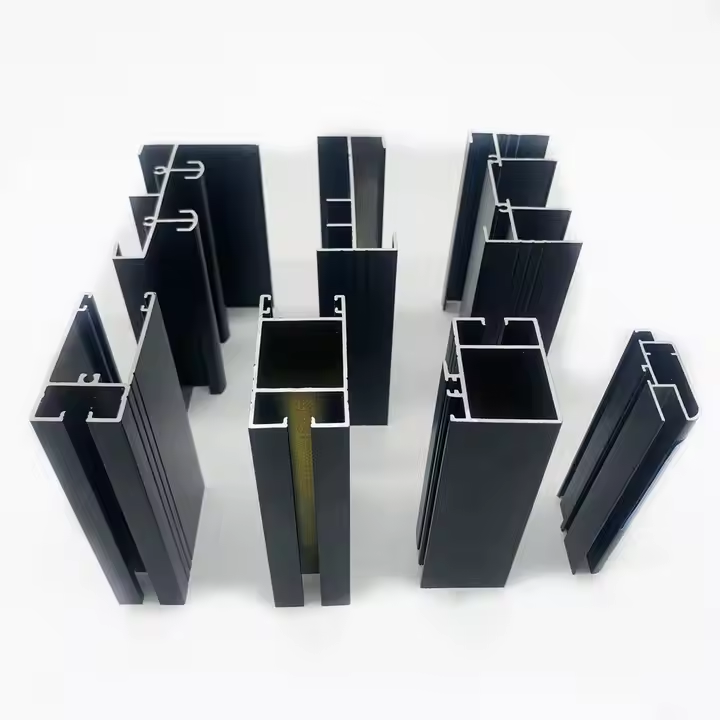
Window and Door Systems represent one of the most widespread uses of aluminum extrusions. Casement windows, sliding doors, and curtain wall systems all rely on precision-extruded frames that must meet strict thermal and structural performance standards. Modern systems often incorporate thermal break technologies—polyamide strips inserted between interior and exterior aluminum sections—to improve energy efficiency. Our casement window profiles and shutter louver profiles are designed to meet these demanding architectural requirements.
Curtain Walls and Facades use aluminum mullions and transoms to create the structural grid that supports glass panels in high-rise buildings. The extrusion process allows for complex shapes that integrate glazing gaskets, drainage channels, and thermal breaks within a single profile.
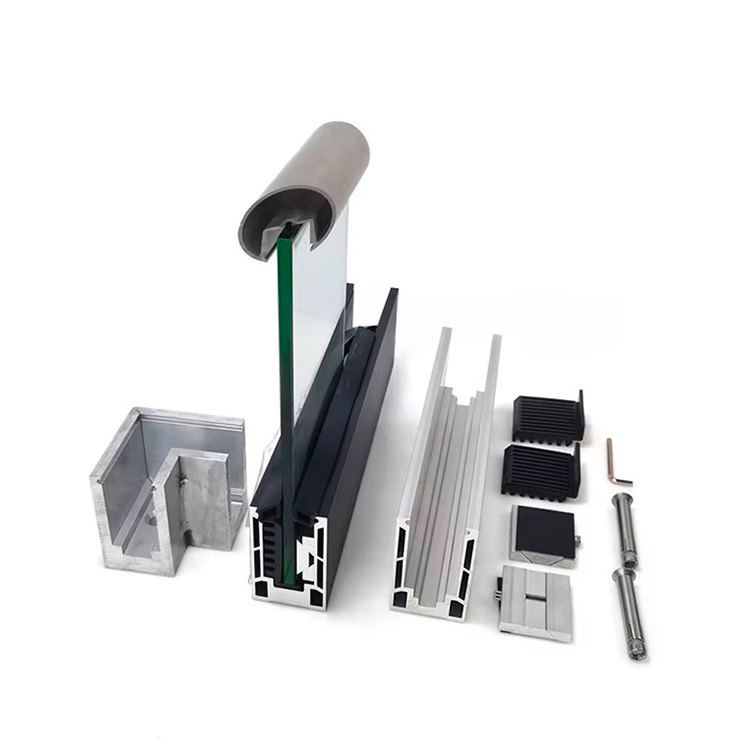
Architectural Components extend to handrails, balustrades, grilles, shopfronts, skylights, roller shutters, and decorative elements. Aluminum's ability to be extruded into clean, precise shapes with excellent surface finish makes it ideal for visible architectural features.
Building Formwork Systems increasingly use aluminum extrusion profiles for concrete formwork. Lightweight, durable, and reusable, aluminum formwork reduces labor costs and improves construction speed compared to traditional timber or steel systems.
Emerging Applications include solar mounting systems and photovoltaic frame structures, which benefit from aluminum's corrosion resistance and light weight.
2. Automotive and Transportation: The Fastest-Growing Sector
The transportation sector is the second-largest consumer of aluminum extrusions, using 6.31 million tons in 2024 with projected growth to 6.53 million tons in 2025. More significantly, this sector represents one of the fastest-growing application areas, driven by the global shift toward vehicle lightweighting and electric vehicle (EV) production.
The Lightweighting Imperative
Aluminum has approximately one-third the density of steel while offering comparable strength when properly alloyed and heat-treated. Every kilogram of weight reduction in a vehicle contributes to improved fuel efficiency or extended battery range. In electric vehicles, weight reduction is particularly critical because it directly impacts driving range and battery performance.
Key Applications in Automotive
Body Structures and Chassis Components represent the frontier of aluminum extrusion adoption in automotive. While traditional applications included engine blocks, cylinder heads, and wheels, the scope has expanded dramatically to include crash management systems, side impact beams, roof rails, and complete body-in-white structures. The extrusion process enables the creation of hollow, multi-cavity profiles that optimize strength-to-weight ratios.
Battery Enclosures and Trays for electric vehicles are a rapidly growing application. EV battery packs require protective housings that are lightweight, impact-resistant, and capable of managing thermal loads—all properties that extruded aluminum profiles can deliver. Our industrial structural profiles are well-suited for these demanding applications.
Heat Exchanger Components, including radiators, condensers, and evaporators, utilize aluminum extrusions for their excellent thermal conductivity. Many modern automotive heat exchange systems use aluminum at nearly 100% of their construction.
Interior Components such as seating structures, instrument panel beams, and trim elements benefit from aluminum extrusions' design flexibility and aesthetic potential. Furniture/decorative profiles produced for automotive interiors must meet stringent aesthetic and durability standards.
Rail and Mass Transit applications also use extruded aluminum for carbody structures, interior panels, seating, and handrails. High-speed rail networks, particularly in Asia and Europe, rely on aluminum extrusions to reduce weight while maintaining structural integrity.
3. Electronics and Electrical: Precision and Conductivity
The electrical and electronics sector uses approximately 2.48 million tons of aluminum extrusions annually. This segment is characterized by demand for precise tolerances, excellent thermal management, and electrical conductivity—properties that aluminum extrusion delivers effectively.
Key Applications in Electronics
Heat Sinks and Thermal Management are perhaps the most recognizable application of aluminum extrusions in electronics. The extrusion process allows for the creation of complex fin geometries that maximize surface area for heat dissipation. From consumer electronics like laptops and LED lighting to high-power industrial equipment and telecommunications infrastructure, extruded aluminum heat sinks are essential for managing thermal loads. Our extruded aluminum heat sinks are engineered to meet the demanding thermal requirements of modern electronic devices.
Enclosures and Housings for electronic equipment benefit from aluminum extrusions' combination of lightweight structure, electromagnetic shielding properties, and aesthetic flexibility. Busbars, electrical tubes, piping, and components for telecommunications systems all rely on precision-extruded aluminum profiles.
Lighting Components, particularly for LED lighting systems, use extruded aluminum profiles for both thermal management and structural purposes. The ability to create long, uniform profiles with integrated mounting features makes extrusion ideal for linear lighting applications.
4. Furniture and Interior Decoration: Aesthetics and Function
The furniture and interior decoration sector, while smaller in volume than construction or automotive, represents a high-value application area where aesthetics and design flexibility are paramount.
Key Applications in Furniture
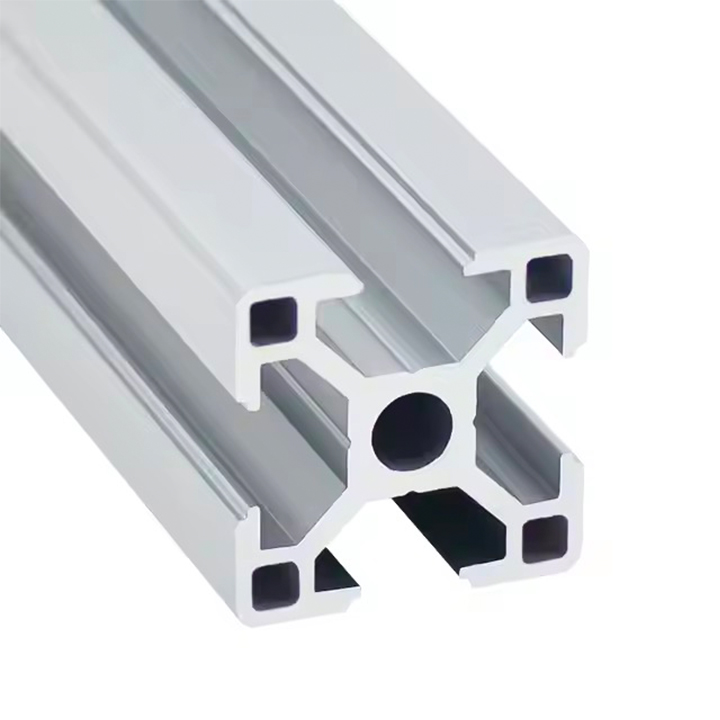
Office Partitions and Workstations leverage aluminum extrusion's modularity and clean appearance. T-slot profiles enable flexible, adjustable configurations that can be easily modified as workspace needs change. Our furniture profiles are designed with these applications in mind.
Wardrobe Systems and Storage Solutions use extruded aluminum for door tracks, hanging systems, shelves, and framework. The material's strength-to-weight ratio allows for slim, elegant profiles that maximize storage space while maintaining structural integrity. Our wardrobe door tracks are a core offering in this category.
Curtain Tracks and Window Treatments rely on smooth-running aluminum tracks that maintain dimensional stability over long spans. Extrusions with integrated channels for carriers and cords enable quiet, reliable operation.
Kitchen Cabinetry and Display Systems increasingly incorporate aluminum profiles for handles, trim, and structural elements. The availability of a wide range of surface finishes—from anodizing to powder coating to wood grain transfer—allows designers to achieve various aesthetic effects while benefiting from aluminum's durability.
5. Industrial Machinery and Automation
The industrial sector, including machinery and equipment manufacturing, uses aluminum extrusions extensively for modular framing, material handling, and custom equipment construction.
Key Applications in Industrial Settings
Modular T-Slot Framing Systems are the backbone of modern factory assembly lines, workstations, machine guards, and safety enclosures. The standardized slot geometry allows for easy assembly, modification, and expansion without requiring welding or specialized fabrication. This modular approach significantly reduces installation time and enables flexible factory layouts.
Conveyor and Material Handling Systems rely on aluminum extrusions for frames, guide rails, and support structures. Aluminum's light weight reduces the load on drive systems, while its corrosion resistance ensures long service life in demanding environments.
Machine Frames and Equipment Mounting applications benefit from extrusion's ability to create strong, rigid structures with integrated mounting features. Control panel frames, sensor positioning systems, and custom machine frames are commonly constructed from extruded aluminum profiles.
Clean Room Infrastructure for pharmaceutical, semiconductor, and food processing facilities uses aluminum extrusions for wall frames, ceiling supports, and equipment mounting due to the material's clean appearance and ease of sanitization.
6. Renewable Energy: The Emerging Frontier
Solar energy and renewable energy infrastructure represent one of the fastest-growing application areas for aluminum extrusions.
Key Applications in Renewable Energy
Solar Panel Frames utilize aluminum extrusions for both structural support and mounting systems. Aluminum's lightweight, corrosion-resistant properties are ideal for rooftop installations and ground-mounted solar farms that must withstand wind, rain, and temperature fluctuations over decades of service.
Solar Tracker Systems increasingly use extruded aluminum profiles for the mechanical structures that adjust panel angles to follow the sun. The material's strength and precision ensure reliable operation over long service lives.
Energy Storage Systems, including battery enclosures for grid-scale storage, benefit from aluminum extrusions' structural and thermal management properties, paralleling developments in electric vehicle battery applications.
7. Aerospace and Specialized Applications
While smaller in volume, the aerospace sector represents the highest value application of aluminum extrusions, demanding the strictest quality standards.
Key Applications in Aerospace
Aircraft Structural Components, including fuselage frames, wing stringers, and floor beams, use high-strength aluminum alloys like 7075 and 7050 in extruded form. These applications require the highest levels of precision, testing, and certification. In November 2025, Montana Aerospace secured a multi-year contract extension with Airbus to supply aluminum extrusions across the full Airbus aircraft family, underscoring the material's ongoing importance in aviation.
Seating and Interior Components for commercial aviation also rely on aluminum extrusions for lightweight, durable structural elements.
Choosing the Right Extrusion Partner for Your Industry
Each of the sectors discussed above has unique requirements—whether it's architectural aesthetics, automotive crash performance, electronic thermal management, or furniture design flexibility. Working with an experienced extrusion partner who understands your industry's specific demands is essential for success.
Aluleader's integrated capabilities—from die design and extrusion through CNC machining, surface finishing, and assembly—position us to serve diverse industries with consistent quality and responsive service. Our engineering team collaborates with clients to optimize designs for manufacturability, ensuring the best balance of performance, quality, and cost.
Related Posts
To deepen your understanding of aluminum extrusion and make more informed sourcing decisions, we recommend exploring these related articles from our blog:
Aluminum Extrusion Process: 11 Key Steps Explained — A comprehensive walkthrough from billet heating to final aging.
Surface Finishing Options for Aluminum Extrusions — An overview of anodizing, powder coating, and other finishes.
Aluminum Extrusion Cost Breakdown: A Complete Guide — Understand cost components and implement cost-saving strategies.
How to Choose an Aluminum Extrusion Supplier — Key criteria for selecting a reliable manufacturing partner.
Aluminum Alloy 6063 vs 6061: Which One to Choose? — Detailed comparison to help you select the right material for your project.
Frequently Asked Questions (FAQ)
Q: Which industry uses the most aluminum extrusions?
A: The construction industry is by far the largest consumer, accounting for over 60% of global extrusion demand. In 2024, construction consumed approximately 18.57 million tons of extruded aluminum.
Q: Why is aluminum extrusion important for electric vehicles?
A: Aluminum extrusion enables the production of lightweight, high-strength structural components that extend EV driving range. Key applications include battery enclosures, crash management systems, and body structures.
Q: How are aluminum extrusions used in electronics?
A: Heat sinks for thermal management are the most common application. Aluminum extrusions are also used for enclosures, busbars, and telecommunications components.
Q: What makes aluminum extrusions suitable for furniture?
A: Design flexibility, clean aesthetics, lightweight strength, and a wide range of surface finishes allow aluminum extrusions to meet both functional and decorative requirements in furniture and interior applications.
Q: Is the aluminum extrusion market growing?
A: Yes. Global consumption reached 34.27 million tons in 2024 and is projected to reach 36.14 million tons by 2026, driven by construction, automotive lightweighting, and renewable energy demand. The market is valued at approximately US$170 billion and is expected to grow at a CAGR of 7.2%.
About Aluleader
With over 15 years of experience in the aluminum extrusion industry, Aluleader provides high-quality architectural profiles, industrial profiles, and furniture/decorative profiles to clients worldwide. Our integrated capabilities—from die design and extrusion to CNC machining, surface finishing, and fabrication—position us to serve diverse sectors including construction, automotive, electronics, furniture, and industrial automation.
Our engineering team is committed to helping clients select the optimal profile design and finishing specifications for their specific applications, balancing performance, aesthetics, and cost.
For project-specific questions or detailed inquiries about how aluminum extrusions can benefit your industry, our experts are available to provide technical guidance.