Welcome to Aluleader Metal
Aluminum Extrusions in Military and Defense Applications | Aluleader
The defense sector operates under a relentless imperative: do more with less weight. Every kilogram saved on a military platform translates directly to increased payload capacity, extended operational range, improved fuel efficiency, enhanced mobility, and greater survivability. Aluminum extrusions have emerged as a cornerstone technology for meeting these demands, offering an exceptional combination of lightweight construction, high strength, and design flexibility that is transforming how defense systems are conceived and built.
This guide explores the critical role of aluminum extrusions in modern military and defense applications, examining material innovations, manufacturing advances, and the strategic importance of domestic production capabilities.
The Strategic Importance of Aluminum in Defense
Aluminum has become indispensable to defense manufacturing because it addresses fundamental operational requirements. Modern fighter aircraft, missiles, and space programs require lightweight yet highly durable metals produced through specialized processes . This capability is so strategically significant that nations are investing heavily in domestic extrusion capacity to reduce dependence on imports and strengthen supply chain resilience .
China's Southwest Aluminum, for example, has developed high-strength, high-toughness, high-precision aluminum alloys with extended service life that can meet the demands of critical national equipment in complex environments. The company has broken foreign technological blockades in the preparation of new aluminum alloys with properties including high strength, high toughness, damage tolerance, fatigue resistance, and low density . These materials have been featured prominently in national military parades, underscoring their role in supporting strategic platforms .
Similarly, China's state-owned Chalco has positioned itself as the primary supplier of critical aluminum materials for national defense and aerospace, with a research and development pipeline structured around an "apply one batch, develop one batch, reserve one batch, plan one batch" innovation model . This systematic approach ensures continuous advancement in material capabilities.
Armored Vehicles: Structural Armor That Carries the Load
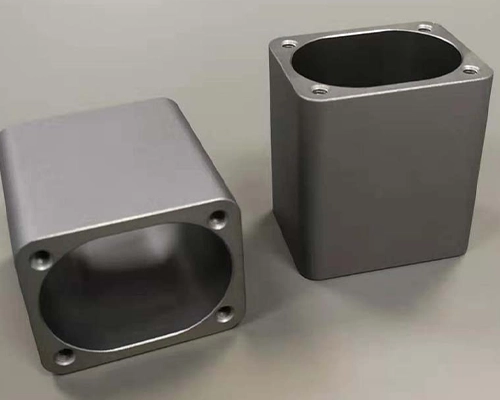
The most transformative development in defense aluminum applications is the shift toward structural armor—armor plate that contributes to the vehicle's structure instead of only adding mass . This approach integrates ballistic protection directly into the hull, lowering overall weight and improving mobility, payload, and operational range .
The Weight Advantage
Aluminum's lighter weight compared to steel offers multiple tactical advantages. Vehicles with aluminum hulls achieve better speed and cross-country mobility than steel-hulled vehicles with the same level of protection . Better mobility allows for greater responsiveness in battle and more maneuverability, which combine to lower a vehicle's vulnerability and improve occupants' survivability .
Lighter weight also reduces fuel consumption, increases operational range, and allows access to more of the battlefield due to weight limitations along roads and bridges . This lower weight increases the number of vehicles that can be carried into remote areas by air, enabling commanders to rapidly concentrate forces with more aircraft available for supplies and ammunition .
Advanced Aluminum Armor Alloys
Traditional armor-grade aluminum alloys include 5083, 5456, and 5059 (MIL-DTL-46027), as well as 7017 and 7020 (MIL-DTL-32505) . However, a new class of alloys is pushing performance boundaries.
The CrossAlloy.57 developed by AMAG represents a significant advance in armor technology. This age-hardenable high-magnesium alloy achieves 7xxx-series strength levels (Rp0.2 up to 470 MPa in T651 temper) while maintaining the weldability and corrosion resistance characteristic of 5xxx alloys . This combination is unprecedented—conventional 7xxx armor grades are notoriously difficult to weld, while 5xxx alloys lack the strength required for demanding structural applications.
Ballistic behavior of CrossAlloy.57 has been benchmarked against MIL-DTL-46027 and MIL-DTL-32505 specifications, with encouraging results . The alloy's temper-tunable protection profile allows matching the protection level to the specific threat and platform thickness requirements.
Component Consolidation: Reducing Welds, Increasing Strength
One of the most significant advances in defense manufacturing is the move from multi-piece welded assemblies to monolithic extruded or machined components. Every weld is a potential weak point in a combat vehicle due to the heat-affected zone and stress concentration .
Constellium, a leading defense supplier, has demonstrated the impact of component consolidation. For ground combat vehicles, the company reduced the piece count from 63 individual welded pieces to 14 monolithic pieces machined to a single-piece configuration, eliminating 95 welds . This approach has resulted in:
Enhanced structural integrity: Loads are distributed evenly without the stress points introduced by welds, bolts, and rivets
Improved ballistic performance: The elimination of weld-induced weaknesses creates a more uniform armor surface
Faster production throughput: Elimination of part distortion from welding increases final assembly throughput by 20-25% monthly
Reduced cost, time, and storage requirements: Simplified supply chains with fewer individual parts
Hybrid Armor Systems
Aluminum is increasingly integrated into hybrid multilayer armor architectures. One study demonstrated a functionally graded aluminum-Kevlar-cabuya fiber composite system for vehicle door protection that successfully resisted 9×19 mm and 5.56×45 mm FMJ threats without complete perforation .
The sequential energy dissipation mechanism in this system involves:
Plastic deformation of the aluminum layer
Kevlar fibrillation and fragment retention
Controlled micro-cracking within the treated cabuya backing layer
With an areal density of 140.87 kg/m², the system achieved a 19% weight reduction compared with conventional steel-based solutions . This demonstrates the feasibility of lightweight hybrid armor systems using aluminum as the primary structural layer.
Aircraft and Aerospace: The Original Lightweighting Application
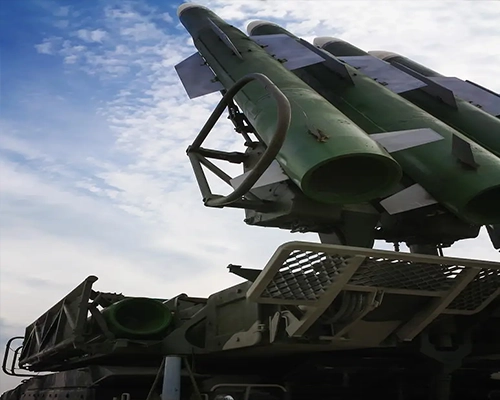
Aluminum extrusions have long been essential to aircraft manufacturing, and recent advances have extended their role in next-generation platforms.
Aerospace-Grade Aluminum Alloys
China's C919 large passenger aircraft, a strategic national project, uses over 60% aluminum by weight in its airframe . The successful development of this aircraft required breakthroughs in key technologies, including:
Super-large-scale complex multi-component low-segregation casting
Large-profile extrusion and wide plate performance uniformity control
Precision isothermal forging and digital forming simulation
These advances have broken foreign monopolies on critical aerospace aluminum materials and established a complete technical system for design, quality control, and product standards for aircraft aluminum .
Large-Profile Extrusions for Airframes
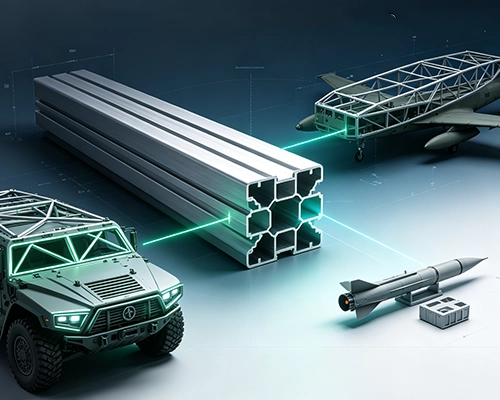
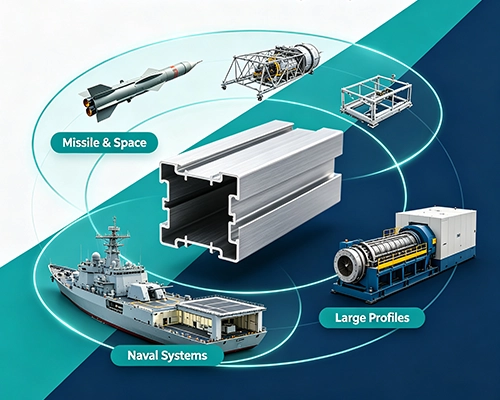
Large-profile aluminum extrusions are enabling new design possibilities for airframes, military vehicles, and naval components . These single-piece extrusions replace assemblies that previously required dozens of smaller parts, offering:
Enhanced structural integrity: Every weld, bolt, or rivet previously introduced potential stress points and failures. Monolithic extrusions distribute loads evenly, improving performance in environments of extreme vibration, shock, and temperature changes .
Improved thermal management: Heat is dissipated more effectively and evenly across single-piece extrusions—critical in electronics enclosures and sensitive space-based equipment .
Reduced weight and assembly costs: Fasteners, brackets, and overlapping materials are eliminated .
Advanced Press Technology
New large-profile extrusion presses—including a 16-inch container press launching in 2026—are empowering engineers to create stronger, lighter, mission-ready components with fewer design constraints . This capability is foundational for next-generation airframes and military platforms.
Missiles, Naval Systems, and Strategic Components
Aluminum extrusions serve a wide range of defense applications beyond vehicles and aircraft.
Missile Programs and Space Systems
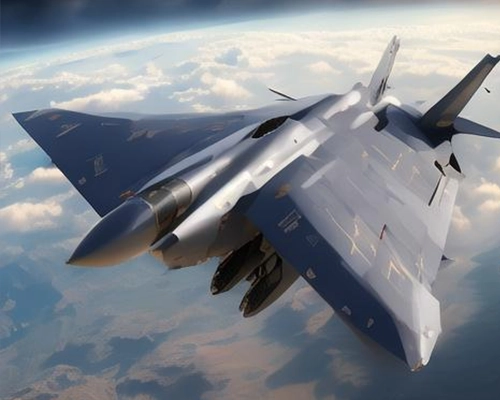
Modern missile and space programs require lightweight, high-strength aluminum components capable of withstanding extreme thermal and mechanical stresses . Defense-grade aluminum extrusions are used in:
Rocket and missile structural components
Spacecraft frames and panels
Guidance system housings
Launch vehicle structures
Naval Applications
Aluminum extrusions are increasingly specified for naval components due to their corrosion resistance and weight advantages. Key applications include:
Ship superstructures
Interior bulkheads and deck structures
Weapon system mounts
Electronics enclosures
India's recently initiated 10,000-tonne aluminum extrusion press at the Ordnance Factory Ambajhari is specifically designed to manufacture large and complex aluminum alloy profiles for defense systems, aerospace and aviation structures, missile programs, and railways—addressing what the Defence Minister described as a "crucial gap in the country's manufacturing ecosystem" .
Specialized Aluminum Alloys for Defense
Different defense applications require different alloy characteristics:
2024 aluminum: A copper-magnesium alloy with high strength and moderate heat resistance (effective up to 150°C). Widely used in aircraft structures, fuselage frames, skin panels, wing ribs, and rivets . The strength of 2024 exceeds that of 7075 at temperatures above 125°C .
7050, 7A55, 7B50: High-strength 7xxx-series alloys used in structural aerospace and defense applications .
2A97, 5A90: Advanced aluminum-lithium alloys offering lower density and higher stiffness .
These alloys are available in a range of temper conditions (T4, T6, T6511, T73511, T76511, T77) to optimize the balance between strength, toughness, and stress corrosion resistance for specific applications .
Frequently Asked Questions (FAQ)
Q: Why is aluminum preferred over steel for military vehicles?
A: Aluminum offers a superior strength-to-weight ratio, reducing vehicle weight while maintaining protection levels. This improves mobility, fuel efficiency, operational range, and the ability to transport vehicles by air. Aluminum also provides natural corrosion resistance and can be integrated as structural armor .
Q: What are the most common defense-grade aluminum alloys?
A: Common alloys include 2024 for aerospace structures , 5083/5456/5059 for armor applications , and high-strength 7xxx alloys such as 7050 and 7075 for critical structural components . Advanced alloys like CrossAlloy.57 combine 7xxx strength with 5xxx weldability .
Q: Can aluminum armor stop bullets?
A: Yes. High-strength aluminum armor plate is ballistically screened against MIL-DTL threat definitions . In hybrid configurations, aluminum layers work in combination with materials like Kevlar to resist ballistic threats while reducing weight compared to steel .
Q: Why is eliminating welds important in defense manufacturing?
A: Every weld is a potential weak point due to the heat-affected zone, stress concentration, and defect risk. Monolithic extrusions and machined components eliminate weld-related failures, improve structural integrity, and can increase production throughput by up to 25% .
Q: What are the strategic implications of domestic aluminum extrusion capability?
A: Indigenous production reduces dependence on imports, strengthens supply chain resilience, and supports national security. Nations are investing in advanced extrusion facilities to produce critical defense materials domestically .
Related Posts
Large-Section Aluminum Extrusion Design — Learn about design principles for large, complex profiles used in defense applications.
Aluminum Extrusion Market Outlook 2026-2027 — Understand market trends affecting defense-grade aluminum supply.
Aluminum Welding Guide — Explore welding challenges and solutions for defense-grade aluminum alloys.
Aluminum Extrusion Process: 11 Key Steps Explained — Understand the manufacturing process behind defense-grade extrusions.
Applications of Aluminum Extrusion in Different Industries — Discover how extrusion serves aerospace, automotive, construction, and more.
About Aluleader
With over 15 years of experience in the aluminum extrusion industry, Aluleader provides high-quality architectural profiles, industrial profiles, and furniture/decorative profiles. Our integrated capabilities—from die design and extrusion to CNC machining, surface finishing, and fabrication—ensure consistent quality across every project.
While our primary focus is on architectural and industrial applications, we maintain strong relationships with domestic and international partners in the defense supply chain. Our engineering team can support preliminary consultations on material selection, profile design, and manufacturing feasibility for defense-related projects.
For project-specific questions or detailed inquiries about our extrusion capabilities, our experts are available to provide technical guidance.