Welcome to Aluleader Metal
Custom Aluminum Profiles for Ethiopia: From Drawing to Production
Not every aluminum profile required for a building project can be found in a standard catalogue.
Window manufacturers, door fabricators, contractors and building-material suppliers may already have their own profile systems or need to reproduce a profile that is commonly used in their local market.
In these situations, custom aluminum extrusion makes it possible to manufacture a profile according to a specific cross-sectional design.
For Ethiopian buyers, a custom profile project may begin with:
A CAD drawing
A PDF profile drawing
An existing aluminum sample
A window-system catalogue
A profile that needs modification
A completely new design
The profile then moves through several stages before mass production:
Drawing → Technical Review → Die Development → Trial Extrusion → Sample Inspection → Surface Finishing → Approval → Mass Production
This guide explains how that process works and what buyers should prepare when ordering custom aluminum profiles from an extrusion manufacturer.
1. What Is a Custom Aluminum Profile?
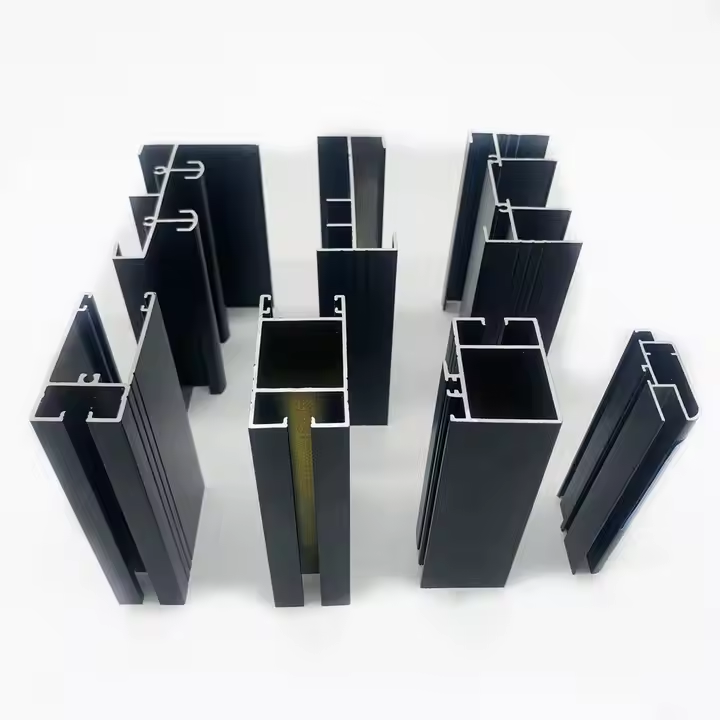
A custom aluminum profile is an extrusion manufactured according to a customer-specific cross-section.
Unlike a standard extrusion, such as a common angle, tube or channel, the profile may contain features designed specifically for a particular product.
These can include:
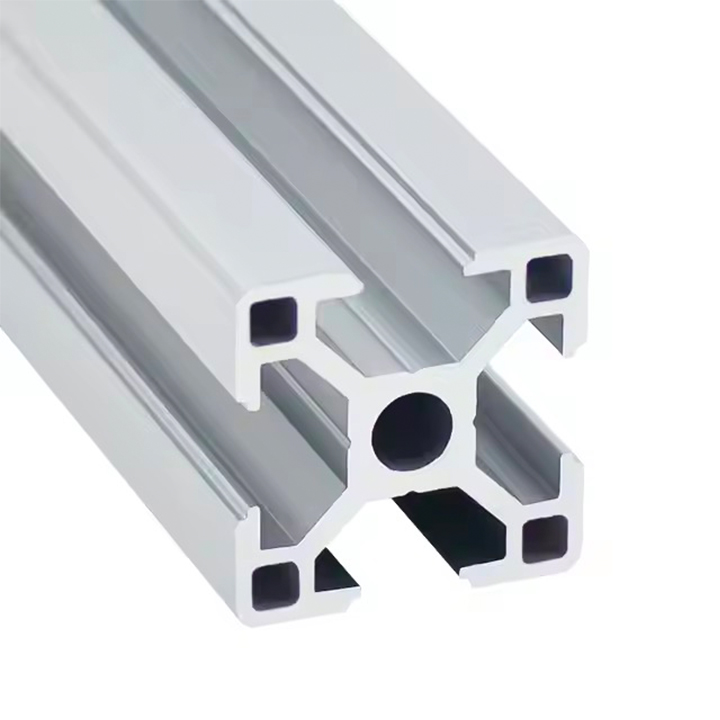
Hollow cavities
Screw channels
Glass grooves
Sliding tracks
Interlocking sections
Hardware channels
Decorative surfaces
Reinforcement ribs
Custom extrusion is therefore particularly useful for products such as:
Window systems
Door systems
Curtain walls
Building facades
Partitions
Furniture systems
Industrial assemblies
For building applications, you can also view Aluleader's existing range of architectural aluminum profiles.
2. When Do You Need a Custom Aluminum Extrusion?
Not every project requires a new extrusion die.
If an existing profile already matches your requirements, using the existing design can save tooling time and cost.
Custom extrusion becomes useful when:
You Have Your Own Profile Design
Your company already has a CAD drawing and needs a manufacturer to produce it.
You Need to Reproduce an Existing Profile
You already use the profile but want to source it from another manufacturer.
You Need to Modify an Existing Profile
For example, you may want to change:
Wall thickness
Overall dimensions
Glass groove
Screw channel
Hardware position
Internal ribs
You Need a Local-Market Window System
Some markets use profile systems that may not be part of every manufacturer's standard catalogue.
You Are Developing a New Product
A completely new window, door, furniture or industrial system may require a unique cross-section.
3. Start With a CAD Drawing
The best starting point for a custom aluminum profile is a technical drawing.
Common formats include:
DWG
DXF
Dimensioned PDF
The drawing should show the complete cross-section and important dimensions.
Depending on the project, it may also identify:
Wall thickness
Critical dimensions
Tolerance requirements
Connection points
Glass grooves
Hardware locations
A clear drawing makes technical evaluation much easier.
It also reduces the risk of misunderstandings between buyer and manufacturer.
4. What If You Do Not Have a CAD Drawing?
This is common.
Many window manufacturers already use a profile but do not have the original CAD file.
In this situation, you can provide a physical aluminum profile sample.
The sample can be used as a reference to understand:
Cross-sectional shape
Overall dimensions
Wall thickness
Internal cavities
Grooves
Connection features
Surface finish
The manufacturer can then prepare or reconstruct a technical drawing for confirmation.
However, the physical sample itself should not be the only final production reference.
Before the extrusion die is made, the buyer should approve the final drawing.
5. Can an Existing Ethiopia Aluminum Profile Be Reproduced?
In many cases, yes.
Suppose your company already manufactures windows in Ethiopia using an existing profile system.
You may have:
L + T + Z + Zekolo + Fasha + other matching sections
but no CAD drawings.
You can provide physical samples of the profiles for technical evaluation.
The manufacturer can check the cross-sections and determine whether:
A suitable existing die is available
The profile needs a new die
The design needs adjustment before extrusion
For buyers specifically sourcing this type of window system, see our LTZ Series 1.4mm Sliding Window Aluminum Profiles for Ethiopia.
6. Technical Review Before Opening the Die
Receiving the drawing does not mean the manufacturer should immediately start making the die.
The profile should first go through a technical review.
The extrusion manufacturer may evaluate:
Overall profile size
Wall thickness
Thin-wall areas
Thick-wall areas
Hollow cavities
Internal ribs
Sharp corners
Cross-sectional balance
Critical dimensions
Extrusion feasibility
This stage is important because a profile that can be drawn in CAD is not automatically easy to manufacture consistently.
The objective is to preserve the customer's functional requirements while making sure the profile is suitable for extrusion.
7. Why Wall Thickness Matters in Custom Profile Design
Wall thickness has a direct effect on the design and production of a custom extrusion.
It can influence:
Profile weight
Material consumption
Rigidity
Metal flow during extrusion
Die design
Production cost
For example, a buyer may want to change an existing profile from:
1.2mm
to:
1.4mm
But this should not automatically be done by increasing every wall without reviewing the complete cross-section.
Changing thickness can affect internal dimensions and compatibility with other components.
For a detailed explanation, see our article:
Aluminum Profile Wall Thickness for Windows and Doors: A Buyer’s Guide
8. Identify Critical Dimensions
Not every dimension on a custom extrusion has the same functional importance.
For window profiles, critical dimensions may include:
Glass groove width
Interlock clearance
Track dimensions
Hardware channels
Screw channels
Mating surfaces
Connection dimensions
These should be clearly identified during drawing review.
This allows the manufacturer to understand which dimensions have the greatest impact on the final product.
For more information about dimensional control, see our dedicated guide to aluminum extrusion tolerances for window and door profiles.
9. What Is an Aluminum Extrusion Die?
An extrusion die is the tooling used to form the aluminum into the required cross-sectional shape.
During extrusion, heated aluminum billet is pushed through the die.
The opening and internal die structure are designed to create the required profile.
Different profile designs normally require different tooling.
A simple solid profile and a complex hollow window profile may require very different die designs.
The die is therefore one of the most important parts of a custom extrusion project.
If you want to understand the complete manufacturing principle, our aluminum extrusion process guide explains how aluminum profiles are produced.
10. Does Every Custom Profile Need a New Die?
No.
Before making a new die, the manufacturer can check its existing tooling library.
There are three possible situations:
Exact Existing Die
An existing die already matches the required profile.
Similar Die but Not Exact
The profile looks similar but the dimensions or internal geometry are different.
In this case, the existing die should not automatically be treated as interchangeable.
No Suitable Die
A new custom extrusion die needs to be developed.
The decision should be based on the actual cross-sectional drawing rather than the commercial name of the profile.
11. Die Development and Trial Extrusion
After the drawing is approved, the custom die can be manufactured.
The next major step is trial extrusion.
The objective is not simply to produce the first piece of aluminum.
The manufacturer needs to evaluate whether the die produces the profile correctly.
The trial extrusion may be checked for:
Cross-sectional shape
Dimensions
Wall thickness
Straightness
Twist
Surface condition
Profile weight
Overall extrusion behavior
If adjustments are required, the die may need correction before another trial.
This is a normal part of custom extrusion development.
12. Why the First Trial May Require Die Correction
Buyers sometimes assume:
“Once the die is made, the profile is finished.”
Custom extrusion is more complex than that.
Metal flow through an extrusion die needs to be balanced.
For a complex profile, different areas of the cross-section may not initially flow at exactly the desired rate.
This can affect:
Shape
Dimensions
Straightness
Twist
Surface quality
The manufacturer may therefore make corrections to the die after the first trial.
The important objective is not to avoid every correction.
It is to obtain an approved profile before mass production.
13. Sample Inspection
After trial extrusion, samples should be inspected against the approved drawing.
Depending on the project, inspection may include:
Overall dimensions
Critical dimensions
Wall thickness
Straightness
Twist
Profile weight
Surface condition
For profiles that are part of an assembly, dimensional inspection alone is not enough.
The profile should also be tested with the components it is designed to fit.
14. Test Matching Profiles Together
This is particularly important for window and door systems.
Imagine a custom sliding-window system containing:
Frame + sash + track + interlock
Each extrusion may appear acceptable when measured individually.
But the real question is:
Do they work together?
During sample approval, it is useful to test:
Profile-to-profile fit
Sliding movement
Interlock clearance
Glass installation
Gaskets
Rollers
Locks
Screws
Other hardware
System-level testing can reveal problems that are difficult to identify from a single extrusion alone.
15. Confirm Alloy and Temper
The material specification should be agreed before mass production.
For architectural window and door profiles, 6063-T5 is commonly used.
A specification may therefore state:
Alloy: 6063
Temper: T5
6063 is widely used because it offers characteristics suitable for many architectural extrusion applications.
For a detailed explanation, see:
Why 6063 Aluminum Is Widely Used for Window and Door Profiles
If the project requires another alloy or temper, this should be discussed during technical review.
16. Choose the Surface Finish
Once the profile design has been approved, the required surface finish should also be confirmed.
Common options include:
Powder Coating
Suitable for a wide range of architectural colors.
Anodizing
Suitable when a metallic aluminum appearance is desired.
Wood Grain
Used when the project requires a timber-like decorative appearance.
For more information about available processes, see our surface finishing options for aluminum extrusions.
For projects where you are deciding specifically between powder coating and anodizing, see:
Powder Coated vs Anodized Aluminum Profiles: Which Is Better for Ethiopia?
17. Approve the Color Before Mass Production
If the profile will be powder coated or otherwise supplied in a specified decorative finish, color approval may be necessary.
Do not rely only on photographs or computer screens where precise color matching matters.
Instead, use:
Recognized color references
Physical color samples
Approved finished profile samples
The approved sample can then serve as a reference during production inspection.
18. Move to Mass Production Only After Approval
Once the extrusion sample, dimensions and required finish have been approved, the project can proceed to mass production.
The manufacturer should work according to the final approved:
Drawing
Alloy
Temper
Wall thickness
Critical dimensions
Profile length
Surface finish
Color
Quantity
This is why revision control is important.
If the profile drawing has been modified several times, both buyer and manufacturer should make sure the production team is using the final approved revision.
19. Quality Control During Mass Production
Custom profile quality control should be based on the agreed specifications.
Depending on the product, checks may include:
Cross-sectional dimensions
Critical dimensions
Wall thickness
Straightness
Twist
Surface quality
Color
Profile weight
Length
Packaging
For complete window systems, matching profiles can also be checked for assembly compatibility.
The objective is to ensure that mass-production profiles remain consistent with the approved sample and drawing.
20. Cutting and Additional Fabrication
Extrusion does not always need to be the final manufacturing step.
Depending on the project, aluminum profiles may also require additional fabrication such as:
Cutting
Drilling
Punching
Milling
CNC machining
Whether these services should be completed by the extrusion supplier or by the buyer depends on the final product and supply-chain requirements.
If fabrication is required, it should ideally be discussed during the quotation stage.
This allows the supplier to understand the complete product requirement rather than quoting only raw extrusion.
21. Packaging Custom Aluminum Profiles
After extrusion and finishing, the profiles need suitable packaging for transportation.
This is particularly important for architectural profiles with visible finished surfaces.
Packaging may need to protect against:
Scratching
Abrasion
Profile-to-profile contact
Handling damage
Surface contamination
For a project containing many custom sections, clear profile identification is also useful.
Each bundle can be associated with a profile code, for example:
AP-001
AP-002
AP-003
This helps the buyer identify the profiles after delivery.
22. Custom Profiles vs Standard Profiles
Should you always develop a custom extrusion?
No.
The decision depends on the application.
| Factor | Standard Profile | Custom Profile |
|---|---|---|
| Existing die | Usually available | May require new die |
| Cross-section | Fixed | Designed for project |
| Tooling cost | Usually none | May apply |
| Development time | Shorter | Longer |
| Custom dimensions | Limited | High flexibility |
| Unique system | Limited | Suitable |
| Existing sample reproduction | Usually not exact | Suitable |
| Product differentiation | Limited | Greater potential |
If a standard profile already satisfies the requirement, there may be no reason to develop a new die.
Custom extrusion becomes valuable when the cross-section itself needs to perform a specific function.
Aluleader also supplies standard aluminum profiles for applications that do not require a completely customized cross-section.
23. What Information Should You Send for a Custom Aluminum Profile?
A complete inquiry makes technical evaluation much faster.
Custom Aluminum Profile RFQ Checklist
| Information | What to Provide |
|---|---|
| Application | Window, door, facade, furniture or industrial use |
| Drawing | DWG, DXF or dimensioned PDF |
| Physical sample | If drawing is unavailable |
| Alloy | For example, 6063 |
| Temper | For example, T5 |
| Wall thickness | Required nominal thickness |
| Critical dimensions | Clearly identify on drawing |
| Profile length | Required extrusion length |
| Surface finish | Mill finish, powder coated, anodized, etc. |
| Color | Color reference or sample |
| Fabrication | Cutting, drilling, punching, CNC if required |
| Quantity | Required quantity |
| Packaging | Required protection |
| Destination | Country or delivery port |
If you are importing the profiles into Ethiopia, our guide to importing aluminum window and door profiles from China to Ethiopia also covers the purchasing and shipping preparation process.
24. Example: Reproducing an Existing Ethiopia Window Profile
Suppose an Ethiopian window fabricator currently uses an aluminum sliding-window system.
The company has physical samples but no CAD drawings.
A practical development process could be:
Step 1
Send the existing profile samples.
Step 2
Identify every section in the window system.
Step 3
Prepare or reconstruct cross-sectional drawings.
Step 4
Confirm dimensions and wall thickness.
For example:
Required wall thickness: 1.4mm
Step 5
Confirm alloy and temper.
For example:
6063-T5
Step 6
Check whether existing dies are available.
Step 7
Develop new dies where necessary.
Step 8
Run trial extrusion.
Step 9
Inspect samples and assemble matching sections.
Step 10
Approve surface finish and color.
Step 11
Begin mass production.
This is much safer than trying to manufacture the entire order based only on profile names or photographs.
25. Common Mistakes in Custom Aluminum Extrusion Projects
Mistake 1: Opening the Die Before Confirming the Drawing
Changes after tooling can create additional work and cost.
Better approach: Approve the final cross-section first.
Mistake 2: Sending Only a Photograph
A photograph cannot accurately define the internal profile geometry.
Better approach: Provide CAD drawings or physical samples.
Mistake 3: Ignoring Matching Profiles
One extrusion may need to connect with several others.
Better approach: Review the complete system.
Mistake 4: Making Every Tolerance Extremely Tight
This can increase manufacturing difficulty unnecessarily.
Better approach: Identify genuinely critical dimensions.
Mistake 5: Changing Wall Thickness Without Checking Internal Dimensions
A thickness change can affect compatibility.
Better approach: Review the complete cross-section.
Mistake 6: Skipping Trial Samples
A drawing alone cannot verify complete system fit.
Better approach: Approve trial extrusion samples before mass production.
Mistake 7: Forgetting Hardware
The extrusion may be correct but incompatible with the intended roller or lock.
Better approach: Test actual accessories where possible.
Frequently Asked Questions About Custom Aluminum Profiles
Can you manufacture aluminum profiles from my drawing?
Yes. Custom aluminum profiles can be evaluated and manufactured from DWG, DXF or dimensioned PDF drawings, subject to extrusion feasibility.
What if I only have a physical aluminum profile sample?
A physical sample can be used as a technical reference. The cross-section can be evaluated and a production drawing prepared for confirmation before tooling.
Does every custom aluminum profile require a new die?
No. If a suitable existing die is available, new tooling may not be required. The manufacturer needs to compare the actual cross-sectional drawing.
Can I customize the wall thickness?
Yes, subject to profile design and extrusion feasibility. Changes should be reviewed because they may affect weight, dimensions and compatibility.
Can you produce custom 6063-T5 aluminum extrusions?
Yes. 6063-T5 is commonly used for architectural profiles, and custom cross-sections can be produced according to the required design and technical specifications.
Can I reproduce an existing Ethiopia window profile?
In many cases, yes. Existing drawings or physical samples can be used for technical evaluation and die development.
Should I approve a sample before mass production?
For a new custom die, sample approval is strongly recommended, particularly when the profile must fit other extrusions, glass or hardware.
Need Custom Aluminum Profiles for an Ethiopia Project?
Aluleader manufactures custom aluminum extrusions for window, door, architectural and other applications based on customer drawings and physical samples.
You can also explore our existing architectural aluminum profiles before deciding whether a new custom die is necessary.
For Ethiopia sliding-window projects, view our LTZ Series 1.4mm Sliding Window Aluminum Profiles for Ethiopia.
To start a custom extrusion project, send:
CAD drawing or physical sample + alloy/temper + wall thickness + critical dimensions + surface finish + quantity
If you already use an aluminum profile in Ethiopia but do not have the original drawing, you can send an existing profile sample for technical evaluation.
Contact Aluleader for custom aluminum profile design review, die development, sample production and quotation.