Welcome to Aluleader Metal
How to Cut Aluminum Extrusion & Section Profiles | Complete Cutting Guide
How to Cut All Types of Aluminum Extrusion Profiles (Step-by-Step Guide)
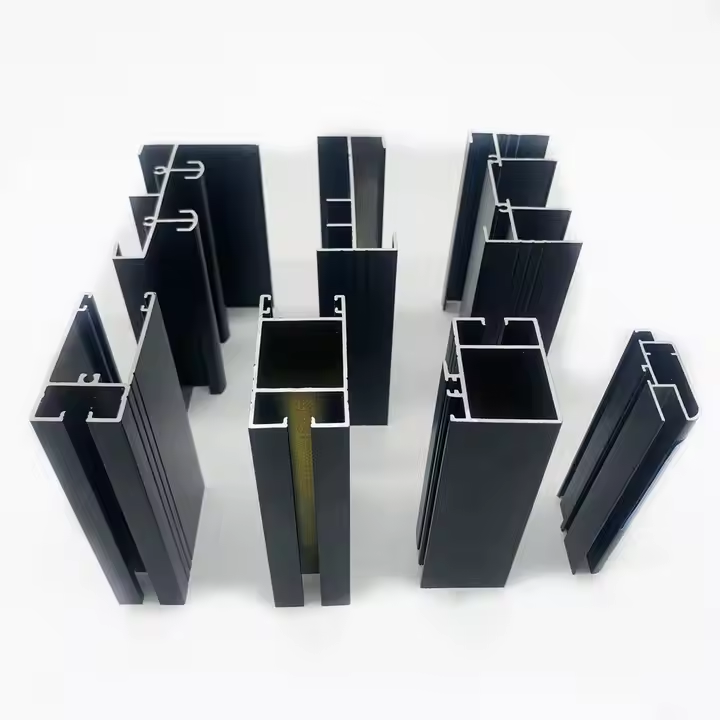
Aluminum extrusions come in countless shapes and sizes — from H profiles, track extrusions, square channels to architectural moulding sections, round tubes, and custom industrial shapes. They are widely used in industrial frames, door & window systems, construction equipment, and mechanical assemblies.
The good news is: almost all aluminum extrusion profiles can be cut using the same core principles. The difference lies mainly in tool selection, blade choice, and cutting speed. Whether you're completing DIY assembly or professional architectural fabrication, mastering how to cut aluminum extrusion accurately helps you get burr-free, perfectly fitted profiles — no matter the shape.
Need custom aluminum profiles cut to exact lengths? Check our precision cutting & CNC machining service or send us your drawing for a factory quote.
Common Types of Aluminum Extrusions You May Cut
While the cutting method is similar across all aluminum extrusions, wall thickness affects tool choice and cutting parameters. Here are the most common types you're likely to work with:
H & Structural Aluminum Profiles
Often used for construction supports, partition frames, and heavy-duty structural applications. These thicker profiles require more rigid saws and slower feed rates for clean cuts.
Square, Rectangular & Channel Extrusions
Commonly used for mechanical tracks, equipment frames, and conveyor systems. Square and rectangular shapes are relatively easy to cut with standard miter or circular saws.
Door & Window Aluminium Moulding Profiles
Thin-wall architectural profiles for building projects. These are among the easiest to cut, and a standard miter saw with a proper blade delivers clean 45° and 90° cuts.
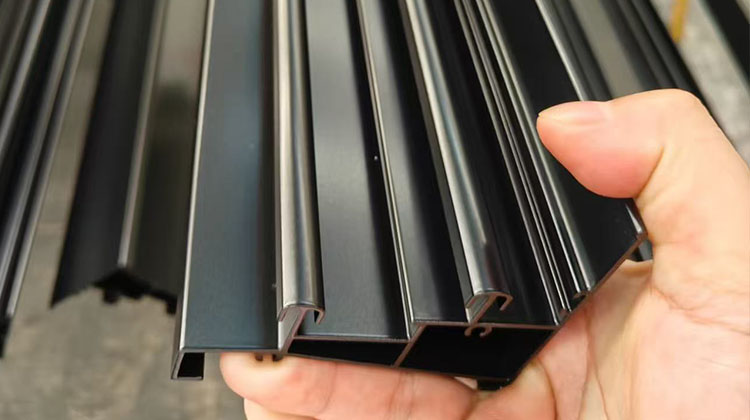
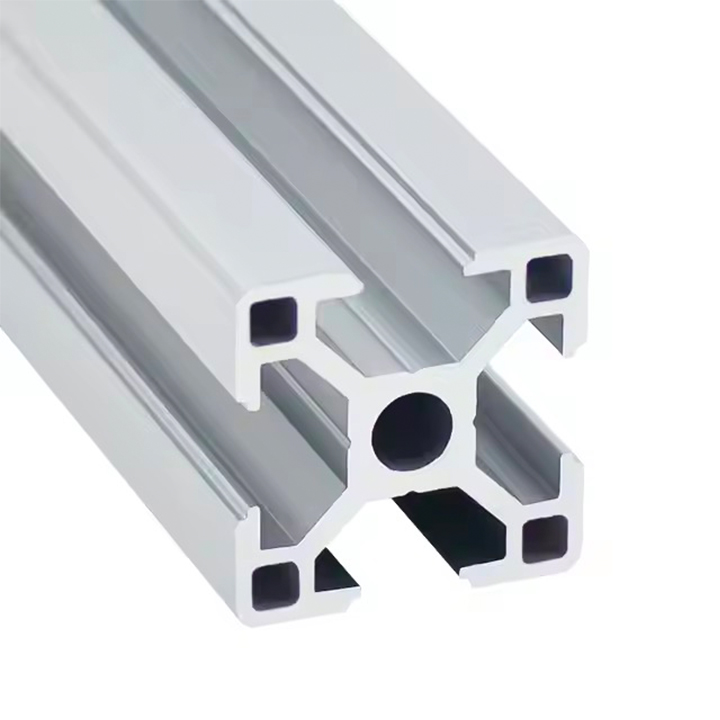
T-slot Industrial Aluminum Extrusions
Widely used for workstation frames, assembly lines, and machine guards. Their thicker walls and internal slots require stable clamping and sharp blades for burr-free results.
Note: This guide covers cutting techniques. For detailed product specifications and custom extrusion options, browse our full aluminum extrusion catalog.
Best Saw Blades for Cutting Aluminum Extrusion
Using the wrong blade is the #1 cause of rough cuts, heavy burrs, and damaged profiles. This section covers what you need to know about choosing the best saw blade for cutting aluminum extrusion.
Blade Material
Carbide-tipped (TCT) non-ferrous metal blades are the gold standard for aluminum extrusion cutting. They stay sharp much longer than standard high-speed steel (HSS) blades and deliver significantly cleaner cut surfaces.
Tooth Count Guide
The right tooth count depends on profile thickness:
-Thin profiles (window frames, thin tubes, decorative moulding): 80–100 teeth
-Medium profiles (standard channels, T-slot frames): 60–80 teeth
-Thick solid bars & H-sections: 40–60 teeth with slower feed rate
More teeth generally produce smoother cuts, but too many teeth on thick material can cause chip loading, overheating, and blade binding.
Recommended Tooth Geometry
Triple-chip grind (TCG) teeth are highly recommended for aluminum. They shear the material cleanly, reduce burr formation, and prevent the blade from sticking or grabbing during the cut.
What to Avoid
Never use standard wood-cutting blades on aluminum. They have aggressive hook angles and too few teeth, resulting in rough edges, melted aluminum buildup, blade damage, and even dangerous kickback.
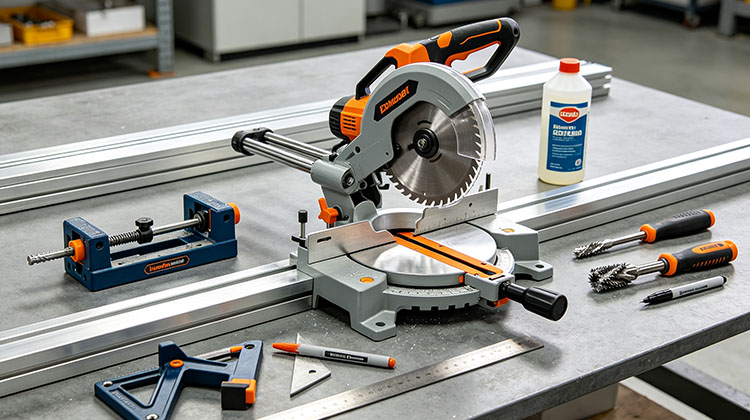
Step-by-Step Guide to Cut Aluminum Extrusion Cleanly
Follow these steps consistently for clean, accurate, burr-free cuts on any aluminum extrusion profile.
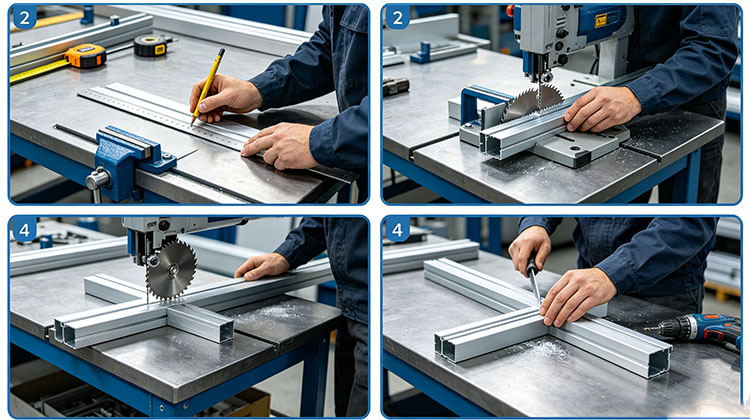
1. Measure & Mark Precisely
Use a combination square and caliper to mark cut lines. Double-check all dimensions before cutting — measuring twice saves material waste. For angled cuts, verify the angle with a protractor or your saw's built-in gauge.
2. Secure the Extrusion with Clamps
Fix the profile tightly to your workbench or saw table. This is especially important with long aluminum bars, which can vibrate or shift during cutting and cause inaccurate angles. Never cut freehand.
3. Install the Right Aluminum Cutting Blade
Match the blade tooth count to your profile thickness. Apply cutting wax or lubricant to the blade before starting — even a small amount makes a noticeable difference in cut quality and blade life.
4. Perform the Cut with Steady, Controlled Feed
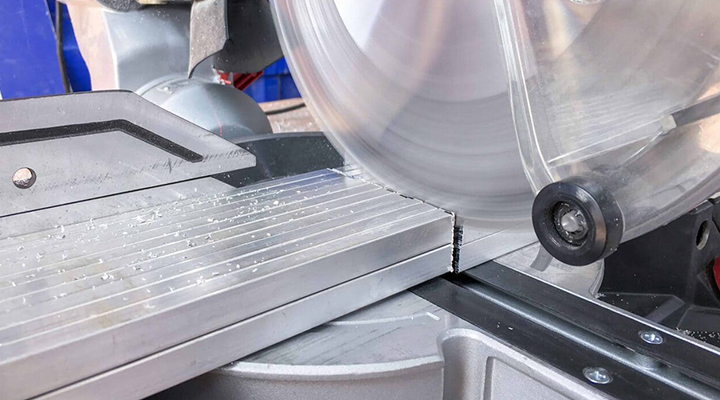
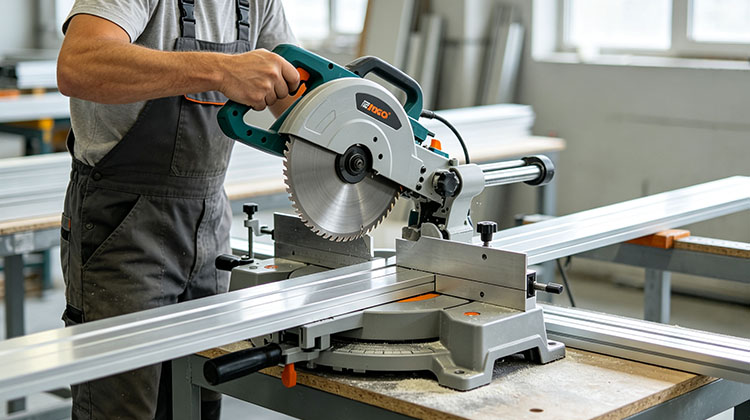
Miter saw: Lower the blade slowly and steadily. Let the teeth do the work — don't force or rush the cut.
Circular saw: Keep the base plate flat and parallel to the extrusion for perfectly square cuts.
Hacksaw: Use smooth, even back-and-forth strokes. Apply light pressure — forcing the blade causes bending and rough cuts.
5. Deburr & Finish the Cut Edges
Almost every cut leaves small burrs. Use a file, deburring knife, or deburring wheel to remove sharp edges. This ensures safe handling, proper fit during assembly, and clean downstream machining.
Key Tips to Cut Aluminum Extrusion Without Burrs
Follow these pro tips to consistently achieve smooth, clean cuts on any aluminum profile:
-Apply cutting lubricant or wax to reduce friction and heat buildup
-Always use sharp, aluminum-specific carbide blades — dull blades cause tearing and burrs
-Avoid fast feed speed; slow, steady cutting delivers smoother surfaces
-Support long extrusions with roller stands to prevent wobble and deflection
-Clean aluminum chips from the blade and work area frequently during cutting
-Let the blade reach full speed before entering the cut
Common Mistakes When Cutting Aluminum Profiles
Using Wood Saw Blades on Aluminum
This is the most common and most costly mistake. Wood blades have the wrong tooth geometry for aluminum, resulting in rough burrs, melted chip buildup, and potential saw damage.
Cutting Without Lubricant
Dry cutting generates excess heat, which causes aluminum to melt and stick to the blade teeth. This ruins cut quality and shortens blade life dramatically.
Poor Clamping
Unsecured extrusions shift during cutting, leading to uneven cuts, wasted material, and safety hazards. Always use proper clamps — never hold the profile by hand.
Rushing the Cut
Feeding too fast creates heavy burrs, chatter marks, and inaccurate dimensions. Slow down — a few extra seconds per cut saves far more time in rework.
Skipping Safety Gear
Aluminum chips can fly at high speed. Always wear safety glasses, and use ear protection with power saws.
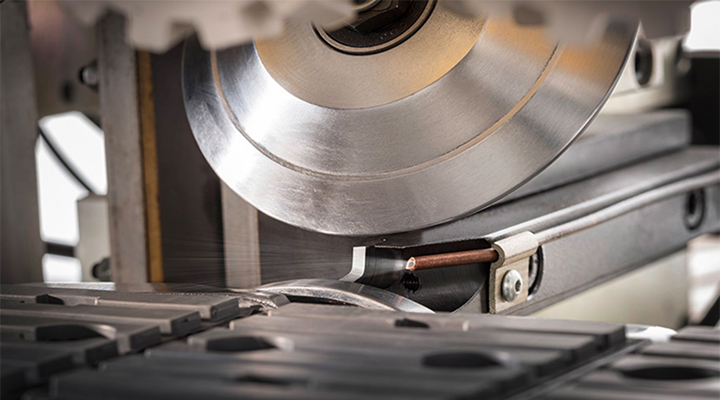
When to Use Professional Pre-Cut Service
For small projects and on-site adjustments, a good miter saw and quality blade are all you need. But for production orders, tight-tolerance parts, or projects requiring additional machining, working with a professional extrusion manufacturer is more efficient and cost-effective.
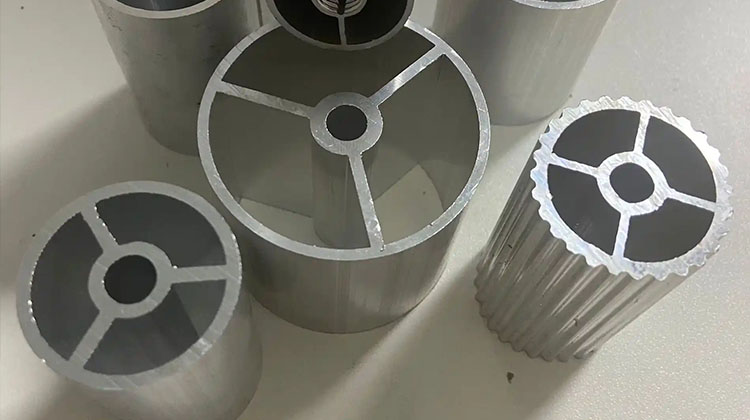
At Aluleader, we provide custom aluminum extrusion with precision cutting, CNC machining, drilling, tapping, and surface finishing — all in-house. You receive ready-to-assemble parts cut to your exact specifications, with consistent quality across every piece and minimal material waste.
FAQ
1.What is the best way to cut aluminum extrusion?
For most common aluminum extrusion profiles, a miter saw equipped with a carbide-tipped non-ferrous metal blade delivers the cleanest straight and angled cuts. For very thick or structural profiles, a band saw or cold saw is preferred.
2.Can you cut aluminum extrusion with a regular hacksaw?
Yes, hacksaws work for small batches of short, thin aluminum moulding and tube. For larger projects or thicker profiles, power saws are far more efficient and produce cleaner results.
3.Can I cut aluminum extrusion with a wood cutting blade?
Not recommended. Wood blades have aggressive tooth geometry designed for wood grain, not aluminum. They produce rough, burr-heavy cuts, can cause blade damage, and increase kickback risk.
4.How to cut aluminum extrusion without burrs?
Use a high-tooth-count carbide aluminum blade, apply cutting lubricant, feed slowly and steadily, and deburr the edges after cutting. Sharp blades and proper speed make the biggest difference.
5.Do I need lubricant when cutting aluminum profiles?
While you can cut aluminum dry, lubricant is highly recommended. It reduces heat, prevents aluminum chips from sticking to the blade, greatly improves cut surface quality, and significantly extends blade life.
6.Can all types of aluminum extrusion be cut the same way?
The core cutting principles are the same for all aluminum extrusions — the main variables are blade choice, cutting speed, and clamping method. Thin decorative profiles cut easily with a standard miter saw, while thick structural profiles may require a band saw or cold saw for best results.
Conclusion
Cutting aluminum extrusion — whether it's H profiles, track bars, channel sections, architectural moulding, or custom shapes — follows the same fundamental rules: use the right tools, choose a proper carbide blade, clamp securely, and cut with slow, steady feed.
Looking for more technical guides? Explore our blog or visit our FAQ page for answers to common aluminum extrusion questions.
Foshan Aluleader Metal Materials Co.,Ltd (OEM&ODM)
is a comprehensive enterprise with over 15 years experence,engaging in the design, production and sales of aluminum profiles.Learn more...
If you have any question, feel free to contact us, Thank You !
Whatsapp: +8619867251009 Email: [email protected]