Welcome to Aluleader Metal
Low-Volume Custom Aluminum Extrusion: MOQ, Tooling Costs & Ordering Guide
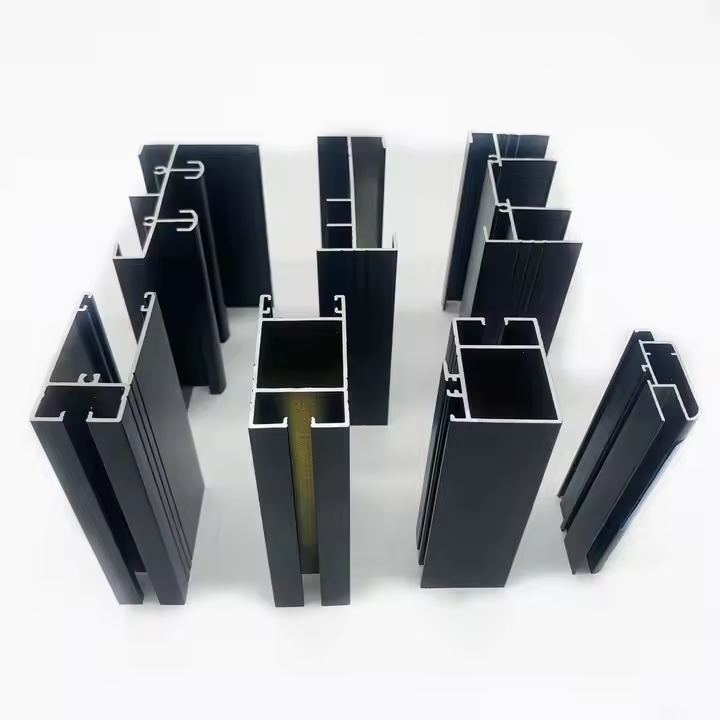
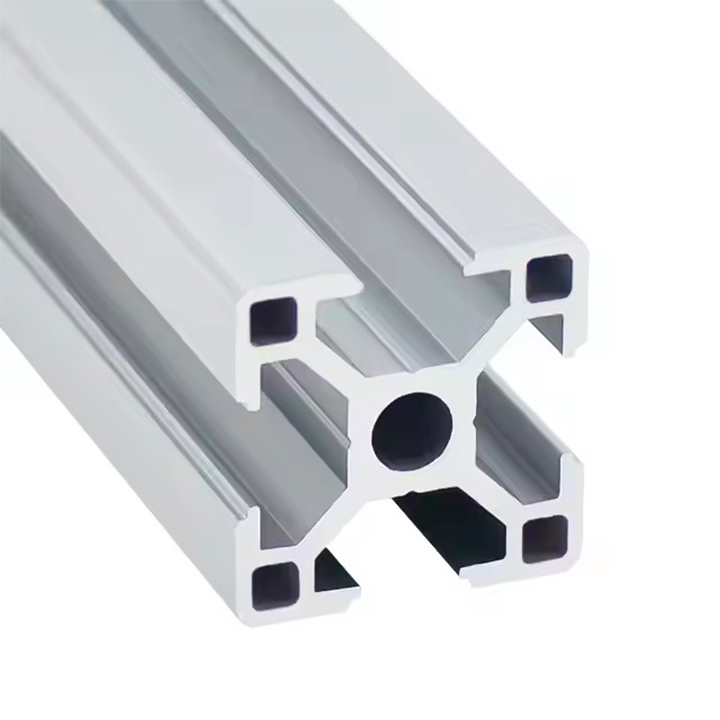
Custom aluminum extrusion is widely used to manufacture application-specific profiles for industrial equipment, architectural systems, furniture, electronics, and other products.
However, not every project requires thousands of kilograms of aluminum profiles.
Some buyers need only a limited quantity for prototype development, product testing, pilot production, replacement components, or specialized equipment.
This creates an important purchasing question:
Can custom aluminum extrusions be manufactured in small quantities?
The answer is yes in some circumstances, but low-volume extrusion projects require careful planning. Feasibility depends on the profile design, aluminum alloy, tooling availability, production scheduling, surface finishing, and supplier requirements.
Small-batch custom aluminum extrusion is not simply a smaller version of mass production. Fixed tooling and setup costs can represent a larger share of the total order.
This guide explains how low-volume custom aluminum extrusion works, what affects minimum order quantities, how tooling costs influence pricing, and how buyers can source small batches more effectively.
It is intended for product developers, engineers, manufacturers, fabricators, importers, and purchasing teams evaluating custom aluminum profiles for limited-volume applications.
1. What Is Low-Volume Custom Aluminum Extrusion?
Low-volume custom aluminum extrusion refers to manufacturing relatively small quantities of aluminum profiles with application-specific cross-sectional designs.
Unlike standard catalog profiles, custom extrusions may require dedicated tooling and engineering review.
The term "low volume" does not have a universal quantity definition.
For one manufacturer, a small order may mean a few hundred kilograms. For another, the same quantity may be below its normal production requirements.
Order size must therefore be evaluated in relation to the supplier's capabilities and the specific project.
Common Low-Volume Applications
Small-batch aluminum extrusion is often considered for:
New product development
Prototype validation
Pilot production
Industrial equipment components
Specialized machinery
Custom furniture systems
Limited-production products
Replacement parts
Research and development projects
These applications may require custom geometry without immediately justifying large-volume purchasing.
Low-Volume Extrusion vs Standard Profile Purchasing
Buying a small quantity of an existing aluminum profile is different from producing a new custom extrusion.
An existing profile may already have an available die and established production specifications.
A new custom design may require tooling development, trial extrusion, and sample approval.
| Consideration | Existing standard profile | New custom extrusion |
|---|---|---|
| Cross-section | Established design | Application-specific design |
| New die | Often unnecessary if suitable tooling exists | Usually required |
| Initial engineering | May be limited | Design feasibility review needed |
| Sampling | Existing product samples may be available | Trial extrusion may be required |
| Minimum order | Depends on availability and supplier | Depends on tooling and production conditions |
| Design flexibility | Limited | Greater flexibility |
Before developing a new die, buyers should determine whether an existing profile can meet their requirements.
Explore our guide to aluminum extrusion profile types and sizes for an overview of common shapes.
2. Why Do Aluminum Extrusion Manufacturers Have MOQs?
MOQ stands for minimum order quantity.
In aluminum extrusion manufacturing, MOQ is often related to production efficiency rather than simply the supplier's willingness to accept smaller customers.
Extrusion production involves several activities that may not decrease proportionally with order size.
These can include:
Material preparation
Extrusion die installation
Press setup
Production scheduling
Trial and process adjustments
Cooling and handling
Cutting and inspection
Surface finishing preparation
Packaging
When production quantities are small, these activities can account for a relatively large portion of the unit cost.
Production Setup Costs
An extrusion press must be prepared for the relevant alloy, die, and production requirements.
A small production run may involve setup work similar to that of a larger run.
This can make short runs less economical.
Raw Material and Billet Requirements
Aluminum extrusion production uses billets selected for the required alloy and processing conditions.
The supplier must coordinate material availability and production scheduling.
Special alloy requirements or unusual profile dimensions may reduce scheduling flexibility.
Surface Finishing Minimums
A project may satisfy the extrusion manufacturer's production requirements but still face minimum quantities for anodizing or powder coating.
Finishing facilities may have separate batch, color, or process constraints.
Therefore, buyers should ask about MOQ for both extrusion and finishing.
Processing and Packaging Requirements
Custom cutting, machining, or special packaging may introduce additional setup requirements.
The final MOQ may depend on the complete finished-product specification.
3. Is There a Standard MOQ for Custom Aluminum Extrusion?
There is no universal MOQ for custom aluminum extrusion.
Minimum quantities vary according to:
Manufacturer
Profile geometry
Alloy and temper
Die availability
Surface finishing
Secondary processing
Production scheduling
Commercial arrangements
Some suppliers may accept smaller projects under specific conditions.
Others may require larger quantities to make production economically practical.
MOQ by Weight vs MOQ by Length
Aluminum extrusion orders may be measured in kilograms, metric tons, meters, or pieces.
For example, a manufacturer may express its production requirement by total weight, while a buyer thinks in terms of finished pieces.
These quantities are connected through the profile's weight per meter.
Example: Converting Weight Into Pieces
Consider a hypothetical aluminum profile with the following specifications:
| Item | Example |
|---|---|
| Profile weight | 0.80 kg/m |
| Finished length | 2 meters |
| Weight per piece | 1.60 kg |
| Target order weight | 500 kg |
The approximate number of finished pieces would be:
500 kg ÷ 1.60 kg/piece = 312.5 pieces
This means approximately 313 pieces would correspond to the target weight before accounting for production yield, cutting losses, and other practical considerations.
This is a calculation example, not an Aluleader MOQ or production commitment.
Actual order quantities should be confirmed with the manufacturer.
Why Profile Weight Matters
A heavy industrial profile may reach a supplier's minimum production weight with relatively few pieces.
A lightweight decorative profile may require many more pieces to reach the same total weight.
For this reason, comparing MOQ by piece count alone can be misleading.
4. Can You Order Custom Aluminum Extrusions Without a New Die?
Possibly.
If the supplier already has a die that produces a suitable cross-section, the buyer may be able to use an existing profile.
However, the profile must meet the project's technical requirements, and the tooling must be available for the intended use.
When Existing Tooling May Work
An existing die may be suitable when:
The cross-sectional geometry matches the requirement
Critical dimensions are acceptable
The alloy and temper are suitable
Surface finishing requirements can be met
The profile is compatible with the intended assembly
The tooling can be used under the supplier's commercial arrangements
Similar Does Not Mean Identical
Two profiles may appear similar but have different internal dimensions, wall thicknesses, or connection features.
For example, a channel that is only slightly narrower than required may prevent a mating panel from fitting.
Buyers should request technical drawings before approving a substitute profile.
Using a Standard Profile With Secondary Machining
Sometimes an existing extrusion can be modified through:
Cutting
Drilling
Milling
Tapping
Slotting
Other suitable machining operations
This approach may avoid the initial cost of a new extrusion die.
However, secondary machining introduces its own costs.
The total cost should be compared with a new custom extrusion rather than assuming that modifying a standard profile is always cheaper.
5. How Much Does Low-Volume Aluminum Extrusion Tooling Cost?
New custom aluminum extrusion profiles generally require suitable extrusion tooling.
Tooling cost depends on the profile's geometry and manufacturing requirements.
Important factors include:
Cross-sectional dimensions
Solid, hollow, or semi-hollow geometry
Number of internal chambers
Wall thickness distribution
Narrow slots and detailed features
Required dimensional tolerances
Alloy selection
Trial extrusion and die adjustments
There is no single reliable tooling price that applies to every design.
Why Tooling Has a Bigger Impact on Small Orders
A tooling charge is often paid at the beginning of a custom extrusion project.
When only a small number of profiles are purchased, this initial expense represents a larger amount per piece.
Example: Tooling Cost per Piece
Assume a hypothetical custom extrusion die costs USD 900.
| Production quantity | Tooling cost allocated per piece |
|---|---|
| 100 pieces | USD 9.00 |
| 300 pieces | USD 3.00 |
| 1,000 pieces | USD 0.90 |
| 3,000 pieces | USD 0.30 |
These figures illustrate how tooling cost allocation changes with quantity.
They are not actual tooling quotations.
The table also assumes the same initial tooling charge across the different production scenarios.
Actual costs may change with design modifications, tooling replacement, and production requirements.
Is Tooling a One-Time Investment?
A custom extrusion die may be reused for subsequent production orders.
However, reuse depends on the die's condition, design requirements, and commercial arrangements.
Before paying a tooling charge, clarify:
Die ownership
Tooling storage
Maintenance responsibilities
Modification charges
Replacement arrangements
Future reorder conditions
A buyer should not assume that paying a tooling fee guarantees unlimited production or unrestricted ownership.
For a more detailed explanation, see our custom aluminum extrusion cost and tooling guide.
6. What Makes Small-Batch Aluminum Extrusion More Expensive?
Small-batch production can have a higher unit cost because certain expenses are spread across fewer products.
Tooling Amortization
When a new die is required, its cost may represent a significant share of the first order.
Production Setup
Press preparation, die changes, and other production activities may be necessary regardless of whether the order is small or large.
Manufacturing Yield
The amount of saleable finished product may be lower than the total material introduced into production.
Yield depends on profile geometry, process conditions, cutting requirements, and quality acceptance criteria.
Finishing Batch Requirements
Anodizing or powder coating small quantities may involve additional setup or minimum-batch considerations.
Secondary Processing
Custom machining and inspection may require dedicated setup or fixtures.
Administrative and Logistics Costs
Order handling, documentation, packaging, and international shipping can represent a larger percentage of a small order's value.
Understanding Total Cost
The relevant purchasing question is not simply:
"How much does one kilogram of aluminum extrusion cost?"
It is:
"What is the total cost of obtaining the required number of acceptable finished profiles?"
This includes the necessary tooling, processing, inspection, packaging, and delivery arrangements.
7. How to Reduce the Cost of Low-Volume Custom Aluminum Extrusion
There are several ways to make a small-volume project more economical.
However, cost reduction should not compromise essential product requirements.
1. Check Existing Profile Options
Before opening a new die, determine whether a standard or existing custom profile can be used.
A suitable existing profile may reduce initial tooling requirements.
2. Simplify the Cross-Section
Complex internal chambers, narrow openings, and large wall thickness variations may increase extrusion difficulty.
Where practical, simplify the geometry.
3. Avoid Unnecessary Tight Tolerances
Identify critical dimensions and apply appropriate tolerances.
Unnecessarily strict requirements may increase manufacturing and inspection costs.
4. Select a Suitable Alloy
Choose an alloy and temper that meet the application's needs and are practical to extrude.
A higher-strength alloy is not always necessary.
5. Consider Standard Finishes
Special colors or finishing requirements may increase setup complexity.
Where appearance requirements allow, discuss commonly available finishing options.
6. Minimize Secondary Machining
Review whether the design can reduce drilling, milling, or other operations.
However, do not make the extrusion die unnecessarily complex merely to eliminate a simple machining step.
7. Plan Repeat Orders
If future demand is expected, provide the manufacturer with an estimated purchasing forecast.
This may help with tooling and production planning.
A forecast is not a guaranteed purchase commitment unless agreed contractually.
8. Compare Different Manufacturing Approaches
For very small quantities, machining an existing aluminum section or another manufacturing process may be more economical than opening a new extrusion die.
The correct choice depends on geometry, quantity, material requirements, and functional performance.
8. Prototype vs Pilot Production vs Small-Batch Manufacturing
These terms are related but describe different stages of product development.
Prototype Development
A prototype is used to evaluate design, fit, or function.
Depending on the project, prototypes may be produced through machining, additive manufacturing, or trial extrusion.
Not every prototype needs to be made using the final production process.
However, a prototype made by a different method may not reproduce all characteristics of an actual extrusion.
Pilot Production
Pilot production is a limited production run intended to evaluate the product and manufacturing process before larger-scale production.
It may be used to check:
Dimensional consistency
Assembly performance
Surface finish
Processing requirements
Quality control procedures
Small-Batch Commercial Production
Small-batch production refers to manufacturing limited quantities of finished products for actual use or sale.
The process may use approved extrusion tooling and established specifications.
Comparison
| Stage | Main purpose | Typical considerations |
|---|---|---|
| Prototype | Validate design and function | Speed, design changes, sample method |
| Pilot production | Validate production and assembly | Tooling, process capability, inspection |
| Small-batch production | Supply limited commercial demand | MOQ, unit cost, repeatability |
Understanding these stages helps buyers select an appropriate sourcing approach.
9. Alternative Manufacturing Methods for Very Small Quantities
When the required quantity is extremely small, custom extrusion may not be the most economical manufacturing method.
Alternative approaches may include machining, fabrication, or additive manufacturing.
CNC Machining
CNC machining can produce components from aluminum bars, plates, or other available stock.
It may be useful when:
Only a few parts are required
Geometry can be machined economically
Design changes are expected
New extrusion tooling would be difficult to justify
However, machining may waste more material and require more processing time for some shapes.
Fabrication From Standard Profiles
A component may be assembled from existing aluminum sections using suitable mechanical connections or welding.
This can avoid new extrusion tooling.
However, additional assembly operations may affect cost, appearance, and performance.
Metal Additive Manufacturing
Metal additive manufacturing may be suitable for selected complex or low-quantity components.
However, material properties, surface finish, dimensional accuracy, equipment availability, and cost must be evaluated.
It should not automatically be considered a direct replacement for aluminum extrusion.
When Does Custom Extrusion Become More Economical?
Custom extrusion may become attractive when:
The cross-section is used repeatedly
Multiple features can be integrated into one profile
Secondary machining can be reduced
The design is stable
Expected production quantities justify tooling
The break-even quantity depends on actual quotations for the competing manufacturing methods.
10. How Profile Design Influences Small-Batch Production
A well-designed cross-section can improve the feasibility of low-volume extrusion.
Wall Thickness
Wall thickness affects profile weight and extrusion difficulty.
Thin walls may reduce material consumption but can create manufacturing challenges.
There is no universal minimum wall thickness suitable for every profile.
Hollow and Semi-Hollow Geometry
Hollow sections may require more complex tooling than simple solid profiles.
For small orders, this tooling complexity can have a greater effect on total cost.
Critical Dimensions
Identify dimensions that directly affect assembly.
Avoid imposing unnecessary precision on noncritical features.
Surface Finish
Visible surfaces may require additional preparation and inspection.
Clearly communicate cosmetic requirements.
Assembly Features
Integrated grooves, screw ports, and mounting channels can reduce downstream assembly operations.
However, these features must be practical to extrude.
For technical design recommendations, read our custom aluminum extrusion design guide.
11. How to Choose a Supplier for Low-Volume Aluminum Extrusions
Not every aluminum extrusion manufacturer is equally suited to small-volume custom projects.
A supplier experienced in large-volume standard profiles may have different production priorities from one that accepts specialized development work.
Evaluate Technical Capabilities
Ask whether the supplier can review your drawing and identify manufacturing concerns.
A useful technical review may address:
Alloy selection
Wall thickness
Hollow geometry
Tooling feasibility
Critical tolerances
Surface finishing
Secondary processing
Confirm Minimum Order Requirements
Ask for the MOQ associated with your actual profile and finishing requirements.
Do not rely solely on a general MOQ advertised on a website.
Clarify Tooling Arrangements
Confirm tooling charges, ownership terms, maintenance, and future reorder conditions.
Discuss Sampling
Ask how initial samples are produced and approved.
For a new custom die, clarify whether trial extrusion and die adjustments are included in the agreed scope.
Review Quality Control
Small orders still require appropriate dimensional and quality control.
The inspection requirements should match the product's intended use.
Evaluate Communication
Small custom projects may involve design revisions and technical questions.
Clear communication can help prevent costly misunderstandings.
For a broader procurement checklist, read our guide to evaluating aluminum extrusion manufacturers.
12. How to Request a Low-Volume Custom Aluminum Extrusion Quotation
A clear request for quotation helps the manufacturer determine whether the project is feasible.
Include the following information where available.
| RFQ item | Recommended information |
|---|---|
| Profile drawing | 2D drawing or 3D CAD model |
| Alloy | Required aluminum grade |
| Temper | Required material condition |
| Dimensions | Cross-section, wall thickness, length |
| Tolerances | Critical dimensions and general requirements |
| Surface finish | Mill finish, anodizing, powder coating, etc. |
| Initial quantity | Required first-order quantity |
| Future demand | Estimated repeat order volume |
| Processing | Cutting, drilling, tapping, CNC machining |
| Application | Intended product or assembly |
| Inspection | Required testing or documentation |
| Destination | Delivery country and shipping terms |
Explain Why the Quantity Is Small
If the order is intended for prototype validation or pilot production, explain this to the supplier.
The manufacturer may be able to suggest a suitable production or development approach.
However, alternative arrangements depend on the supplier's actual capabilities.
Ask for Separate Cost Components
Where practical, request separate quotations for:
Extrusion tooling
Initial production
Surface finishing
Secondary machining
Samples
Packaging and transportation
This makes it easier to understand the cost of the initial project and potential repeat orders.
Confirm Future Reorder Conditions
If you expect recurring purchases, clarify whether the same tooling and specifications can be used.
Also confirm whether changes to the drawing will require new tooling or additional charges.
13. Example: Comparing Low-Volume Manufacturing Options
Consider a hypothetical project requiring 150 custom aluminum components.
The buyer is evaluating three possible approaches.
Option A: New Custom Extrusion Die
This option may involve:
Initial tooling investment
Trial extrusion
Production of the required quantity
Cutting and finishing
It may become more economical if the same profile will be reordered regularly.
Option B: Machining an Existing Aluminum Section
This option may avoid a new extrusion die.
However, machining time and material waste may increase the unit cost.
It may be attractive when only a few components are needed.
Option C: Using a Similar Standard Profile
This option may reduce tooling and machining requirements if an existing profile can meet the functional needs.
However, dimensional compatibility must be verified.
Comparison
| Consideration | New custom extrusion | CNC machining | Existing standard profile |
|---|---|---|---|
| New extrusion die | Usually required | Not required | Usually not required |
| Design flexibility | High for constant cross-sections | High within machining limits | Limited |
| Initial setup | Tooling and trial production | Programming and machining setup | Depends on modifications |
| Repeat production | Can become economical | Depends on machining time | Depends on availability |
| Best suited for | Repeated custom cross-sections | Very small quantities or complex local features | Applications compatible with existing shapes |
No option is always cheapest.
The correct decision requires comparing actual costs for the specified design and quantity.
14. Common Mistakes When Ordering Small-Batch Aluminum Extrusions
Mistake 1: Assuming Every Manufacturer Accepts Small Orders
Production minimums vary.
Confirm MOQ for the actual profile before planning the project.
Mistake 2: Ignoring Tooling Costs
A low unit price may not reflect the initial die investment.
Evaluate the complete first-order cost.
Mistake 3: Designing an Unnecessarily Complex Profile
Complex geometry can increase tooling difficulty and development costs.
Simplify the design where practical.
Mistake 4: Treating Prototype and Production Costs as Identical
Prototype development and commercial production may involve different processes and charges.
Request separate pricing where appropriate.
Mistake 5: Failing to Specify the Temper
The alloy designation alone may not fully define the required material properties.
Include the necessary temper and material specification.
Mistake 6: Requesting Unnecessarily Tight Tolerances
Excessive precision may increase manufacturing difficulty.
Focus on critical dimensions.
Mistake 7: Assuming Tooling Ownership
Tooling arrangements vary by supplier.
Confirm ownership and future use in writing.
Mistake 8: Ordering Without Sample Validation
For a new custom extrusion, samples can help identify dimensional or assembly issues before commercial production.
15. Frequently Asked Questions
Can aluminum extrusion be done in small quantities?
Yes, some manufacturers can accommodate small-volume extrusion projects. Feasibility depends on tooling, profile design, alloy, production scheduling, finishing, and supplier requirements.
What is the minimum order quantity for custom aluminum extrusion?
There is no universal MOQ. Manufacturers may establish different minimum quantities depending on the profile and production requirements. Buyers should request a project-specific quotation.
Can I order 100 pieces of custom aluminum extrusion?
It may be possible, but acceptance depends on the profile's weight, tooling requirements, manufacturing process, and supplier. A 100-piece order of a heavy profile differs significantly from 100 pieces of a lightweight profile.
Do I need a new die for a small custom aluminum extrusion order?
A new cross-sectional design generally requires suitable tooling. If an existing die matches the required specifications and is available for use, new tooling may not be necessary.
Is low-volume custom aluminum extrusion expensive?
Small orders may have higher unit costs because tooling, setup, and other fixed expenses are spread across fewer products. The total cost depends on the design and manufacturing requirements.
Can I get samples before placing a larger order?
Sample arrangements vary by supplier. For a new custom extrusion die, trial samples may be produced for dimensional and functional approval before mass production.
What is the difference between a prototype and a production extrusion?
A prototype is intended to validate design or function. A production extrusion is manufactured under the agreed production process and specifications. A prototype made by another method may not reproduce all characteristics of the final extrusion.
Can 6061 aluminum be used for low-volume custom extrusion?
6061 can be used for custom extrusions, subject to geometry, tooling, temper, and manufacturing feasibility. Some complex shapes may be more difficult to extrude in 6061 than in 6063.
Can small-batch aluminum profiles be anodized or powder coated?
Yes, depending on the supplier and finishing process. However, finishing facilities may have separate batch requirements or minimum charges.
How can I reduce tooling cost for a small order?
Consider existing dies, simpler profile geometry, standard sections with machining, or other manufacturing approaches. The best solution depends on the project requirements.
Is CNC machining better than custom extrusion for small quantities?
It can be for certain low-volume projects, particularly when new extrusion tooling would be difficult to justify. However, the decision depends on geometry, machining time, material usage, and expected repeat orders.
How do I find a supplier for low-MOQ custom aluminum extrusions?
Provide your drawing, material requirements, quantity, finishing needs, and future demand estimate. Ask suppliers to confirm feasibility, MOQ, tooling charges, sampling arrangements, and repeat-order terms.
Conclusion: Plan Low-Volume Aluminum Extrusion Around Total Project Cost
Low-volume custom aluminum extrusion can be a practical manufacturing option for product development, specialized equipment, and limited-production applications.
However, small orders require careful evaluation of tooling, setup, production efficiency, finishing, and total procurement cost.
There is no universal minimum order quantity or tooling charge that applies to every project.
The most economical approach may involve a new custom extrusion, an existing profile, machining, or another manufacturing method.
The best decision is based on the required geometry, quantity, performance, and expected future demand—not simply the lowest advertised MOQ.
By providing clear drawings and discussing production requirements early, buyers can improve quotation accuracy and identify a practical sourcing strategy.
Discuss Your Custom Aluminum Profile Requirements With ALULEADER
If you are developing a custom aluminum profile for industrial, architectural, furniture, or other manufacturing applications, ALULEADER can be contacted to discuss your project requirements.
Explore our product categories:
For more information about custom extrusion pricing, see our aluminum extrusion cost and tooling guide.
Send your CAD drawing, required alloy and temper, dimensions, estimated initial quantity, and future demand to ALULEADER for a project-specific feasibility and quotation review.