Welcome to Aluleader Metal
Aluminum vs Galvanized Steel: Strength, Weight & Cost
Aluminum and galvanized steel are two widely used materials in construction, industrial equipment, structural frames, transportation, and manufacturing.
Both materials can provide reliable performance, but their properties differ significantly.
Aluminum is valued for its relatively low weight, corrosion resistance, and ability to be manufactured into complex extruded profiles.
Galvanized steel combines the mechanical characteristics of steel with a protective zinc coating that helps reduce corrosion.
For engineers and purchasing managers, choosing between aluminum and galvanized steel requires more than comparing material prices.
The better material depends on structural requirements, weight limitations, environmental exposure, manufacturing methods, maintenance expectations, and total lifecycle cost.
This guide compares aluminum and galvanized steel in terms of strength, stiffness, weight, corrosion resistance, cost, fabrication, and common applications.
It also explains when aluminum extrusion profiles may offer advantages over galvanized steel components.
1. What Is the Difference Between Aluminum and Galvanized Steel?
Aluminum and galvanized steel differ in both material composition and corrosion protection.
What Is Aluminum?
Aluminum is a lightweight metal used in a wide range of engineering and manufacturing applications.
Commercial aluminum products are commonly manufactured from different alloys to achieve specific mechanical and processing characteristics.
Examples include:
6063 aluminum
6061 aluminum
6005A aluminum
Aluminum can be processed into sheets, plates, castings, and extruded profiles.
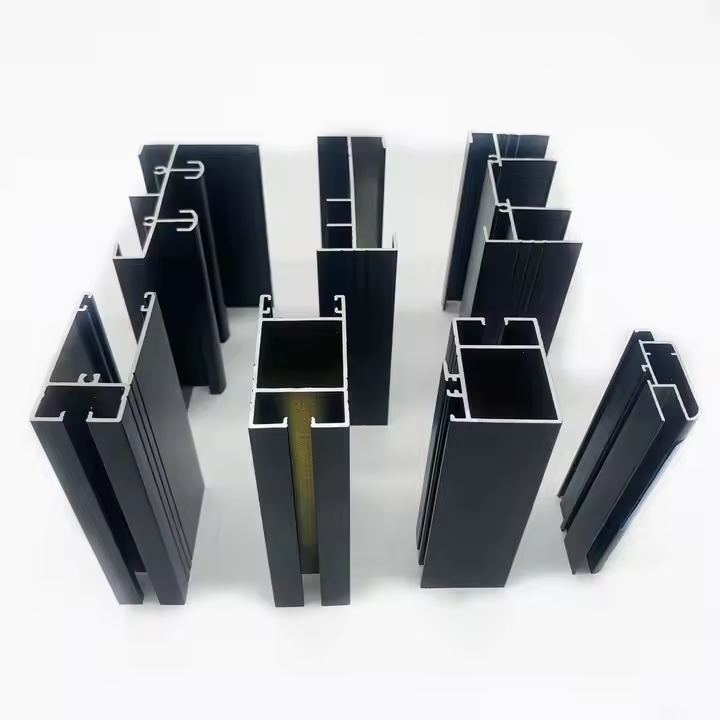
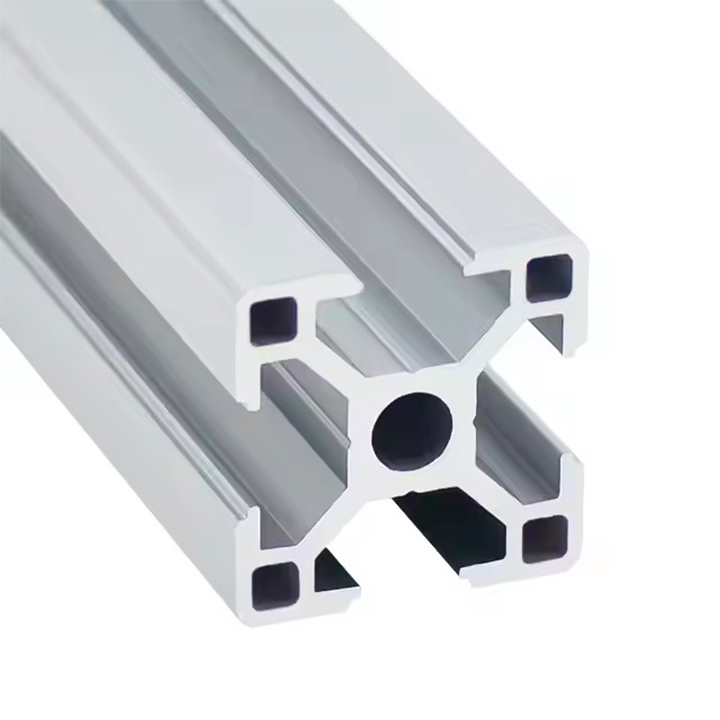
Extrusion is particularly useful for producing components with consistent cross-sectional shapes, such as channels, tubes, structural profiles, and custom frames.
Aluminum naturally forms a thin oxide layer when exposed to air.
This oxide layer contributes to corrosion resistance in many environments.
However, aluminum is not immune to corrosion, especially under aggressive exposure conditions or unfavorable assembly designs.
What Is Galvanized Steel?
Galvanized steel is steel that has been coated with zinc to provide corrosion protection.
The underlying steel provides the component's primary mechanical properties.
The zinc coating helps protect the steel through barrier protection and sacrificial corrosion behavior.
Common galvanizing processes include:
Hot-dip galvanizing
Continuous sheet galvanizing
Electrogalvanizing
These processes produce different coating characteristics and are not interchangeable for every application.
The expected corrosion performance depends on coating thickness, coating quality, environmental exposure, and fabrication details.
Key Material Difference
Aluminum's corrosion resistance is largely associated with its naturally formed oxide film.
Galvanized steel relies on a zinc coating to protect the underlying steel.
Both systems can perform well when correctly specified for the intended environment.
2. Aluminum vs Galvanized Steel: Quick Comparison
The following table summarizes the main differences.
| Property | Aluminum | Galvanized steel |
|---|---|---|
| Base material | Aluminum alloy | Steel with zinc coating |
| Typical density | Approximately 2.7 g/cm³ | Approximately 7.85 g/cm³ for the steel substrate |
| Elastic modulus | Approximately 69–70 GPa | Approximately 200 GPa |
| Strength | Depends on alloy and temper | Depends on steel grade |
| Corrosion protection | Natural oxide film; optional finishing | Protective zinc coating |
| Weight | Relatively lightweight | Significantly heavier at equal volume |
| Fabrication | Extrusion, machining, forming, welding | Forming, cutting, welding, fabrication |
| Complex constant cross-sections | Well suited to extrusion | Often requires alternative forming or assembly methods |
| Surface finishing | Anodizing, powder coating, other treatments | Galvanizing, painting, duplex systems |
| Maintenance | Depends on environment and finish | Depends on zinc coating and exposure |
| Material price | Often higher per kilogram | Often lower per kilogram |
| Lifecycle cost | Application-dependent | Application-dependent |
Important: This table provides a general comparison. Actual strength, corrosion performance, cost, and service life depend on the specific materials and specifications.
3. Aluminum vs Galvanized Steel: Which Is Stronger?
Strength is one of the most common factors considered when comparing aluminum and galvanized steel.
However, the question "Which material is stronger?" cannot be answered accurately without identifying the alloy, steel grade, product geometry, and loading conditions.
Understanding Material Strength
Two important mechanical properties are:
Yield strength: The stress associated with the onset of specified permanent deformation.
Ultimate tensile strength: The maximum engineering tensile stress reached during a tensile test.
Different aluminum alloys and steel grades have different strength values.
Aluminum Strength
Aluminum alloys can achieve a wide range of mechanical properties.
For example, 6061-T6 is commonly used in industrial and structural applications.
Representative tensile strength values for 6061-T6 are often around 290–310 MPa, although specified minimum properties vary with product form, dimensions, and applicable standards.
Other aluminum alloys and tempers may have substantially different properties.
Galvanized Steel Strength
Galvanizing does not define the steel's strength grade.
A galvanized steel component may be made from low-carbon sheet steel, structural steel, or another specified steel grade.
The strength depends primarily on the underlying steel and its processing condition.
The zinc coating is intended mainly for corrosion protection, not to provide the primary structural strength.
Strength Comparison
| Consideration | Aluminum | Galvanized steel |
|---|---|---|
| Yield strength | Varies by alloy and temper | Varies by steel grade |
| Tensile strength | Varies by alloy and temper | Varies by steel grade |
| Elastic modulus | Lower | Higher |
| Structural performance | Strongly influenced by profile geometry | Strongly influenced by section geometry |
| Strength-to-weight potential | Useful in lightweight designs | Depends on grade and geometry |
Many structural steels have higher strength than common architectural aluminum alloys.
However, some strengthened aluminum alloys can provide useful strength for engineered structural components.
A valid comparison should use the actual material grades and product specifications.
Why Cross-Sectional Design Matters
An aluminum profile can be designed with ribs, chambers, flanges, and other features to improve structural performance.
A well-designed aluminum extrusion may provide suitable stiffness or load capacity while remaining relatively lightweight.
However, structural performance must be evaluated using the complete component geometry.
Material strength alone does not determine whether an aluminum or steel structure is suitable for an application.
4. Aluminum vs Galvanized Steel: Weight Comparison
Weight is one of the clearest differences between aluminum and galvanized steel.
The density of common aluminum alloys is approximately 2.7 g/cm³.
The density of carbon steel is approximately 7.85 g/cm³.
This means aluminum has approximately 34% of the density of steel.
In other words, aluminum is approximately 66% lighter than steel when comparing equal volumes of material.
Example: Equal-Volume Weight Comparison
Consider two components with an identical material volume of 1,000 cm³.
| Material | Approximate density | Calculated weight |
|---|---|---|
| Aluminum | 2.70 g/cm³ | 2.70 kg |
| Steel | 7.85 g/cm³ | 7.85 kg |
The aluminum component would weigh approximately 5.15 kg less.
This example compares equal material volumes, not equally strong or equally stiff structures.
The zinc coating adds some weight to galvanized steel, but the actual amount depends on coating thickness and component geometry.
Why Weight Matters
Reducing component weight can be useful for:
Transportation equipment
Moving machinery
Portable structures
Modular frames
Handling and installation
Weight-sensitive assemblies
Lighter components may also reduce handling effort and certain transportation costs.
However, the benefit depends on the complete product and logistics arrangement.
Weight vs Structural Stiffness
Aluminum's lower density does not mean it can always replace steel at identical dimensions.
Because aluminum has a lower elastic modulus, a component may require a different cross-section to achieve comparable stiffness.
For some applications, the aluminum section may need to be larger or differently shaped.
Therefore, engineers should compare designs that meet the same performance requirements rather than simply replacing steel with aluminum of identical dimensions.
5. Aluminum vs Galvanized Steel: Corrosion Resistance
Corrosion resistance is an important consideration for outdoor structures, industrial equipment, architectural components, and products exposed to moisture.
Both aluminum and galvanized steel can provide corrosion resistance, but they rely on different protective mechanisms.
How Aluminum Resists Corrosion
Aluminum naturally forms an oxide film on its surface.
Under many conditions, this film helps protect the underlying metal.
However, corrosion may still occur in environments involving:
High chloride exposure
Aggressive chemicals
Crevices that retain moisture
Contact with dissimilar metals
Unfavorable drainage conditions
Aluminum corrosion performance also depends on the alloy and surface treatment.
How Galvanized Steel Resists Corrosion
Galvanized steel uses a zinc coating to protect the underlying steel.
Zinc provides barrier protection and can offer sacrificial protection in certain conditions.
As the coating is consumed over time, its ability to protect the underlying steel can decrease.
The service life of galvanized steel depends on:
Zinc coating thickness
Environmental corrosivity
Exposure conditions
Fabrication and installation details
Maintenance practices
What Happens When the Surface Is Scratched?
For aluminum, damage to a decorative coating does not automatically mean the base metal will immediately suffer severe corrosion.
The exposed aluminum can form an oxide film, although its performance depends on the environment.
For galvanized steel, the surrounding zinc may provide sacrificial protection to certain exposed areas.
However, the extent of protection depends on the size of the exposed area and environmental conditions.
Neither material should be considered completely corrosion-proof.
Outdoor Corrosion Comparison
| Environment | Aluminum considerations | Galvanized steel considerations |
|---|---|---|
| Typical indoor environment | Often suitable | Often suitable |
| General outdoor exposure | Alloy and finish selection matter | Zinc coating specification matters |
| Coastal environment | Chloride exposure and localized corrosion require evaluation | Zinc consumption and coating life require evaluation |
| Industrial atmosphere | Chemical exposure must be assessed | Coating corrosion rate must be assessed |
| Wet or poorly drained joints | Crevice and galvanic corrosion may be concerns | Moisture retention and coating degradation may be concerns |
The appropriate material depends on the actual exposure conditions.
For demanding environments, consult relevant corrosion specifications and engineering guidance.
6. Which Material Lasts Longer Outdoors?
There is no universal service-life figure for aluminum or galvanized steel.
Actual performance depends on environmental exposure, product design, material specifications, protective treatments, and maintenance.
Aluminum Service Life
Aluminum can provide long service life in many architectural and industrial applications.
However, the outcome depends on:
Alloy selection
Surface finish
Environmental conditions
Connection design
Drainage
Maintenance
Anodizing or powder coating may be specified for additional surface performance or appearance requirements.
Galvanized Steel Service Life
Galvanized steel service life depends heavily on the zinc coating and exposure environment.
A thicker, properly specified zinc coating may provide longer protection than a thinner coating under otherwise comparable conditions.
However, exact performance cannot be determined from the term "galvanized steel" alone.
Maintenance Requirements
Both materials benefit from appropriate inspection and maintenance.
For aluminum, maintenance may focus on cleaning, surface finish condition, and joint integrity.
For galvanized steel, inspection may include coating condition, corrosion, and areas where zinc protection has been damaged or depleted.
Consider Lifecycle Cost
When comparing materials, consider:
Initial purchase price
Fabrication and installation
Transportation
Surface treatment
Maintenance
Repair
Replacement
Expected service conditions
The material with the lowest initial cost is not necessarily the lowest-cost option over the product's service life.
7. Aluminum vs Galvanized Steel Cost Comparison
Cost is a major factor in material selection.
However, comparing only the price per kilogram can be misleading.
Aluminum and steel have different densities, manufacturing methods, and processing requirements.
Raw Material Cost
Steel is often less expensive than aluminum on a per-kilogram basis.
However, market prices vary over time.
Actual procurement prices depend on:
Material grade
Product form
Order quantity
Supplier
Market conditions
Processing requirements
Delivery destination
Cost per Meter or Component
Because aluminum is lighter than steel, comparing prices per kilogram does not directly show the cost of an equivalent component.
For example, an aluminum profile may cost more per kilogram but require less total material weight than a steel component of equal volume.
However, equal-volume components do not necessarily provide equal mechanical performance.
Fabrication Costs
Aluminum extrusion can produce complex constant cross-sections directly.
This may reduce the need to assemble multiple separate parts.
Galvanized steel components may be manufactured through rolling, forming, welding, or other fabrication methods.
The more economical process depends on the product geometry and production quantity.
Tooling Costs
Custom aluminum extrusion often requires a dedicated die.
This can create an initial tooling expense.
For repeat production, the tooling investment may be distributed across a larger number of components.
Steel fabrication may involve different tooling and setup costs.
Surface Treatment Costs
Aluminum may be supplied with mill finish, anodizing, or powder coating.
Galvanized steel includes a zinc coating, but additional painting or protective treatments may be specified.
These finishing costs should be included in the comparison.
Total Cost Comparison
| Cost factor | Aluminum | Galvanized steel |
|---|---|---|
| Raw material per kg | Often higher | Often lower |
| Material weight | Lower for equal volume | Higher for equal volume |
| Complex cross-section manufacturing | Extrusion can be advantageous | May require additional fabrication |
| Initial custom tooling | Extrusion die may be required | Depends on fabrication method |
| Surface protection | Depends on alloy and finish | Zinc coating is central |
| Shipping and handling | Lower weight may be beneficial | Greater weight may affect handling |
| Maintenance | Application-dependent | Application-dependent |
| Total lifecycle cost | Requires project-specific analysis | Requires project-specific analysis |
For a detailed explanation of extrusion-related pricing, see our custom aluminum extrusion cost guide.
8. Aluminum vs Galvanized Steel: Manufacturing and Fabrication
Manufacturing requirements can strongly influence material selection.
Aluminum Extrusion
Aluminum extrusion is well suited to products requiring a consistent cross-sectional shape.
Examples include:
Industrial structural profiles
Channels
Tubes
Window and door sections
Equipment frames
Furniture profiles
Custom mounting components
The extrusion process allows designers to integrate features such as grooves, ribs, and internal chambers.
This may reduce downstream machining or assembly.
Galvanized Steel Fabrication
Galvanized steel products may be produced using processes such as:
Roll forming
Bending
Cutting
Welding
Mechanical assembly
The process sequence matters.
For example, fabrication after galvanizing can affect coating continuity at cut edges or welded areas.
Some assemblies are fabricated first and hot-dip galvanized afterward, depending on their design and requirements.
Machining Considerations
Both aluminum and steel can be machined.
Machining performance depends on the specific alloy or steel grade, product condition, tooling, and process parameters.
Welding Considerations
Both materials can be welded using suitable procedures.
However, important differences exist.
Aluminum welding: Welding can change local mechanical properties, particularly in precipitation-hardened alloys such as 6061-T6.
Galvanized steel welding: Zinc coatings introduce additional welding considerations, including fumes and coating effects. Appropriate procedures, ventilation, exposure controls, and coating restoration may be necessary.
Welding should be performed under suitable technical and safety procedures.
9. Aluminum vs Galvanized Steel for Structural Frames
Structural frames are used in machinery, construction, equipment supports, and industrial systems.
Both aluminum and galvanized steel can be appropriate depending on the design.
Aluminum Structural Frames
Aluminum extrusion frames may offer:
Lower weight
Modular assembly
Integrated connection features
Good suitability for certain industrial systems
Reduced need for some fabrication operations
However, aluminum's lower elastic modulus must be considered when evaluating deflection and stiffness.
Galvanized Steel Structural Frames
Galvanized steel may offer:
Higher elastic stiffness
A wide selection of structural steel grades
Established steel fabrication methods
Zinc-based corrosion protection
Potential cost advantages in certain applications
However, the higher material density increases component weight.
Strength-to-Weight vs Stiffness
A lightweight structure may benefit from aluminum's lower density.
A structure requiring high stiffness within limited dimensions may benefit from steel's higher elastic modulus.
The appropriate choice depends on:
Load conditions
Allowable deflection
Member geometry
Connection design
Installation requirements
Environmental exposure
Total project cost
For structural or safety-related applications, material substitution should be supported by engineering analysis.
10. Aluminum vs Galvanized Steel for Outdoor Applications
Outdoor structures require particular attention to corrosion, temperature changes, loading, and maintenance.
Aluminum for Outdoor Structures
Aluminum may be used for:
Architectural frames
Facade components
Outdoor equipment enclosures
Certain solar mounting components
Lightweight support structures
The alloy, finish, and connection details should be selected according to the service environment.
Galvanized Steel for Outdoor Structures
Galvanized steel is used for:
Fencing and support systems
Structural members
Utility structures
Industrial platforms
Various outdoor fabricated products
Its performance depends on steel grade, coating specification, and exposure conditions.
Thermal Expansion
Aluminum generally has a higher coefficient of thermal expansion than carbon steel.
Approximate reference values are:
| Material | Linear thermal expansion coefficient |
|---|---|
| Aluminum alloys | Approximately 23 × 10⁻⁶/K |
| Carbon steel | Approximately 12 × 10⁻⁶/K |
Actual values vary by alloy, grade, and temperature.
For long profiles or structures exposed to large temperature changes, thermal movement should be considered during design.
Galvanic Corrosion Between Aluminum and Steel
When aluminum and steel are used together, galvanic corrosion may occur if the metals are electrically connected in the presence of an electrolyte.
This is particularly relevant in wet or coastal environments.
Suitable design measures may include:
Electrical isolation where appropriate
Compatible fastener selection
Protective coatings
Sealing
Drainage
Avoiding moisture traps
The correct approach depends on the complete assembly.
11. Aluminum vs Galvanized Steel for Windows, Doors, and Architectural Systems
Aluminum and galvanized steel are both used in building-related applications.
However, their roles and design requirements may differ.
Aluminum Window and Door Profiles
Aluminum extrusion is widely used for window and door systems because it can produce complex cross-sections with integrated features.
These may include:
Glazing channels
Hardware grooves
Seal locations
Sliding tracks
Drainage features
Reinforcement chambers
Architectural aluminum profiles may also be anodized or powder coated to achieve particular appearances.
Explore our aluminum window profiles.
Galvanized Steel in Building Systems
Galvanized steel may be used for reinforcement, supporting components, framing, and other building applications.
Its suitability depends on the complete system design and relevant building requirements.
Thermal Performance
Both aluminum and steel conduct heat.
The thermal performance of a complete window or door system depends on more than the frame material.
Relevant factors include:
Thermal breaks
Glazing
Seals
Frame geometry
Installation
Complete system design
Neither material should be considered automatically energy-efficient without evaluating the finished assembly.
Architectural Appearance
Aluminum extrusion offers considerable flexibility in cross-sectional design and surface finishing.
Galvanized steel may also be painted or otherwise finished.
The appropriate choice depends on design intent, structural requirements, maintenance, and budget.
12. Aluminum vs Galvanized Steel for Industrial Equipment
Industrial equipment manufacturers often compare aluminum and steel when developing machine frames, enclosures, workstations, and support structures.
When Aluminum May Be Preferable
Aluminum may be attractive when:
Weight reduction is important
Modular assembly is required
Components need frequent adjustment
Complex cross-sectional features are useful
Corrosion resistance is a priority
Ease of handling matters
When Galvanized Steel May Be Preferable
Galvanized steel may be attractive when:
High stiffness is required within a particular geometry
Heavy-duty fabrication is appropriate
Material cost is a major consideration
The selected coating system meets environmental requirements
Weight is less important
Modular vs Welded Construction
Industrial aluminum framing systems often use mechanical connectors.
Steel structures may use bolted or welded connections.
Both materials can support different assembly methods.
The appropriate design depends on required stiffness, loads, maintenance, and manufacturing conditions.
For aluminum joining methods, read our guide to connecting aluminum extrusions.
13. Environmental and Sustainability Considerations
Environmental performance is increasingly important in material selection.
Both aluminum and steel can be recycled.
However, their environmental impacts depend on more than recyclability alone.
Aluminum Recycling
Recycled aluminum can require substantially less energy than primary aluminum production.
However, the environmental footprint of a particular aluminum product depends on factors such as:
Primary vs recycled material content
Electricity sources
Production processes
Transportation
Product lifespan
End-of-life recovery
Steel Recycling
Steel is also widely recycled.
Its environmental footprint depends on production route, recycled content, energy sources, coating processes, and other factors.
Lightweight Design
Aluminum's lower density can provide environmental benefits in certain weight-sensitive applications, especially where reducing mass lowers energy consumption during use.
However, this benefit is application-dependent.
Compare Complete Product Systems
A meaningful sustainability comparison should consider the complete product lifecycle.
This may include raw material production, manufacturing, transportation, use, maintenance, and end-of-life treatment.
For projects requiring formal environmental assessment, use suitable product-specific lifecycle data rather than assuming one material is always more sustainable.
14. How to Choose Between Aluminum and Galvanized Steel
Material selection should begin with the intended application.
The following process can help guide the decision.
Step 1: Define Structural Requirements
Determine the required strength, stiffness, loading conditions, and allowable deflection.
Step 2: Evaluate Weight Constraints
Consider whether component weight affects transportation, installation, moving parts, or product performance.
Step 3: Assess Environmental Exposure
Identify moisture, chlorides, chemicals, temperature changes, and other relevant conditions.
Step 4: Compare Manufacturing Methods
Determine whether extrusion, machining, forming, welding, or mechanical assembly is most appropriate.
Step 5: Review Surface Protection
Specify the required corrosion protection and appearance.
Step 6: Compare Total Costs
Include material, fabrication, finishing, installation, maintenance, and logistics.
Step 7: Validate the Final Design
For structural or critical applications, verify the selected material and component design using appropriate engineering methods.
Material Selection Checklist
| Project requirement | Key consideration |
|---|---|
| Low weight | Aluminum may offer an advantage |
| High elastic stiffness | Steel may offer an advantage |
| Complex constant cross-section | Aluminum extrusion may be attractive |
| Low raw material cost | Steel may offer an advantage |
| Modular industrial framing | Aluminum extrusion systems may be suitable |
| Outdoor corrosion protection | Both require appropriate specification |
| Decorative surface finish | Aluminum offers various finishing options |
| Heavy fabricated structures | Steel may be appropriate |
| Long-term maintenance | Compare actual exposure and protection systems |
| Sustainability | Use project-specific lifecycle data |
The table provides general guidance, not a substitute for engineering design.
15. Frequently Asked Questions
Is aluminum stronger than galvanized steel?
Not necessarily. Strength depends on the specific aluminum alloy and temper and the underlying steel grade. Many structural steels have higher strength than common architectural aluminum alloys, but the comparison must use actual material specifications.
Is aluminum lighter than galvanized steel?
Yes. Aluminum has a density of approximately 2.7 g/cm³, compared with approximately 7.85 g/cm³ for carbon steel. For equal material volumes, aluminum is approximately 66% lighter.
Does aluminum rust like galvanized steel?
Aluminum does not form iron rust because it does not contain iron as its base metal. However, aluminum can corrode under certain environmental conditions.
Is galvanized steel more corrosion-resistant than aluminum?
Neither material is universally more corrosion-resistant. Performance depends on aluminum alloy, zinc coating thickness, surface treatments, exposure conditions, and product design.
Is aluminum more expensive than galvanized steel?
Aluminum is often more expensive per kilogram, but total component cost depends on weight, geometry, fabrication, finishing, and logistics.
Which lasts longer outdoors, aluminum or galvanized steel?
Service life depends on the environment, material specification, protective treatment, and maintenance. Neither material has a universal service-life advantage.
Can aluminum replace galvanized steel in structural applications?
Sometimes, but substitution requires engineering evaluation. Aluminum and steel differ in stiffness, strength, density, thermal expansion, and connection behavior.
Is aluminum better for coastal environments?
Aluminum may perform well in certain coastal applications when properly specified, but chloride exposure and galvanic corrosion must be considered. Galvanized steel can also be used in coastal environments with suitable coating specifications and maintenance planning.
Can aluminum and galvanized steel be used together?
Yes, but direct contact in wet environments may create galvanic corrosion risks. Appropriate isolation, protective treatments, and drainage may be necessary.
Which is better for machine frames?
Aluminum may be attractive for lightweight, modular frames. Steel may be attractive when high stiffness, heavy-duty fabrication, or certain cost requirements are priorities. The correct choice depends on the complete design.
Is aluminum more sustainable than galvanized steel?
Not automatically. Both materials are recyclable. A meaningful comparison requires lifecycle data for the specific products and applications.
Why are aluminum extrusions used instead of steel profiles?
Aluminum extrusion can produce complex constant cross-sections with integrated channels, grooves, and mounting features. This can be useful for lightweight, modular, and application-specific products.
Conclusion: Aluminum or Galvanized Steel?
Aluminum and galvanized steel are both valuable engineering materials.
Aluminum offers relatively low weight, corrosion resistance in many environments, and considerable flexibility for producing custom extruded profiles.
Galvanized steel combines the properties of steel with zinc-based corrosion protection and may offer advantages in stiffness, fabrication, or material cost for certain applications.
The correct material depends on the product's actual requirements.
For weight-sensitive structures, modular industrial systems, and complex custom profiles, aluminum extrusion may provide important design and manufacturing benefits.
For applications where high stiffness, heavy-duty fabrication, or particular cost requirements dominate, galvanized steel may be more appropriate.
The best material is the one that meets the required performance, manufacturing, environmental, and lifecycle-cost objectives—not simply the material with the lowest price or highest nominal strength.
Explore Aluminum Extrusion Solutions From ALULEADER
If your project requires lightweight structural components, architectural profiles, or custom aluminum extrusions, ALULEADER can be contacted to discuss your requirements.
Explore our product categories:
For application-specific components, read our custom aluminum extrusion design guide.
Send your CAD drawing, required dimensions, intended application, alloy requirements, and estimated order quantity to ALULEADER for a technical feasibility review and quotation.