Welcome to Aluleader Metal
How to Inspect Aluminum Profile Quality: 5 Expert Tips
Buying aluminum profiles from overseas requires a professional approach to quality control. To help our global partners avoid costly mistakes, the Leader Aluminum QC team has summarized the five most critical inspection points to verify before any shipment leaves the factory.
1. Wall Thickness and Tolerance Precision
Always use a digital caliper to verify the wall thickness at multiple points of the profile cross-section. High-quality extrusions should maintain a tight tolerance, typically within ±0.1mm to ±0.15mm for standard architectural shapes. If the thickness varies significantly, it indicates a poorly maintained extrusion die or uneven pressure during production. This not only affects the weight but also compromises the structural safety and assembly of the profile.
2. Surface Integrity and Visual Defects
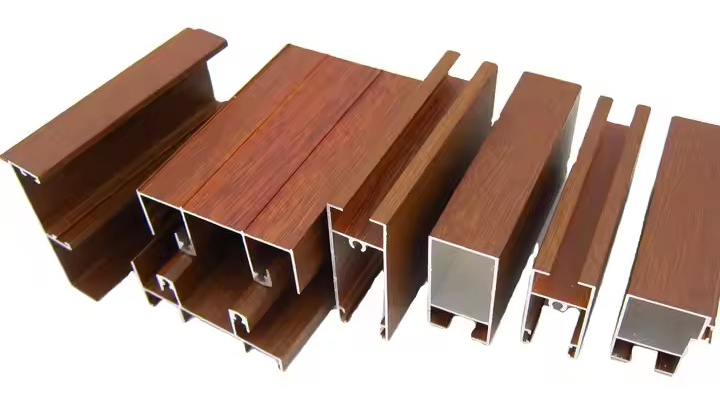
Inspect the profiles under strong, direct light. Look for "extrusion lines" or "die tracks." While all extrusions have minor lines, they should not be deep enough to be felt with a fingernail. Additionally, check for pitting, bubbles, or scratches. These surface defects are often sites where corrosion begins, especially in humid or coastal climates. A premium profile from Leader Aluminum will have a smooth, uniform surface, which is essential for successful anodizing or powder coating.
3. The Webster Hardness Test (Temper Verification)
The most reliable way to confirm the temper (T5 or T6) is using a Webster hardness tester. For the popular 6063-T5 alloy, the reading should consistently fall between 8 and 12 HW. If the reading is below 8, the aluminum is too "soft" and was not aged correctly in the oven. If the reading fluctuates wildly across the same batch, it is a red flag that the aging oven’s temperature control was unstable, leading to inconsistent structural strength.
4. Coating Thickness and Adhesion (Anodizing/Spraying)
For surface-treated profiles, the thickness of the protection layer is vital for longevity. Use an eddy current thickness gauge to check:
Anodized Profiles: Should typically have a film thickness of 10μm to 15μm for standard use, or 20μm+ for marine environments.
Powder Coating: Should usually be between 60μm and 80μm. Beyond thickness, perform a "cross-cut test" using a specialized blade to ensure the coating adheres firmly to the aluminum and won't peel off under environmental stress.
5. Geometric Accuracy: Straightness and Twist
Even a profile with the correct thickness can be useless if it is warped. Place the profile on a high-precision flat platform to check for:
Straightness: The deviation should generally not exceed 0.5mm per meter.
Twist: Ensure the profile does not rotate along its longitudinal axis. Poor straightness usually results from improper handling during the cooling and stretching phase. At Leader Aluminum, we use automated stretching machines to ensure every 6-meter bar remains perfectly straight for easy installation on-site.
Tired of receiving sub-standard aluminum that causes assembly delays? At Leader Aluminum our internal QC standards are stricter than international norms.
👉 Partner with a reliable manufacturer. Contact us now to see our full QC process and secure your high-quality supply chain!

GuangDong Leader Aluminium Profiles Co.,Ltd (OEM&ODM)
is a comprehensive enterprise with over 10 years experence,engaging in the design, production and sales of aluminum profiles.Learn more...
If you have any question, feel free to contact us, Thank You !
Whatsapp: +8619867251009 Email: [email protected]