Welcome to Aluleader Metal
What is the Hardness (Webster) Standard for Industrial Aluminum?
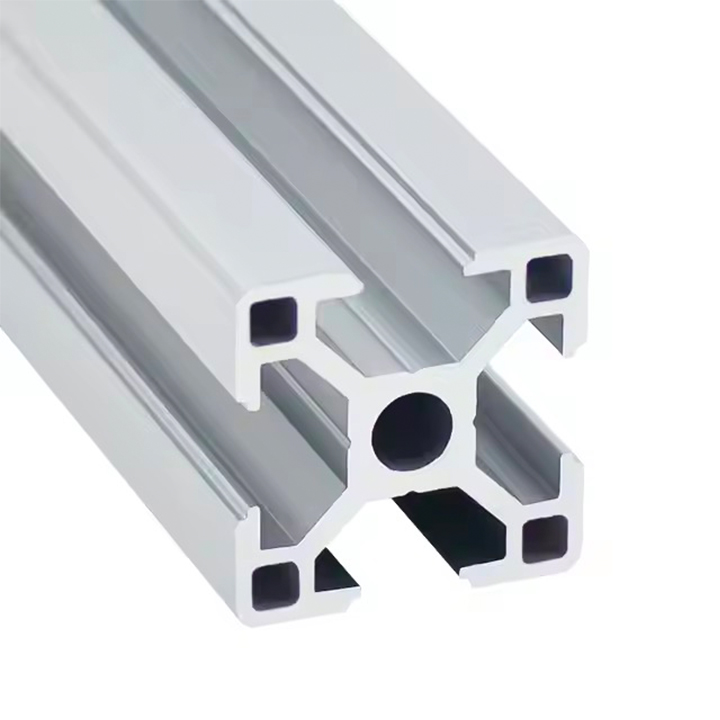
When a container of industrial T-slot profiles or heavy-duty solar rails arrives at your warehouse, you cannot wait weeks for a laboratory tensile test to confirm if the metal is strong enough. You need an immediate, reliable field answer. That is where the Webster Hardness Tester (HW) comes in.
At Leader Aluminum, our quality control team uses the Webster scale as the primary defensive barrier to ensure that no under-aged, soft profiles ever leave our loading bays. Here is a practical engineering guide to understanding Webster hardness standards for industrial aluminum.
1. Decoding the Webster Hardness (HW) Scale
The Webster hardness tester is a portable, spring-loaded plier device that forces a small steel penetrator into the surface of the aluminum profile. The depth of the indentation is instantly converted into a readable value from 0 to 20 HW.
It is important to understand that Webster hardness is directly proportional to the metal's yield strength. If the Webster reading is too low, it means the aluminum molecules did not form the correct crystalline lattice during the heat treatment process, and the profile will permanently warp or bend under structural loads.
2. Standard Hardness Benchmarks for Common Alloys
Different combinations of alloys and tempers have strict, non-negotiable Webster standards under international ASTM regulations:
6063-T5 (Architectural & Light Industrial): The standard benchmark is 8 to 12 HW. Any profile measuring below 8 HW is considered "soft metal" and will fail to hold heavy glass panels or window assemblies safely.
6063-T6 (Medium-Duty Structural): Must reach a minimum of 12 HW.
6061-T6 (Heavy-Duty Industrial & Automation): The gold standard is 15 to 17 HW. Because 6061 is built for high-stress automated framing, robot workstations, and heavy machinery plates, hitting a minimum of 15 HW is mandatory to prevent material deformation under hydraulic strain.
3. What Causes Wild Fluctuations in Hardness?
If you test an aluminum bar and find 11 HW at one end but only 6 HW at the other, your supplier has serious manufacturing flaws. Inconsistent hardness is typically caused by poor temperature control within the factory's aging oven.
If the oven suffers from internal heat stratification—where the top is hotter than the bottom—the profiles will undergo uneven artificial aging. At Leader Aluminum, we eliminate this risk by using automated, multi-zone forced air circulation ovens that keep thermal variance strictly within ±3°C, ensuring uniform molecular hardness throughout the entire 6-meter length of the extrusion.
Soft aluminum kills industrial efficiency. If your structural profiles or T-slot framing systems sag or warp after installation, you face catastrophic assembly downtime and massive financial losses.
GuangDong Leader Aluminium Profiles Co.,Ltd (OEM&ODM)
is a comprehensive enterprise with over 10 years experence,engaging in the design, production and sales of aluminum profiles.Learn more...
If you have any question, feel free to contact us, Thank You !
Whatsapp: +8619867251009 Email: [email protected]