Welcome to Aluleader Metal
Guide to Aluminum Extrusion Die Design and Lifespan | Aluleader
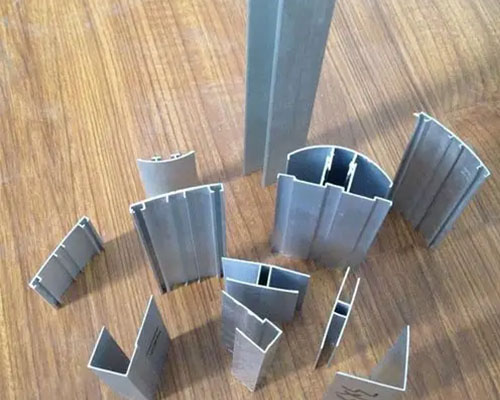
The extrusion die is the heart of the aluminum extrusion process. It is a precision-engineered steel disk that shapes hot aluminum billets into profiles with specific cross-sections—from simple angles to highly complex hollow sections with multiple cavities. A well-designed die directly determines product quality, production efficiency, and overall manufacturing costs. Poor die design, on the other hand, leads to defects, scrap, and frequent production stoppages.
This guide provides a comprehensive overview of aluminum extrusion die design principles, die types, factors affecting die lifespan, and strategies to maximize tooling performance. At Aluleader, with extensive experience manufacturing architectural profiles, industrial profiles, and furniture/decorative profiles, we understand that die performance is the foundation of successful extrusion projects.
What Is an Aluminum Extrusion Die?
An extrusion die is a thick steel disk—typically made of H13 hot-work tool steel—with a precisely machined opening that matches the desired cross-section of the final profile. During extrusion, a heated aluminum billet (approximately 400-500°C) is forced through this opening under high pressure (10,000-15,000 psi). The die shapes the malleable aluminum into a continuous profile with a uniform cross-section.
The die is not a standalone component. It works within a tooling stack that includes support components such as bolsters, backers, and feeder plates, which distribute pressure and support the die during extrusion.
Types of Extrusion Dies
The selection of die type is the first critical design decision. It depends entirely on the profile geometry—whether the shape is solid, hollow, or semi-hollow. A leading die design resource notes that in standard production runs for construction components, solid dies make up nearly 60% of total die volume due to their efficiency and predictability.
Solid Dies
Solid dies are used for profiles without enclosed voids—such as angles, channels, flat bars, and architectural trims. These dies feature a single opening that produces the external shape only.
Advantages: Lower tooling cost, faster lead time, minimal flow complications, highly durable.
Limitations: Cannot create internal cavities; only external geometry is possible.
Typical Applications: Structural components, architectural trims, general-purpose industrial profiles.
Solid dies represent the most economical option for the majority of profiles. Our shutter louver profiles and wardrobe door tracks often utilize solid die designs for their straightforward geometries.
Hollow Dies
Hollow dies are required when the profile has one or more completely enclosed voids—such as tubes, rectangular pipes, or profiles with internal webs. These dies incorporate a mandrel supported by bridges or webs inside the die. The aluminum flows around these obstructions; the streams rejoin on the exit side, welding under high pressure and temperature to create a seamless, continuous hollow profile.
Advantages: Can form closed internal shapes; supports lightweight yet strong designs.
Challenges: More complex to design and align; higher stress on tooling; potential seam weld lines.
Typical Applications: Round tubes, rectangular pipes, hollow extrusions for automotive and aerospace.
Critical Note: Not all applications can accept seam welds. Aerospace or pressure-bearing parts often require designs that avoid any seamlines, regardless of how well fused. This must be addressed during the early design phase.
Semi-Hollow Dies
Semi-hollow dies represent a hybrid design used for profiles with a partially enclosed void—such as a narrow gap or deep U-channel. These designs are more challenging for material flow and cooling but allow greater complexity without the stress and cost of a full hollow die.
Typical Applications: Recessed tracks, snap-fit architectural components, sliding door profiles.
Consideration: The structural strength of the extrusion may be reduced if the partial void acts as a stress riser.
Specialized Hollow Die Structures
Within hollow dies, there are three primary internal configurations:
Porthole Dies: The billet is divided by ports and flows around internal mandrels, rejoining under high pressure. This design is reliable and cost-effective for most tube applications.
Spider Dies: Feature fewer, stronger legs (supports) and provide better flow uniformity for complex, asymmetrical hollows. For structural aluminum or highly engineered parts—such as EV battery enclosures—spider dies are often preferred for better dimensional stability and mechanical strength.
Bridge Dies: Similar to spider dies but with different internal flow channels, often used for profiles requiring precise wall thickness control.
The Die Design Process: Step-by-Step
Designing an aluminum extrusion die is a sophisticated engineering task that blends empirical knowledge with advanced simulation. The complexity arises from the fact that aluminum flow within the die is governed by tribomechanical and rate- and temperature-dependent effects that are not yet fully mathematically modeled.
Step 1: Profile Analysis and Die Type Selection
The process begins with a thorough review of the 2D cross-section or 3D CAD model of the intended profile. Designers ask critical questions:
Is the profile solid, semi-hollow, or hollow?
Are there thin walls or sharp transitions?
What is the expected tolerance range?
Will the profile undergo post-processing like anodizing or machining?
A profile that appears perfect on paper may be un-extrudable due to poor flow paths, trapped air pockets, or excessive die stress. Practical experience and early collaboration with the extrusion supplier are essential at this stage.
Step 2: Flow Simulation and Bearing Design
Once the die type is selected, engineers use finite element simulation software to model aluminum flow inside the die under actual operating conditions—pressure, temperature, flow rate, and bearing geometry. Simulation allows designers to balance metal flow, avoid dead zones and backpressure, prevent distortion or uneven wall thickness, and optimize bearing length.
The bearing—the parallel land at the die exit—is a critical design element. Its length controls the flow rate of aluminum through different sections of the profile. Thicker sections require longer bearing lengths to restrict flow, while thinner sections use shorter bearings to accelerate flow.
A design method that balances exit velocity using a combination of variable sink-in and bearing geometry leads to more stable and predictable flow behavior than traditional designs based on length variations of parallel bearings alone.
Step 3: Strength Check and Extrusion Ratio
Extrusion dies operate under extreme conditions. The pressure acting on the die can reach 186 MPa, and the bearing surface temperature can reach up to 600°C. Strength verification is therefore a non-negotiable step in die design.
Extrusion ratio (the ratio of billet cross-sectional area to profile area) is a key parameter. If the extrusion ratio is below 10, the mechanical properties of the product are compromised. If too high, the product is prone to surface roughness and angle deviation. Recommended ratios are approximately 30 for solid profiles and 45 for hollow profiles.
Step 4: Die Material and Surface Treatment
H13 tool steel is the industry standard for extrusion dies due to its excellent thermal fatigue resistance, toughness, and wear resistance. Dies are heat-treated and surface-hardened, typically through nitriding, to enhance surface hardness and reduce wear.
Nitriding creates a hard surface layer that improves wear resistance. However, die performance depends on multiple interrelated factors: the quality of the die steel, the heat treatment procedure, the die design, the nitriding process parameters, and die maintenance practices.
Advanced coatings such as nitriding or chrome plating further extend die life by reducing surface wear and oxidation.
Die Lifespan: Factors and Failure Mechanisms
The service life of an extrusion die is influenced by a complex interaction of design, process, and material factors. Understanding these factors is essential for maximizing die productivity and minimizing cost per kilogram of extruded product.
Die Failure Modes
A comprehensive study of 595 die failures in commercial aluminum extrusion identified the three leading failure mechanisms:
Fracture is the principal failure mode for extrusion dies. The die experiences cyclic mechanical stresses—from zero to maximum and back during extrusion of each billet. These cyclic stresses, in the presence of pre-existing flaws such as micro-cracks produced during heat treatment, can lead to crack growth and ultimate fatigue failure. Fatigue failures are mostly located at positions of high-stress concentration such as sharp corners, section changes, and stamp marks. Fatigue fracture is especially prevalent for high extrusion ratios and small fillet radii.
Wear is the second most significant failure mode—and the most common in hollow dies, accounting for approximately 36-60% of die failures. Wear occurs at the die-bearing surface due to high pressures, temperatures, and the abrasive aluminum oxide layer that forms on the billet during preheating. Both adhesive and abrasive wear mechanisms work together with sudden temperature fluctuations and prolonged exposure to elevated temperatures. Die wear can cause severe surface damage, leading to product defects and ultimately die failure.
Plastic deformation occurs when the die material yields under excessive pressure or temperature, causing dimensional changes that render the die unusable.
Profile Complexity and Die Life
There is a clear relationship between die life and profile complexity. A complex extrusion profile requires higher pressure and greater force than a simple shape. Varying section thickness, sharp corners, bends, grooves, and passageways dramatically increase stresses. The working environment further aggravates the situation through repeated thermo-mechanical stresses and fatigue effects.
Profile complexity can be quantified using several indices:
Perimeter-based definitions (C1 = Ps/As or C2 = Ps/Ws) exhibit a closer relationship with average die life.
The form factor (C3 = CCD/Tmin), where CCD is the circumscribing circle diameter and Tmin is the minimum wall thickness, provides another measure of complexity.
Dies with higher complexity indices generally have shorter service lives and require more frequent maintenance or replacement.
Extending Die Lifespan: Best Practices
Maximizing die life requires attention to design, process control, and maintenance:
Optimize Die Design: Simplifying profile geometry—avoiding sharp internal corners, deep narrow slots, and excessive asymmetry—reduces die stress and extends lifespan. During design, engineers use variable bearing lengths to balance flow and minimize localized wear.
Control Extrusion Parameters: Maintaining appropriate extrusion temperature (billet and container), speed, and pressure is critical. Overheating or excessive speed accelerates wear and increases the risk of fracture. The extrusion speed must be matched to the alloy type and profile complexity.
Proper Die Maintenance: Regular cleaning, polishing, and inspection of dies extend service life. Operators monitor wear patterns and perform corrections by adjusting bearings (shortening or choking) to restore flow balance. Dies are re-nitrided when the case depth is depleted.
Die Correction and Record Keeping: When faults occur, die technicians examine the extrusion for shape distortion, surface defects, and dimensional deviations. They determine whether faults are die-related or caused by other factors—such as billet quality, temperature settings, or press operation. Corrections may involve shortening bearings to speed up flow or choking bearings to slow it down. All corrections are recorded to track die performance over time.
Monitor Die Performance: Tracking die performance over time using extrusion records allows manufacturers to balance die correction against tonnage, speed, and recovery rates. Persistent issues may indicate the need for a new die or major rework by the die manufacturer.
Frequently Asked Questions (FAQ)
Q: What is the typical cost of a custom aluminum extrusion die?
A: Die costs range from approximately $500 for simple solid dies** to over **$12,000 for complex hollow dies. The exact price depends on profile complexity, circumscribing circle diameter, and required precision. Complex hollow dies for multi-chamber profiles represent the highest tooling investment.
Q: What factors most affect die lifespan?
A: The primary factors are profile complexity (more complex shapes increase stress and wear), extrusion parameters (temperature, speed, and pressure), die material quality and heat treatment, and maintenance practices. Wear is the dominant failure mode for hollow dies, while fracture is more common overall.
Q: Can a die be repaired or corrected?
A: Yes. Dies can be corrected through bearing adjustments (shortening or choking) to rebalance metal flow. Corrections are performed using hand tools, hand-held power tools, or workshop machines. When wear is significant, dies may be re-nitrided. In cases of severe damage, the die may need to be scrapped or returned to the manufacturer for major rework.
Q: How long does an extrusion die typically last?
A: Die life varies widely based on profile complexity and operating conditions. Simple solid dies may produce hundreds of tons before requiring major maintenance, while complex hollow dies may need correction after significantly less tonnage. Studies of commercial extrusion operations show that die life is best modeled using Weibull distributions, indicating significant variability.
Q: Why are H13 steel dies preheated before extrusion?
A: Dies are preheated to approximately 400-500°C to match the aluminum billet temperature. This prevents thermal shock when hot aluminum contacts the die, ensures uniform metal flow, and extends die life by reducing thermal stresses.
Q: What is bearing wash?
A: Bearing wash refers to the gradual wear of the die-bearing surface caused by the abrasive flow of hot aluminum. This wear changes the bearing geometry, affecting flow balance and product dimensions. Bearing wash is a primary reason for die correction and eventual die replacement.
Related Posts
To deepen your understanding of aluminum extrusion and make more informed sourcing decisions, we recommend exploring these related articles from our blog:
Aluminum Extrusion Process: 11 Key Steps Explained — A comprehensive walkthrough from billet heating to final aging. (Please confirm this URL if the article is published)
6061-T6 vs 6063-T5 Aluminum Alloy: Which One to Choose? — Detailed comparison to help you select the right material for your project, directly impacting die performance and extrusion speed.
What is Aluminium Profiles? Types, Uses & Advantages — A foundational guide to understanding profile types and their applications, providing essential context for die selection.
How to Inspect Aluminum Profile Quality — Learn about wall thickness measurement, hardness testing, and straightness checks to ensure die performance translates into quality products. (Please confirm this URL if the article is published)
LTZ L/T/Z-Rail Aluminium Profiles: Customized for Ethiopia & West Africa — A real-world case study demonstrating how die design is customized to meet specific regional standards (LTZ) and climate requirements (UV protection).
About Aluleader
With over 10 years of experience in the aluminum extrusion industry, Aluleader provides high-quality architectural profiles, industrial profiles, and furniture/decorative profiles. Our integrated capabilities—from die design and extrusion to CNC machining, surface finishing, and fabrication—ensure consistent quality across every project.
Our engineering team collaborates with clients to optimize profile designs for manufacturability and die performance, helping you achieve the best balance of quality, cost, and tooling lifespan. For project-specific questions or detailed inquiries about die design and extrusion capabilities, our experts are available to provide technical guidance.