Welcome to Aluleader Metal
How to Choose the Right Aluminum Extrusion for Your Project | Aluleader
Choosing the right aluminum extrusion is not simply a matter of selecting a profile with the correct shape. For importers, distributors, fabricators, purchasing managers and project engineers, the decision involves material properties, wall thickness, dimensional tolerances, surface treatment, manufacturing feasibility and overall cost.
A profile suitable for a window frame may not be appropriate for an industrial machine structure. Similarly, two aluminum profiles with nearly identical dimensions may perform differently because of their alloy, temper or cross-sectional design.
This practical guide explains how to choose aluminum extrusions, compare common specifications and prepare the technical information needed before placing an order.
1. Identify Your Application Requirements
The first step in aluminum extrusion selection is understanding how the profile will be used.
Before selecting a material, consider:
Structural requirements: Will the profile support significant loads?
Environment: Will it be installed indoors, outdoors or near coastal areas?
Appearance: Is the surface visible or decorative?
Assembly: Does the profile need to fit glass, hardware or other components?
Fabrication: Will cutting, drilling, punching or CNC machining be required?
Service conditions: Will the finished component experience vibration, temperature changes or repeated mechanical loading?
Different applications have different priorities.
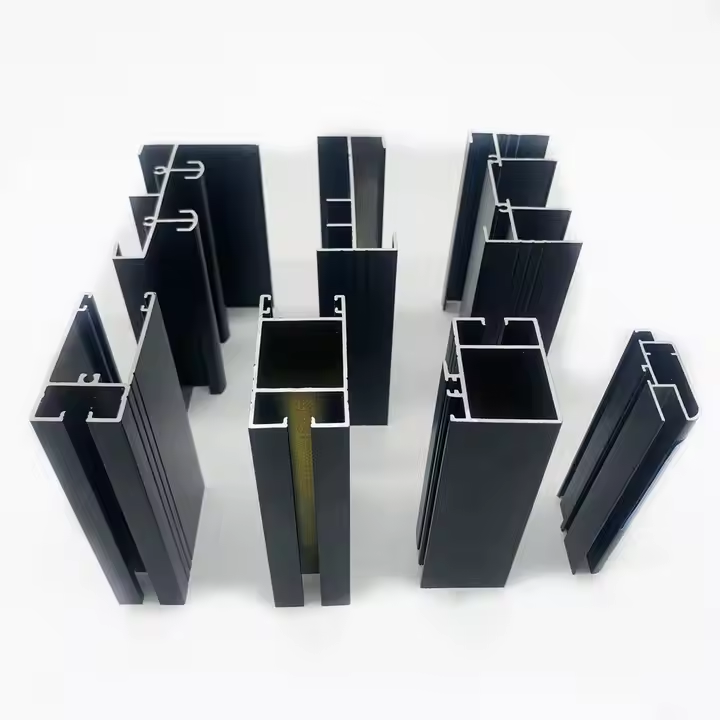
For example, architectural aluminum profiles used in windows, doors and curtain walls commonly require consistent dimensions, corrosion resistance and suitable surface finishes.
By comparison, industrial aluminum profiles used in equipment frames and machinery may require greater attention to mechanical strength, connection methods and machining accuracy.
Furniture and decorative extrusions often place greater emphasis on appearance, profile geometry and finish consistency.
Practical recommendation: Define the application and functional requirements before selecting the alloy or wall thickness.
2. Choose the Right Aluminum Alloy: 6063 vs 6061
Aluminum alloy selection influences strength, extrudability, corrosion resistance, surface appearance and manufacturing cost.
Two commonly used extrusion alloys are 6063 and 6061.
— 6063 Aluminum Extrusions
6063 aluminum is widely used in architectural and decorative applications because it offers good extrudability, corrosion resistance and surface-finishing characteristics.
Common applications include:
Window and door frames
Curtain wall sections
Furniture and cabinet profiles
Decorative trims
Custom architectural components
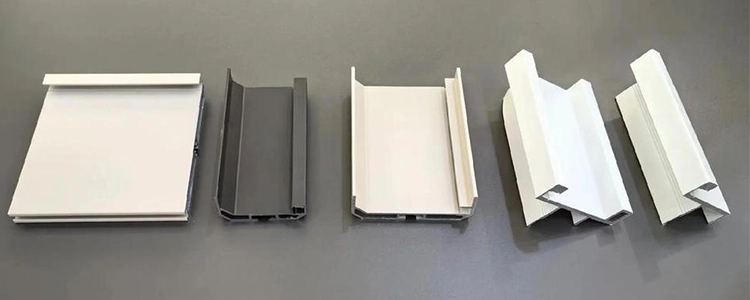
For example, Aluleader supplies 6063-T5 aluminum window and door profiles for residential and commercial window systems.
— 6061 Aluminum Extrusions
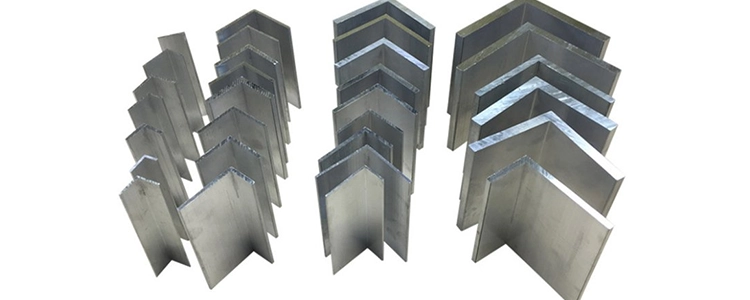
6061 is commonly considered for applications requiring higher mechanical strength, particularly in suitable heat-treated tempers.
Typical applications include:
Industrial equipment
Machinery components
Structural frames
Transportation components
Machined engineering parts
However, higher strength does not automatically make an alloy better for every application. Extrusion complexity, surface requirements and cost must also be considered.
— Aluminum Alloy Comparison
| Selection Factor | 6063 Aluminum | 6061 Aluminum |
|---|---|---|
| Typical applications | Architectural and decorative profiles | Structural and engineering components |
| Extrudability | Generally better for complex sections | More restrictive for some complex sections |
| Surface appearance | Often preferred for decorative finishes | Depends on finish and application |
| Mechanical strength | Suitable for many architectural uses | Generally higher in comparable commonly used tempers |
| Typical tempers | T5, T6 | T6 |
Important: Final material selection should be based on the specified temper, design requirements and applicable engineering standards.
3. Understand Aluminum Temper: T5 and T6
An aluminum alloy designation alone does not completely define the mechanical properties of the extrusion.
The temper describes the material's processing and heat-treatment condition.
Common specifications include:
6063-T5
6063-T6
6061-T6
6063-T5 is frequently used for architectural extrusions, including window and door profiles.
T6 tempers may be considered where the required mechanical properties justify their use, subject to the alloy, profile design and production process.
When preparing an RFQ, always specify both the alloy and temper if they are defined by your project.
For a more detailed explanation of how extrusion and heat treatment fit into manufacturing, read our aluminum extrusion manufacturing process guide.
4. Select the Appropriate Wall Thickness
Wall thickness affects profile weight, stiffness, extrusion feasibility and material cost.
A thicker profile generally consumes more aluminum, but the correct wall thickness cannot be determined from thickness alone.
Important considerations include:
Overall cross-sectional dimensions
Load requirements
Profile geometry
Span and support conditions
Installation method
Local standards and project specifications
Manufacturing feasibility
For window and door systems, wall thickness requirements can vary according to the market, profile system and intended application.
For example, LTZ Series aluminum window profiles for Ethiopia are offered with 1.4mm wall-thickness specifications for the targeted window market. Buyers should confirm the exact project and import requirements before ordering.
For custom aluminum extrusions, the relationship between minimum wall thickness, profile size and internal cavities is particularly important.
Very thin walls or significant differences in wall thickness can make extrusion and dimensional control more challenging.
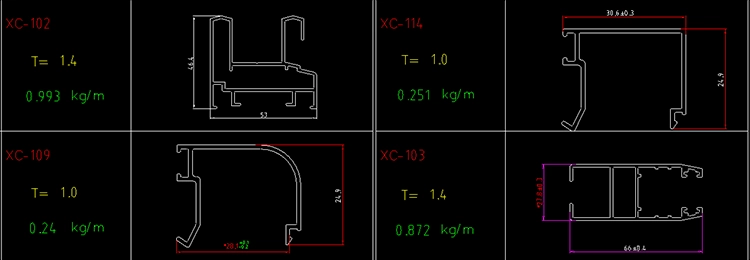
Purchasing tip: Provide a technical drawing showing both overall dimensions and critical wall thicknesses. Do not rely on photographs alone when requesting a precise quotation.
5. Consider Profile Weight and Material Cost
Aluminum extrusion weight is an important factor in quotation comparison.
Two profiles with the same external dimensions may have different theoretical weights because their internal structures are different.
Factors affecting weight include:
Wall thickness
Hollow cavities
Reinforcement ribs
Cross-sectional area
Profile design
For a solid or hollow extrusion, theoretical weight per meter can be estimated from its net cross-sectional area and material density.
Weight per meter (kg/m) = Cross-sectional area (mm²) × Density (g/cm³) ÷ 1,000
For common aluminum alloys, a density of approximately 2.70 g/cm³ can be used for an initial estimate, with the actual alloy density used when greater precision is required.
For example, an aluminum extrusion with a net cross-sectional area of 500 mm² has an approximate theoretical weight of:
500 × 2.70 ÷ 1,000 = 1.35 kg/m
Actual delivered weight can differ due to manufacturing tolerances and other factors.
When comparing supplier quotations, confirm that the same drawing, wall thickness, alloy, temper and finishing requirements are being used.
6. Check Dimensional Tolerances and Assembly Requirements
Dimensional tolerances are particularly important when aluminum extrusions must fit other components.
Critical dimensions may include:
Overall width and height
Slot dimensions
Screw channels
Glass grooves
Connection surfaces
Wall thickness
Straightness and twist
For example, a window profile must fit the intended glazing, sealing components and hardware.
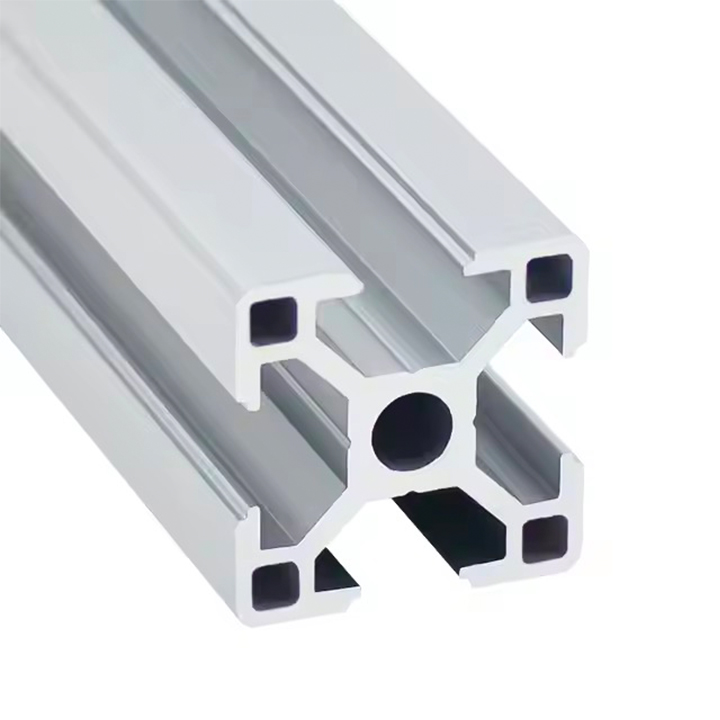
An industrial T-slot extrusion must maintain suitable slot geometry for its connectors and accessories.
When evaluating a drawing, identify dimensions that directly affect assembly or product performance.
Not every dimension requires the tightest possible tolerance. Excessively restrictive tolerances can increase manufacturing complexity and cost.
Best practice: Clearly identify critical dimensions and the applicable tolerance standard before tooling or production begins.
7. Choose the Right Aluminum Surface Finish
Surface treatment affects appearance, corrosion resistance, maintenance and long-term performance.
Common options include mill finish, anodizing, powder coating and wood grain finishes.
— Mill Finish
Mill finish aluminum is supplied without an additional decorative coating.
It may be suitable for components where appearance is less important or further processing is planned.
— Anodizing
Anodizing increases the thickness of the aluminum's natural oxide layer.
It is commonly selected for architectural, decorative and industrial applications requiring a metallic appearance and improved surface durability.
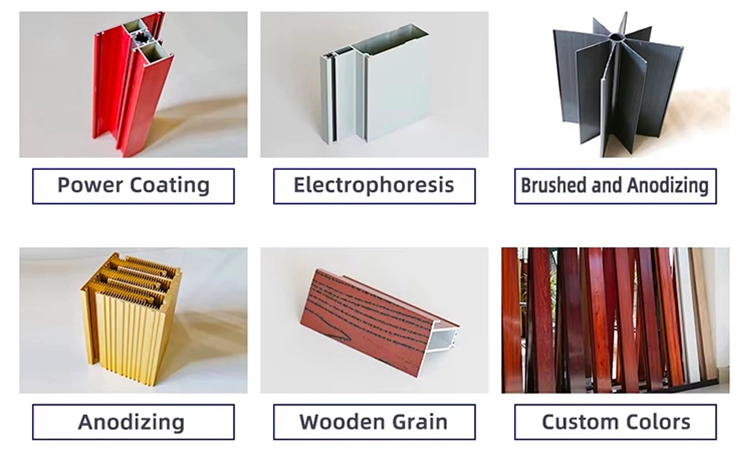
— Powder Coating
Powder coating offers a wide selection of colors, textures and gloss levels.
It is frequently used for architectural windows, doors, curtain walls and decorative profiles.
— Wood Grain Finish
Wood grain finishing provides a timber-like appearance and is commonly used for decorative architectural applications.
— Surface Finish Selection Table
| Application | Common Finish Options |
|---|---|
| Window and door frames | Anodized / Powder coated |
| Curtain wall profiles | Anodized / Architectural coating |
| Industrial equipment | Mill finish / Anodized |
| Furniture and decorative trims | Anodized / Powder coated |
| Wood-look architectural profiles | Wood grain |
| Outdoor structures | Finish selected for environmental exposure |
Surface treatment should be selected according to actual exposure conditions, appearance requirements and applicable coating specifications.
For a more detailed comparison, see our guide to surface finishing options for aluminum extrusions.
8. Standard Aluminum Profiles vs Custom Extrusions
Another important decision is whether to use an existing profile or develop a new extrusion die.
— When to Choose Standard Aluminum Profiles
Standard profiles may be suitable when:
Existing dimensions match your application
Standard accessories are compatible
No unique cross-section is required
Tooling costs should be avoided
Shorter procurement lead times are preferred
For example, 4040 aluminum T-slot extrusions are commonly used for modular industrial frames, workbenches and automation equipment.
You can also explore our broader range of standard aluminum profiles before deciding whether a custom die is necessary.
— When to Choose Custom Aluminum Extrusions
Custom extrusion may be preferable when:
Existing profiles do not match your design
Special wall thicknesses are required
The profile needs integrated functional features
Specific assembly interfaces are required
The design will be used repeatedly in production
Custom extrusions can reduce the need for multiple assembled components, but tooling investment and manufacturing feasibility should be evaluated before production.
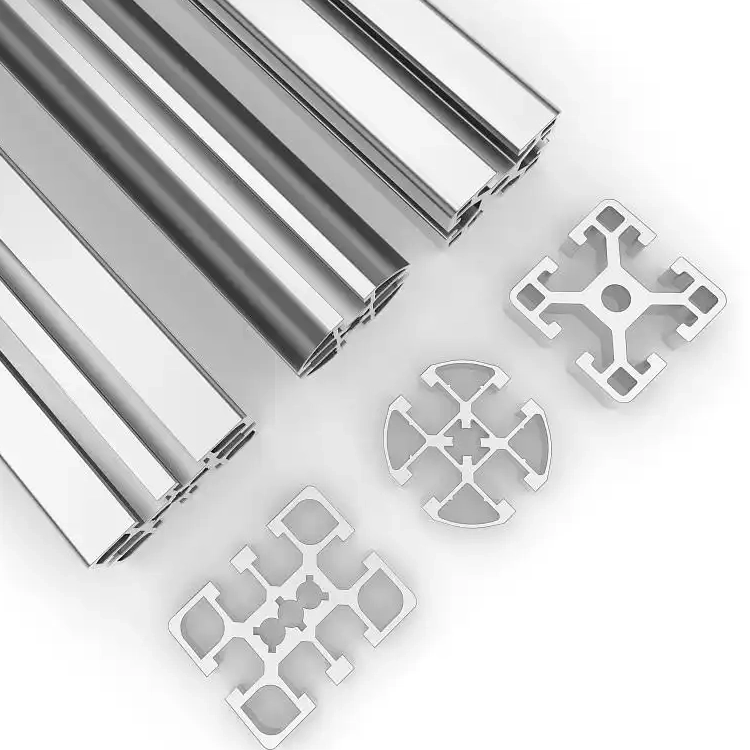
9. What Should Be Checked Before Manufacturing a Custom Extrusion?
Before producing a custom aluminum extrusion die, a technical review should consider the profile's geometry and intended function.
Key review items include:
Overall profile dimensions
Minimum and maximum wall thickness
Hollow or solid cross-section
Internal cavities and ribs
Corner radii
Dimensional tolerances
Critical assembly interfaces
Surface-finish requirements
Secondary machining requirements
Expected order quantity
The objective is not simply to determine whether a profile can be extruded.
The design should also be evaluated for consistent manufacturing, dimensional stability and cost efficiency.
For complex designs, an extrusion manufacturer may suggest modifications to improve manufacturability while preserving the intended function.
10. What Information Do You Need for an Aluminum Extrusion Quotation?
A complete request for quotation helps suppliers evaluate your requirements accurately and reduces unnecessary communication.
— Aluminum Extrusion RFQ Checklist
| Information | What to Provide |
| Profile drawing | DWG, DXF or dimensioned PDF |
| Alloy | 6063, 6061 or specified alloy |
| Temper | T5, T6 or project requirement |
| Wall thickness | Required dimensions |
| Profile length | Standard or customized length |
| Surface finish | Mill finish, anodized, powder coated, wood grain or other specified finish |
| Color | Required color reference |
| Quantity | Pieces, kilograms or metric tons |
| Fabrication | Cutting, drilling, punching, CNC machining or other processing |
| Packaging | Export packing or special protection requirements |
| Destination | Country or delivery port |
If a CAD drawing is unavailable, a physical sample and dimensional information may help with the initial evaluation.
However, a complete technical drawing is preferable for confirming tooling, tolerances and production specifications.
11. Common Mistakes When Buying Aluminum Extrusions
— Mistake 1: Comparing Prices Without Comparing Profile Weight
Profiles with similar external dimensions may have different cross-sectional areas and weights.
Recommendation: Compare quotations using the same technical drawing and material specifications.
— Mistake 2: Selecting an Alloy Without Specifying the Temper
The mechanical properties of an alloy depend partly on its temper.
Recommendation: Confirm both alloy and temper before ordering.
— Mistake 3: Choosing Wall Thickness Based Only on Price
Reducing wall thickness may lower material consumption but can affect stiffness, performance and compliance with project requirements.
Recommendation: Base wall thickness on engineering and application requirements.
— Mistake 4: Ignoring Assembly Tolerances
An extrusion may have the correct overall dimensions but still cause assembly problems if critical grooves or connection features are incorrect.
Recommendation: Identify functional dimensions clearly on the drawing.
— Mistake 5: Selecting a Surface Finish Only by Color
Surface treatment must also suit environmental exposure and performance requirements.
Recommendation: Consider corrosion resistance, coating specifications, durability and maintenance.
— Mistake 6: Starting Tooling Before Confirming the Design
Unconfirmed drawings can lead to tooling changes, delays and additional costs.
Recommendation: Complete a technical drawing review before authorizing die production.
12. Aluminum Extrusion Selection Checklist
Before confirming an aluminum extrusion order, review the following:
Application and service conditions are defined.
Alloy and temper are confirmed.
Cross-sectional drawing is available.
Wall thickness is specified.
Critical dimensions and tolerances are identified.
Surface finish and color are confirmed.
Required machining operations are listed.
Profile length and order quantity are defined.
Packaging and delivery requirements are confirmed.
Samples or technical specifications are approved where required.
A systematic selection process helps reduce specification errors and makes supplier quotations easier to evaluate.
Frequently Asked Questions
1. What is the best aluminum alloy for window and door profiles?
6063 is widely used for window and door extrusions because of its extrudability, corrosion resistance and surface-finishing characteristics. The appropriate temper and profile design depend on the application.
2. Is 6061 stronger than 6063?
6061 generally provides higher mechanical strength than 6063 in commonly compared heat-treated tempers. However, the correct selection depends on the required properties, geometry and manufacturing conditions.
3. How do I choose aluminum extrusion wall thickness?
Wall thickness should be selected according to the cross-sectional design, loads, application, installation conditions and applicable standards. A technical review is recommended for custom profiles.
4. Can aluminum extrusions be manufactured from a CAD drawing?
Yes, many custom aluminum profiles can be developed from technical drawings, subject to a manufacturing feasibility review and tooling requirements.
5. What is the difference between standard and custom aluminum extrusions?
Standard extrusions use existing profile designs, while custom extrusions are developed for specific cross-sections or functional requirements. Custom profiles may require new tooling.
6. What should I send to an aluminum extrusion manufacturer for a quotation?
Provide a drawing, alloy, temper, wall thickness, surface finish, length, quantity and any required machining or packaging details.
Request an Aluminum Extrusion Quotation
Choosing the right aluminum extrusion requires a balance of material properties, manufacturing feasibility, dimensional accuracy and cost.
Aluleader supplies architectural, industrial and custom aluminum extrusion profiles for international B2B customers.
Whether you need an existing extrusion or a custom profile based on your drawing, clear technical specifications are the starting point for an accurate quotation.
Send your CAD drawing, profile sample or technical requirements to Aluleader for quotation and technical review.