Welcome to Aluleader Metal
6061 & 6061-T6 Aluminum Extrusions: Properties & Uses
6061 aluminum extrusion is widely used in industrial equipment, structural components, transportation systems, machinery, and custom-engineered products.
Its combination of mechanical strength, corrosion resistance, machinability, and relatively low weight makes it a common material choice for applications requiring more than decorative performance.
However, buyers frequently encounter two related terms: 6061 aluminum and 6061-T6 aluminum.
Although these terms are sometimes treated as different materials, they do not describe two separate aluminum alloys.
6061 is an aluminum alloy designation, while 6061-T6 identifies 6061 aluminum in a specific heat-treated temper. The T6 designation is important because mechanical properties depend on the material's processing condition.
For engineers and international buyers, understanding this distinction helps prevent material specification errors and improves communication with aluminum extrusion manufacturers.
This guide explains 6061 aluminum extrusion properties, the meaning of T6 temper, common applications, differences between 6061 and 6063, design considerations, and the information buyers should provide when requesting quotations.
1. What Is 6061 Aluminum Extrusion?
6061 is a heat-treatable aluminum alloy belonging to the 6000 series.
Its principal alloying elements are magnesium and silicon.
The alloy is used in a range of manufactured products, including extruded profiles, plates, bars, and other forms.
In aluminum extrusion manufacturing, heated 6061 alloy is forced through a shaped die to create a profile with a consistent cross-section.
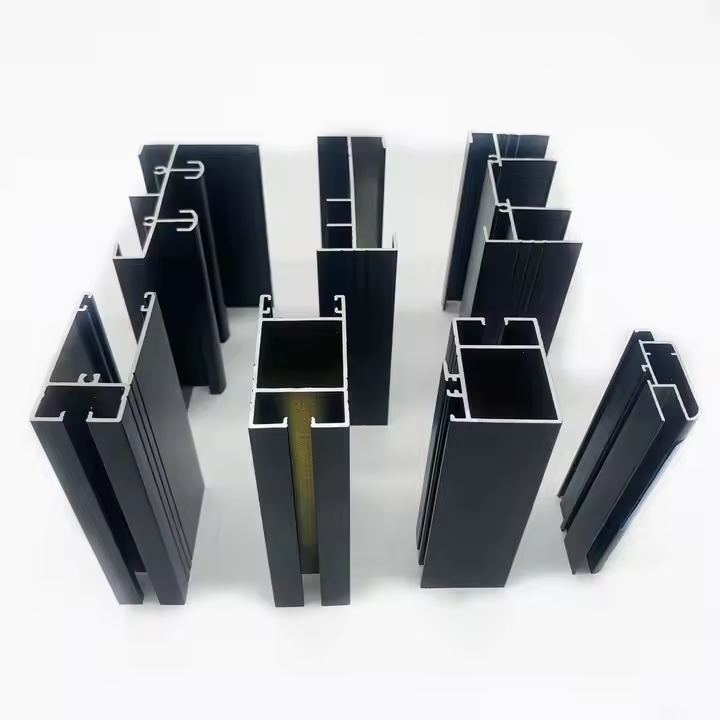
Common 6061 extrusion shapes include:
-
Round and square bars
-
Aluminum angles
-
Channels
-
Round tubes
-
Square and rectangular tubes
-
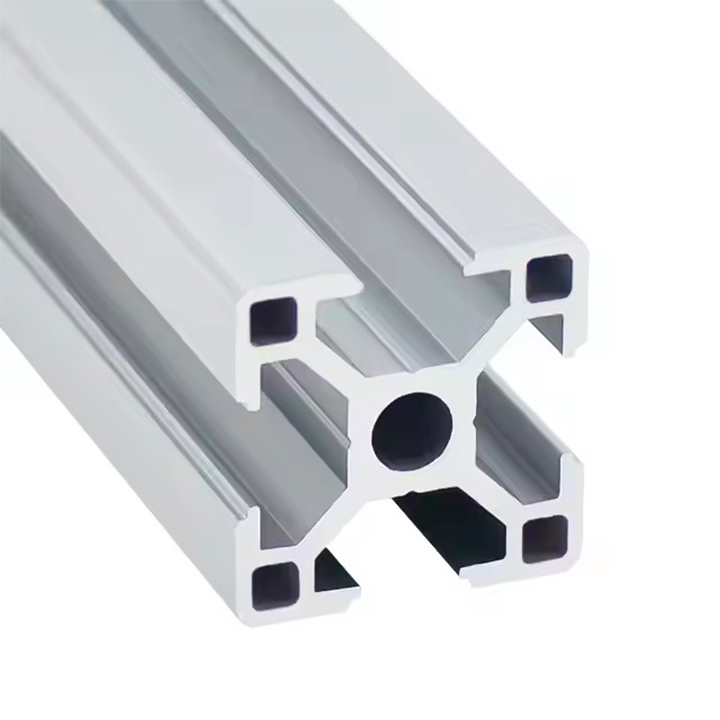
Structural sections
-
Custom industrial profiles
-
Specialized mounting and equipment components
The finished extrusion may undergo additional processing such as heat treatment, straightening, cutting, machining, or surface finishing.
Why Engineers Choose 6061 Aluminum
6061 is frequently considered when a project requires a combination of:
-
Useful mechanical strength
-
Relatively low weight
-
Corrosion resistance in many environments
-
Good machinability
-
Availability in multiple product forms
-
Suitability for a variety of industrial applications
However, these advantages must be evaluated against the actual application.
A suitable alloy for a machined industrial component may not be the most economical choice for a complex decorative extrusion.
The correct selection depends on mechanical requirements, geometry, temper, manufacturing feasibility, and cost.
2. What Does 6061-T6 Mean?
6061-T6 is not a separate aluminum alloy.
It is 6061 aluminum supplied in the T6 temper condition.
The designation contains two parts:
6061: Identifies the aluminum alloy.
T6: Identifies a heat-treatment condition involving solution heat treatment followed by artificial aging.
The T6 condition is commonly selected when specified mechanical properties are required.
Why Temper Matters
The mechanical properties of aluminum depend not only on alloy composition but also on processing history.
For heat-treatable alloys such as 6061, different tempers can produce different strength and ductility characteristics.
Consequently, a purchasing specification that states only "6061 aluminum" may be incomplete.
Where mechanical performance matters, buyers should specify the required temper and applicable material standard.
Common 6061 Temper Designations
| Designation | General meaning | Important consideration |
|---|---|---|
| 6061-O | Annealed condition | Lower strength and greater ductility than typical strengthened tempers |
| 6061-T4 | Solution heat-treated and naturally aged | Properties differ from T6 |
| 6061-T6 | Solution heat-treated and artificially aged | Commonly specified for higher-strength applications |
| 6061-T651 | T6-type condition with stress relief by stretching | Common in certain wrought product forms; availability depends on product specification |
Not every temper is available or commonly supplied for every extruded shape.
The manufacturer should confirm the requested alloy-temper combination for the relevant product form.
Is 6061-T6 Stronger Than 6061?
This question is technically incomplete because 6061 without a temper designation does not define a specific mechanical condition.
6061-T6 generally has higher strength than 6061 in an annealed condition.
However, a meaningful comparison requires specifying the temper, product form, and applicable material specification.
3. 6061-T6 Aluminum Mechanical Properties
Mechanical properties are among the main reasons engineers select 6061-T6 aluminum extrusions.
Important properties include:
-
Ultimate tensile strength
-
Yield strength
-
Elongation
-
Elastic modulus
-
Density
-
Hardness
-
Fatigue behavior
These properties influence how a component performs under loading and during manufacturing.
Typical 6061-T6 Properties
The following values are approximate reference figures commonly associated with 6061-T6 aluminum. They are provided for general understanding, not as guaranteed minimum values for every extrusion.
| Property | Approximate reference value |
|---|---|
| Density | 2.70 g/cm³ |
| Elastic modulus | 69 GPa |
| Ultimate tensile strength | Around 290–310 MPa |
| Yield strength | Around 240–275 MPa |
| Elongation | Varies with product form and dimensions |
| Thermal conductivity | Approximately 150–170 W/m·K |
| Melting range | Approximately 582–652°C |
Important: The strength values above are representative reference values, not universal acceptance limits. Minimum guaranteed properties can vary with extrusion wall thickness, product form, specification, and temper requirements.
For engineering calculations and purchasing acceptance, use the applicable material standard and certified properties for the specific product.
Tensile Strength vs Yield Strength
Ultimate tensile strength describes the maximum engineering tensile stress reached during a tensile test.
Yield strength describes the stress associated with the onset of specified permanent deformation.
For many structural applications, yield strength is especially important because permanent deformation may occur before the material reaches its ultimate tensile strength.
Elastic Modulus and Stiffness
Aluminum has a lower elastic modulus than steel.
For components with similar geometry, an aluminum part may deflect more under the same load.
However, extrusion design allows engineers to modify the cross-sectional geometry to improve stiffness.
This is one reason structural performance should not be evaluated using alloy strength alone.
Density and Weight
The density of 6061 aluminum is approximately 2.70 g/cm³.
This is substantially lower than the density of carbon steel, which is commonly around 7.85 g/cm³.
For components with identical volume, aluminum weighs considerably less.
However, a real structural comparison must also consider the geometry required to achieve the desired strength and stiffness.
4. Chemical Composition of 6061 Aluminum
6061 is an aluminum-magnesium-silicon alloy.
Its composition is controlled within specified ranges under applicable material standards.
The following table provides commonly referenced nominal composition limits.
| Element | Typical specified range or limit, wt.% |
|---|---|
| Magnesium (Mg) | 0.8–1.2% |
| Silicon (Si) | 0.4–0.8% |
| Copper (Cu) | 0.15–0.40% |
| Chromium (Cr) | 0.04–0.35% |
| Iron (Fe) | Maximum 0.70% |
| Manganese (Mn) | Maximum 0.15% |
| Zinc (Zn) | Maximum 0.25% |
| Titanium (Ti) | Maximum 0.15% |
| Aluminum (Al) | Balance |
The composition should be verified against the applicable specification and material documentation.
Why Chemical Composition Matters
Alloying elements influence material properties and processing behavior.
Magnesium and silicon contribute to the heat-treatable characteristics of 6061.
Other controlled elements influence the alloy's overall characteristics.
Buyers requiring material traceability should request appropriate documentation and agree on verification requirements before production.
5. Common Applications of 6061 Aluminum Extrusions
6061 aluminum extrusions are used across industries where mechanical performance, weight, and fabrication requirements are important.
Industrial Machinery and Equipment
6061 profiles may be used for:
-
Equipment components
-
Machine supports
-
Mounting structures
-
Fabricated frames
-
Industrial brackets
-
Mechanical assemblies
The final design must account for loads, deflection, connections, and operating conditions.
Structural Aluminum Components
6061-T6 is used in various structural applications.
Examples include support members, brackets, and engineered frame components.
However, material selection alone does not establish structural suitability.
The complete design must consider:
-
Applied loads
-
Cross-sectional geometry
-
Member length
-
Connection details
-
Buckling and deflection
-
Environmental exposure
-
Applicable engineering requirements
Transportation Components
Aluminum's relatively low density makes it useful for transportation applications.
6061 extrusions may be used in selected structural and fabricated components where their properties are appropriate.
Electronic and Equipment Enclosures
6061 can be used for certain enclosures and equipment components, especially when machining or mechanical performance is important.
However, alloys such as 6063 may be preferable for some complex extruded shapes or decorative requirements.
Custom Industrial Components
Custom 6061 profiles can incorporate mounting features, channels, ribs, and other application-specific geometry.
Such designs should be reviewed for extrusion feasibility before tooling begins.
Explore our industrial aluminum profiles for related product categories.
6. 6061 vs 6063 Aluminum Extrusions
6061 and 6063 are two widely used 6000-series aluminum alloys.
Both contain magnesium and silicon as principal alloying elements, but they differ in composition, typical mechanical properties, and extrusion characteristics.
Key Differences
| Characteristic | 6061 aluminum | 6063 aluminum |
|---|---|---|
| Common applications | Industrial and structural components | Architectural and decorative profiles |
| Strength | Often selected for higher mechanical requirements | Commonly selected for moderate-strength applications |
| Extrudability | Certain complex geometries can be more challenging | Generally well suited to many complex extrusion shapes |
| Surface appearance | Can be finished, but finish quality depends on processing | Often preferred for decorative finish requirements |
| Machinability | Generally good | Suitable for many machining operations |
| Common extrusion tempers | T6 and others depending on specification | T5, T6, and others depending on specification |
The table describes general tendencies, not guaranteed differences between every product.
A meaningful mechanical comparison should use specific alloy-temper combinations, such as 6061-T6 and 6063-T5, rather than comparing alloy names alone.
When Should You Choose 6061?
6061 may be suitable when:
-
Mechanical strength is an important requirement
-
The component will undergo machining
-
The design is intended for industrial use
-
The profile geometry is feasible in the selected alloy
-
The applicable material properties meet the design requirements
When Should You Choose 6063?
6063 may be suitable when:
-
The profile is used for architectural or decorative purposes
-
Surface appearance is a major consideration
-
The cross-section contains complex features
-
The required mechanical properties can be met
-
Extrusion manufacturability is a priority
For more information, read our guide to 6063 aluminum window and door profiles.
Is 6061 Always Better Than 6063?
No.
A higher-strength alloy is not automatically the better material.
For example, a decorative window profile may benefit more from the extrusion and finishing characteristics of 6063 than from the additional strength available in some 6061 tempers.
Conversely, an industrial component with demanding mechanical requirements may justify using 6061-T6.
The correct alloy is the one that meets the actual application requirements.
7. Designing Custom 6061 Aluminum Extrusion Profiles
Custom extrusion design should balance mechanical performance with manufacturing feasibility.
6061 can be extruded into many useful shapes, but its extrusion characteristics must be considered when developing complex profiles.
Cross-Sectional Geometry
Common design features include:
-
Hollow chambers
-
Mounting slots
-
Reinforcement ribs
-
Screw ports
-
Channels
-
Structural flanges
Not every geometry is equally practical to extrude.
The manufacturer should review the design before tooling.
Wall Thickness
Wall thickness affects material consumption, profile weight, extrusion feasibility, and structural performance.
Thin-wall designs can be particularly challenging when combined with complex geometry.
The minimum practical wall thickness depends on the profile size, die design, extrusion equipment, and required tolerances.
There is no universal minimum wall thickness suitable for every 6061 extrusion.
Uniform Wall Thickness
Relatively consistent wall thickness may improve manufacturing feasibility.
Large variations between thick and thin sections can complicate metal flow through the extrusion die.
However, local reinforcement may be necessary for structural or assembly reasons.
The final design should balance these considerations.
Corners and Transitions
Sharp corners and abrupt changes in geometry may increase tooling difficulty.
Appropriate radii and gradual transitions can sometimes improve extrusion feasibility.
The correct dimensions depend on the design.
Design for Secondary Processing
6061 is often selected for components that require machining.
When designing the profile, consider:
-
Tool access
-
Workholding
-
Hole locations
-
Tapping requirements
-
Cutting operations
-
Assembly clearances
A profile that is easy to extrude but difficult to machine may not provide the lowest total manufacturing cost.
For a broader explanation, see our custom aluminum extrusion design guide.
8. Dimensional Tolerances for 6061 Extrusions
Dimensional tolerances define the acceptable variation between the specified drawing and the manufactured profile.
For 6061 aluminum extrusions, achievable tolerances depend on several factors:
-
Cross-sectional dimensions
-
Profile geometry
-
Wall thickness
-
Extrusion process
-
Product length
-
Required alloy and temper
-
Applicable manufacturing standard
Common Inspection Characteristics
Buyers may need to specify requirements for:
-
Overall width and height
-
Wall thickness
-
Straightness
-
Twist
-
Flatness
-
Angularity
-
Cut length
-
Critical slots and mounting features
Relevant Standards
Depending on the product and market, standards such as ASTM B221, EN 755, and ANSI H35.2 may be relevant.
These references cover different aspects of aluminum products and should not be treated as interchangeable.
For example, the applicable material specification and dimensional tolerance requirements should be identified separately where necessary.
Critical Dimensions
For custom profiles, identify dimensions that directly affect assembly or performance.
A mounting slot designed for a particular fastener may require closer dimensional control than a noncritical external feature.
Applying unnecessarily tight tolerances across the entire profile can increase manufacturing difficulty.
For further guidance, read our aluminum extrusion tolerances guide.
9. Machining, Welding, and Joining 6061 Aluminum
6061 aluminum is used in many fabricated products.
However, machining, welding, and mechanical joining should be considered during material selection and design.
CNC Machining
6061, particularly in suitable tempers, is commonly used for machined components.
Operations may include:
-
Milling
-
Drilling
-
Tapping
-
Cutting
-
Boring
-
Other precision machining processes
Machining performance depends on the temper, tooling, cutting parameters, and part geometry.
Welding 6061 Aluminum
6061 is weldable using appropriate processes and procedures.
However, welding can change the mechanical properties of the material near the weld.
For precipitation-hardened tempers such as T6, the heat-affected zone may experience a significant reduction in strength.
Do not assume that a welded 6061-T6 assembly retains the original T6 strength throughout the welded region.
For structural applications, welding procedures, joint design, and allowable properties must be evaluated appropriately.
Mechanical Fastening
6061 profiles can also be assembled using bolts, screws, brackets, or other mechanical connectors.
Connection design should account for loads, local bearing stresses, fastener compatibility, and assembly requirements.
Adhesive Bonding
Adhesive bonding may be appropriate for certain applications.
Its suitability depends on surface preparation, adhesive selection, loading, environmental exposure, and joint design.
No joining method is universally best.
10. Surface Finishing Options for 6061 Aluminum Extrusions
6061 aluminum extrusions may receive various surface treatments.
The appropriate finish depends on appearance, environmental exposure, and functional requirements.
Mill Finish
Mill finish profiles are supplied without a separately specified decorative surface treatment.
The surface may show normal extrusion-related characteristics.
Anodizing
6061 aluminum can be anodized.
However, anodized appearance may differ from that of 6063 due to alloy composition, surface condition, and processing variables.
For highly decorative applications, finish samples are recommended.
Powder Coating
Powder coating may be used for decorative or protective purposes.
The coating system should be selected according to the intended service environment.
Mechanical Surface Treatments
Brushing and other mechanical treatments may be used to achieve particular surface textures.
The appropriate sequence of surface preparation and finishing should be agreed upon with the supplier.
Read our guide to powder coated vs anodized aluminum profiles for a comparison of these finishing methods.
11. Corrosion Resistance of 6061 Aluminum
6061 aluminum naturally develops a protective oxide layer when exposed to air.
This contributes to its corrosion resistance in many environments.
However, aluminum is not immune to corrosion.
Performance depends on factors such as:
-
Environmental exposure
-
Moisture
-
Chloride concentration
-
Contact with dissimilar metals
-
Surface condition
-
Protective treatments
-
Design details
Galvanic Corrosion
When aluminum is electrically connected to certain dissimilar metals in the presence of an electrolyte, galvanic corrosion may occur.
This can be important in assemblies using steel or stainless steel fasteners.
Appropriate design measures may include suitable material selection, isolation, coatings, and drainage.
Outdoor Applications
For outdoor equipment or structural components, evaluate the actual environmental conditions.
Marine or highly aggressive environments may require additional protection or alternative materials.
Corrosion resistance should be considered as part of the complete assembly design rather than an isolated alloy property.
12. How Much Does 6061 Aluminum Extrusion Cost?
6061 extrusion pricing depends on more than the alloy designation.
Important factors include:
-
Raw material cost
-
Required temper
-
Profile weight
-
Cross-sectional complexity
-
Die tooling
-
Production quantity
-
Surface finishing
-
Machining
-
Inspection requirements
-
Packaging and shipping
6061 vs 6063 Extrusion Pricing
6061 and 6063 may have different material and processing costs.
However, there is no universal price difference applicable to every design.
For example, a relatively simple 6061 profile may be easier to manufacture than a highly complex 6063 profile.
Likewise, the production quantity and required processing can influence the quotation significantly.
Custom Tooling Costs
A custom 6061 extrusion generally requires suitable tooling.
Tooling costs depend on the profile's geometry, size, complexity, and development requirements.
New dies may require trial extrusion and adjustments before approval.
MOQ Considerations
Minimum order quantity varies by manufacturer and project.
Small orders may have higher unit costs because setup and preparation expenses are distributed across fewer pieces or kilograms.
For a complete explanation of extrusion pricing, read our custom aluminum extrusion cost and tooling guide.
13. How to Specify 6061-T6 Aluminum Extrusions for Purchasing
A clear purchasing specification helps prevent material and dimensional misunderstandings.
When requesting a quotation, provide the following information.
| Requirement | Information to provide |
|---|---|
| Alloy | 6061 |
| Temper | T6 or another specified condition |
| Product form | Extruded bar, tube, channel, or custom profile |
| Drawing | Dimensioned cross-section or CAD file |
| Wall thickness | Nominal and critical requirements |
| Tolerances | Applicable standard and critical dimensions |
| Mechanical properties | Required specification and acceptance criteria |
| Surface finish | Mill finish, anodizing, powder coating, etc. |
| Processing | Cutting, machining, drilling, tapping |
| Quantity | Initial and expected repeat orders |
| Documentation | Material certificates and inspection reports where required |
| Destination | Delivery country and agreed shipping terms |
Specify the Applicable Material Standard
Depending on the destination and product requirements, buyers may reference standards such as ASTM B221 or relevant EN 755 provisions.
Confirm the applicable edition and product scope.
The manufacturer should understand the required material properties and inspection criteria before production.
Request Material Documentation
For applications where material verification is important, request appropriate certificates or test reports.
The documentation should correspond to the agreed alloy, temper, and product specification.
Approve Samples When Necessary
For custom profiles, sample approval can help verify:
-
Dimensions
-
Surface condition
-
Fit with mating components
-
Machining feasibility
-
Required functional characteristics
Do not rely solely on the alloy designation to determine whether the finished profile meets your project requirements.
14. Common Mistakes When Buying 6061 Aluminum Extrusions
Mistake 1: Treating 6061 and 6061-T6 as Different Alloys
6061 identifies the alloy.
T6 identifies a particular heat-treated condition.
Always specify the required temper when it matters.
Mistake 2: Assuming Every 6061-T6 Product Has Identical Strength
Mechanical-property requirements can vary with product form, dimensions, and applicable specification.
Use the correct standard and material documentation.
Mistake 3: Choosing 6061 Solely Because It Is Stronger
A higher-strength alloy is not necessarily better for every application.
Consider extrusion feasibility, surface finish, geometry, and cost.
Mistake 4: Ignoring Welding Effects
Welding may reduce strength in the heat-affected zone of precipitation-hardened 6061.
Structural designs must account for this behavior.
Mistake 5: Specifying Unrealistic Extrusion Geometry
Very thin walls, narrow features, or complex chambers may create manufacturing challenges.
Request a feasibility review before tooling.
Mistake 6: Comparing Prices Without Matching Specifications
Quotations should use the same alloy, temper, dimensions, finishing requirements, quantity, and delivery conditions.
Otherwise, the comparison may be misleading.
15. Frequently Asked Questions
What is the difference between 6061 and 6061-T6 aluminum?
6061 is the aluminum alloy designation. 6061-T6 is the same alloy in a specific heat-treated temper. T6 indicates solution heat treatment followed by artificial aging.
Is 6061-T6 aluminum suitable for structural applications?
6061-T6 is used in many structural applications. However, suitability depends on profile geometry, loading, connections, design requirements, and applicable engineering standards.
Is 6061 stronger than 6063?
6061 in common strengthened tempers often offers higher strength than 6063 in commonly used architectural tempers. However, a meaningful comparison requires specifying both alloys' tempers and relevant product specifications.
Can 6061 aluminum be extruded into custom shapes?
Yes. 6061 can be extruded into many custom shapes, subject to manufacturing feasibility. Complex geometry and thin-wall features may require additional design review.
Is 6061-T6 aluminum corrosion-resistant?
6061-T6 has useful corrosion resistance in many environments, but it is not immune to corrosion. Performance depends on exposure conditions, surface treatments, and assembly design.
Can 6061-T6 aluminum be welded?
Yes, with appropriate procedures. However, welding can reduce strength in the heat-affected zone. This must be considered for load-bearing applications.
Can 6061 aluminum be anodized?
Yes. 6061 can be anodized, although decorative appearance may differ from that of alloys such as 6063. Approved samples are advisable when appearance is important.
What is the density of 6061 aluminum?
The density of 6061 aluminum is approximately 2.70 g/cm³.
What is the tensile strength of 6061-T6 aluminum?
Representative values are often around 290–310 MPa, but actual specified minimums depend on the product form, dimensions, and applicable standard. Engineering and purchasing decisions should use the relevant certified properties.
Is 6061-T6 suitable for CNC machining?
Yes. 6061-T6 is commonly used for CNC-machined components. Machining performance depends on part geometry, tooling, and process conditions.
Does 6061-T6 require special extrusion tooling?
Custom 6061-T6 profiles generally require a suitable extrusion die. Tooling requirements depend on the cross-sectional design, dimensions, and manufacturing process.
How do I request a quotation for 6061-T6 aluminum extrusions?
Provide a drawing, alloy and temper specification, dimensions, tolerances, surface finish, processing requirements, quantity, and delivery destination. Request confirmation of manufacturing feasibility and relevant documentation.
Conclusion: Choose 6061-T6 Aluminum Extrusions Based on Engineering Requirements
6061 aluminum is widely used for industrial and structural extrusion applications because of its useful combination of mechanical properties, relatively low weight, corrosion resistance, and machinability.
The T6 temper is an important part of the material specification because it identifies a particular heat-treated condition.
However, selecting 6061-T6 does not eliminate the need to evaluate profile geometry, dimensional tolerances, joining methods, manufacturing feasibility, and quality requirements.
For custom applications, engineers should work with an extrusion manufacturer to confirm that the proposed design can be manufactured consistently.
The best material choice is not simply the strongest available alloy, but the alloy and temper that meet the product's functional requirements while remaining practical to manufacture.
Discuss 6061 Aluminum Extrusion Requirements With ALULEADER
If you are sourcing 6061 aluminum extrusions or developing custom industrial aluminum profiles, ALULEADER can be contacted to discuss your project requirements.
Explore our industrial aluminum profiles and structural aluminum profile products.
For custom projects, review our aluminum extrusion design guide to understand the information needed before tooling.
Send your CAD drawing, required alloy and temper, dimensional tolerances, estimated quantity, and processing requirements to ALULEADER for a technical feasibility review and quotation.