Welcome to Aluleader Metal
Why 6063 Aluminum Is Widely Used for Window and Door Profiles
When sourcing aluminum profiles for windows and doors, one alloy number appears again and again: 6063 aluminum.
It is widely used for architectural extrusions such as window frames, door frames, sliding systems, curtain wall components and decorative building profiles.
But why is 6063 so common?
The answer is not simply that 6063 is “good aluminum.” Its popularity comes from a useful combination of extrudability, surface quality, corrosion resistance, mechanical properties and finishing performance.
For window and door manufacturers, these characteristics are especially important because architectural profiles often have complex cross-sections and highly visible finished surfaces.
This article explains why 6063 aluminum extrusion is widely used for window and door profiles and what buyers should check when specifying it.
1. What Is 6063 Aluminum?
6063 is an aluminum-magnesium-silicon alloy widely used in extrusion applications.
It belongs to the 6000-series aluminum alloys, which use magnesium and silicon as principal alloying elements.
One of the major advantages of 6063 is that it can be extruded into relatively complex cross-sectional shapes while maintaining the surface quality required for architectural applications.
This makes it particularly suitable for products such as:
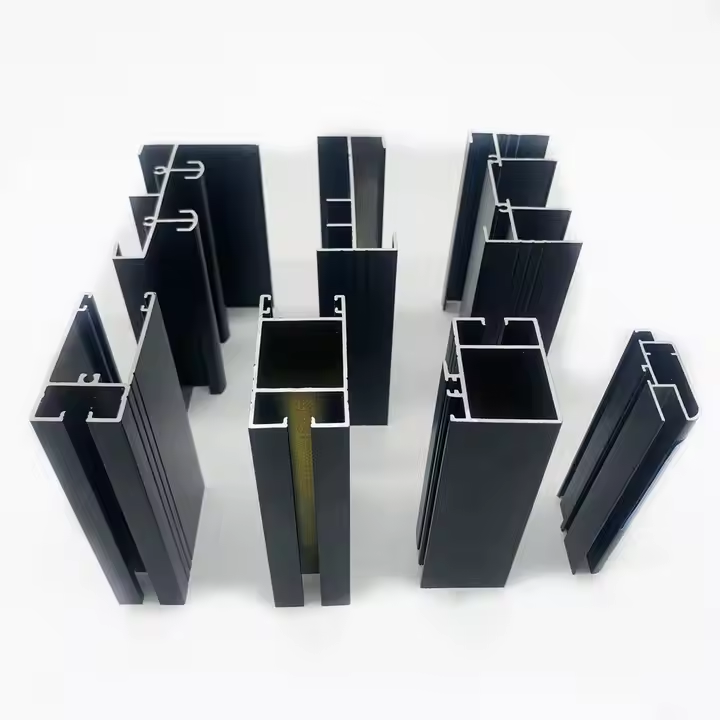
Aluminum window profiles
Aluminum door profiles
Sliding window frames
Curtain wall profiles
Partition profiles
Decorative trims
Architectural framing systems
For this reason, 6063 is commonly found throughout the architectural aluminum profiles industry.
2. Why Is 6063 Suitable for Aluminum Extrusion?
Extrusion involves forcing heated aluminum billet through a die to create a continuous profile with a specific cross-section.
For a simple solid bar, the cross-sectional design may be relatively straightforward.
Window and door profiles are different.
A single extrusion can contain:
Thin walls
Hollow cavities
Glass grooves
Screw channels
Tracks
Interlocking sections
Reinforcement ribs
Decorative surfaces
This makes extrudability very important.
6063 aluminum is widely selected because it can be extruded into many of the complex shapes required by architectural systems.
This gives designers and manufacturers greater flexibility when producing functional profiles for windows and doors.
If you want to understand how aluminum moves from billet to finished extrusion, our aluminum extrusion process guide explains the manufacturing process in more detail.
3. Why 6063 Is Common in Window Profiles
A window profile needs to do several jobs at the same time.
It may need to:
Support glass
Connect to another extrusion
Hold a gasket or brush
Accept screws
Fit rollers or locks
Provide a sliding track
Maintain an attractive visible surface
This is where 6063 becomes particularly useful.
Instead of machining these functions separately from a solid piece of metal, extrusion allows many features to be incorporated directly into the profile cross-section.
For example, a sliding window sash can include its glass groove, connection features and accessory channels in one extrusion.
This makes 6063 suitable for producing complete window systems containing several matching sections.
Aluleader's aluminum window profiles include extruded sections designed for different architectural window applications.
4. What Does 6063-T5 Mean?
When purchasing aluminum profiles, specifying only 6063 does not provide the complete material condition.
You may also see specifications such as:
6063-T5
or
6063-T6
The 6063 identifies the alloy.
The T5 or T6 identifies the temper condition.
6063-T5
T5 generally refers to material that has been cooled from an elevated-temperature shaping process and then artificially aged.
6063-T5 is commonly used for architectural extrusion applications, including many window and door profiles.
6063-T6
T6 involves a different heat-treatment route and is associated with higher mechanical properties than T5 for the same alloy.
However, this does not mean T6 is automatically the better choice for every window profile.
The correct temper depends on:
Profile design
Required mechanical properties
Application
Manufacturing process
Project specification
For many architectural applications, 6063-T5 provides a practical combination of extrusion performance and mechanical properties.
5. 6063-T5 for Sliding Window Profiles
Sliding window systems are a good example of how 6063-T5 aluminum can be used.
A complete system may contain:
Outer frame
Upper and lower tracks
Sliding sash
Interlocking profiles
Fixed profiles
Glass-related sections
Accessory profiles
Each profile can have a different cross-sectional geometry while remaining part of the same window system.
For example, Aluleader supplies LTZ Series 1.4mm Sliding Window Aluminum Profiles for Ethiopia in 6063-T5 according to the required profile specifications.
The LTZ system can include L, T, Z, Zekolo, Fasha and other matching sections for sliding-window fabrication.
For a complete explanation of that particular market and profile system, see our Aluminum Window Profiles for Ethiopia: LTZ Series Buyer’s Guide.
6. 6063 Aluminum and Surface Finishing
Another reason 6063 is popular for architectural applications is its suitability for decorative surface finishing.
Window and door profiles often remain visible after installation.
This means surface appearance matters much more than it might for an internal industrial component.
Common finishes for 6063 aluminum profiles include:
Anodizing
Anodizing creates a controlled oxide layer on the aluminum surface.
It can provide a metallic architectural appearance while improving the surface characteristics of the profile.
Powder Coating
Powder coating allows manufacturers to produce profiles in a wide range of colors and textures.
This is widely used for:
Window frames
Door frames
Curtain wall profiles
Architectural decorative profiles
Wood Grain
Wood-grain finishing can create a timber-like decorative appearance on aluminum profiles.
This can be used for doors, windows and other architectural applications where a wood appearance is desired.
You can read more about the differences between these processes in our surface finishing options for aluminum extrusions.
7. 6063 Aluminum and Corrosion Resistance
Aluminum naturally forms a thin oxide layer when exposed to air.
This helps protect the underlying metal from further oxidation.
6063 is therefore useful for architectural applications where profiles may be exposed to changing environmental conditions.
However, buyers should not assume that alloy selection alone determines the durability of a finished window.
Performance also depends on factors such as:
Surface finish
Pretreatment
Coating quality
Installation environment
Cleaning and maintenance
Contact with other materials
For exterior window and door projects, the complete material and finishing specification should therefore be considered together.
8. What Are 6063 Aluminum Channel Extrusions?
Buyers searching for aluminum profiles may also encounter the term 6063 aluminum channel extrusions.
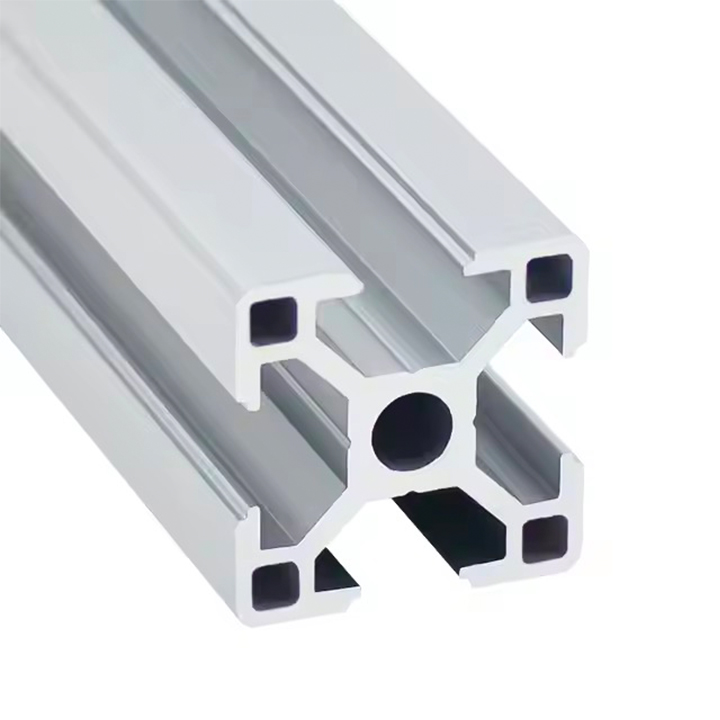
A channel extrusion generally refers to a profile with a channel-shaped or groove-like cross-section.
Examples can include:
U channels
Glazing channels
Guide channels
Track profiles
Framing channels
Decorative channels
6063 is suitable for producing many of these sections because the extrusion process can create channels and other functional features directly in the profile.
However, the term “channel” alone does not define the product.
When purchasing 6063 aluminum channel extrusions, buyers should still provide:
Cross-sectional drawing
Dimensions
Wall thickness
Temper
Length
Surface finish
Quantity
The drawing remains the most important technical reference.
9. 6063 Aluminum vs 6061 Aluminum
6063 and 6061 are both widely used 6000-series aluminum alloys, but they are commonly selected for different priorities.
| Factor | 6063 Aluminum | 6061 Aluminum |
|---|---|---|
| Common use | Architectural profiles | Structural and engineering applications |
| Window and door profiles | Widely used | Less common |
| Complex extrusion shapes | Very suitable | Depends on profile design |
| Decorative surface finish | Widely used | Application dependent |
| Mechanical strength | Suitable for many architectural applications | Generally higher in commonly used tempers |
| Typical applications | Windows, doors, curtain walls, trims | Machinery, structures, frames, engineering components |
This does not mean that 6063 is always better than 6061.
The correct question is:
Which alloy is more appropriate for the application?
For an architectural window frame, 6063 may offer the right combination of extrusion and finishing characteristics.
For a structural engineering component requiring higher mechanical strength, 6061 may be more appropriate.
For a broader explanation of how alloy, temper, wall thickness and application should be considered together, see our guide to choosing the right aluminum extrusion.
10. Does 6063 Determine the Strength of the Profile?
No.
This is an important point for buyers.
Knowing that a profile is made from 6063 aluminum does not tell you everything about the performance of the finished extrusion.
Other factors include:
Temper
Wall thickness
Cross-sectional geometry
Profile size
Internal reinforcement
Unsupported span
Connection method
Finished window design
For example, two profiles can both be manufactured from 6063-T5 while having very different weights and rigidity because their cross-sections and wall thicknesses are different.
Therefore:
Alloy should never be evaluated independently from profile design.
11. Why Wall Thickness Still Matters With 6063 Aluminum
Suppose two suppliers both quote:
6063-T5 aluminum window profile
At first glance, the specifications appear identical.
But Supplier A may be quoting a 1.2mm wall thickness while Supplier B is quoting 1.4mm.
The profiles can therefore have different:
Weight per meter
Aluminum consumption
Rigidity
Production cost
This is why comparing only the alloy and price per ton can be misleading.
When requesting a quotation for a 6063 aluminum extrusion, make sure suppliers are working from the same profile drawing and wall-thickness specification.
12. Standard or Custom 6063 Aluminum Extrusions?
6063 can be used for both standard and customized profiles.
Standard 6063 Profiles
These are existing profile designs for which the manufacturer already has suitable extrusion dies.
Examples may include:
Standard channels
Angles
Tubes
Window sections
Door sections
Custom 6063 Aluminum Extrusions
A custom extrusion is produced according to the buyer's specific cross-sectional design.
This is useful when:
An existing profile does not fit your system
You need a specific wall thickness
You have a unique window or door design
You want to reproduce an existing profile
Hardware requires a particular groove or connection
Several functions need to be integrated into one extrusion
A custom profile can normally be developed from a CAD drawing or physical sample.
13. What Should You Specify When Buying 6063 Aluminum Profiles?
A good RFQ should contain more than:
“Please quote 6063 aluminum.”
Instead, provide the complete specification.
6063 Aluminum Extrusion RFQ Checklist
| Information | What to Provide |
|---|---|
| Application | Window, door or other application |
| Drawing | DWG, DXF or dimensioned PDF |
| Alloy | 6063 |
| Temper | T5, T6 or project requirement |
| Wall thickness | Required thickness |
| Profile length | Required extrusion length |
| Surface finish | Mill finish, anodized, powder coated, etc. |
| Color | Required color or sample |
| Quantity | Pieces, kilograms or tons |
| Fabrication | Cutting, drilling, punching or CNC if required |
| Packaging | Required export packaging |
| Destination | Country or delivery port |
This allows different suppliers to quote on a more comparable basis.
14. Common Mistakes When Buying 6063 Aluminum Extrusions
Mistake 1: Specifying Only “6063”
6063 tells the manufacturer the alloy, but not the complete profile specification.
Better: Confirm alloy + temper + drawing + wall thickness.
Mistake 2: Assuming All 6063 Profiles Have the Same Strength
Profile geometry and wall thickness can be just as important as the alloy.
Better: Evaluate the complete extrusion design.
Mistake 3: Comparing Price Without Comparing Profile Weight
Two 6063 profiles may look similar but contain different amounts of aluminum.
Better: Compare the same drawing and specification.
Mistake 4: Ignoring Surface Finish
For architectural profiles, appearance is an important part of the finished product.
Better: Specify anodizing, powder coating or another required finish before quotation.
Mistake 5: Choosing 6061 or 6063 Only by Strength
Higher mechanical strength does not automatically mean a material is better for every extrusion.
Better: Choose the alloy according to the actual application.
Frequently Asked Questions About 6063 Aluminum
What is 6063 aluminum commonly used for?
6063 aluminum is widely used for architectural extrusions such as window profiles, door profiles, curtain wall components, framing sections and decorative aluminum profiles.
Is 6063 aluminum good for windows?
Yes. 6063 is widely used for aluminum window profiles because of its extrudability, surface-finishing characteristics and suitability for complex architectural cross-sections.
What is 6063-T5 aluminum?
6063 identifies the aluminum alloy, while T5 identifies the temper condition. 6063-T5 is commonly used for architectural extrusion applications, including many window and door profiles.
What is the difference between 6063 and 6061 aluminum?
6063 is widely used for architectural profiles and complex decorative extrusions, while 6061 is commonly selected for higher-strength structural and engineering applications. The correct alloy depends on the intended use.
Can 6063 aluminum profiles be customized?
Yes. Custom 6063 aluminum extrusions can be manufactured according to CAD drawings, physical samples and project requirements, subject to extrusion feasibility.
Can 6063 aluminum be powder coated or anodized?
Yes. Powder coating and anodizing are both commonly used surface treatments for 6063 architectural aluminum profiles.
Looking for 6063 Aluminum Extrusions?
Aluleader manufactures 6063 aluminum extrusions for window, door and architectural applications, including both existing profile systems and customized cross-sections.
If you are sourcing profiles for the Ethiopian market, you can also view our LTZ Series 1.4mm Sliding Window Aluminum Profiles for Ethiopia.
For customized 6063 aluminum profiles, send us:
Drawing or sample + alloy/temper + wall thickness + surface finish + color + quantity
Aluleader can review the profile design and provide a quotation according to your actual requirements.