Welcome to Aluleader Metal
Extruded Aluminum vs Die Cast: Comparison Guide | Aluleader
Aluminum is one of the most versatile materials in modern manufacturing, offering an exceptional combination of light weight, strength, and corrosion resistance. However, not all aluminum parts are created equal. The manufacturing process used to shape the metal fundamentally determines the final product's mechanical properties, dimensional accuracy, cost structure, and application suitability.
Two of the most common aluminum processing methods are extrusion and die casting. While both produce high-quality aluminum components, they serve vastly different purposes. Choosing the wrong process can lead to premature part failure, unnecessary costs, and project delays.
This guide provides a comprehensive comparison of extruded aluminum and die-cast aluminum, examining their core differences, advantages, limitations, and ideal applications. At Aluleader, with extensive experience in manufacturing architectural profiles, industrial profiles, and furniture/decorative profiles, we help clients navigate this critical decision to ensure optimal project outcomes.
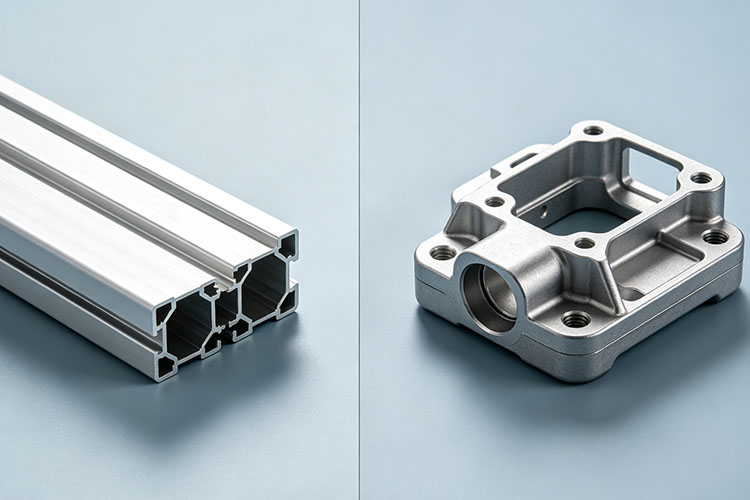
What Is Extruded Aluminum?
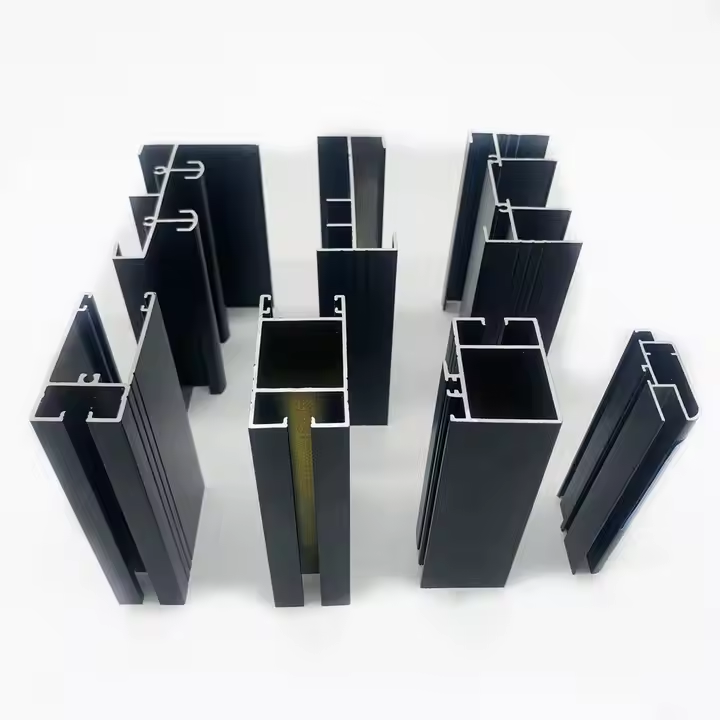
Extruded aluminum is produced by heating a solid aluminum billet to approximately 400-500°C until it becomes malleable but not molten, then forcing it through a precision-shaped steel die using a hydraulic press. The aluminum emerges as a continuous profile with a uniform cross-section that matches the die opening.
This process is often compared to squeezing toothpaste from a tube—the shape of the opening determines the final form, and the result is a long, continuous length of consistent cross-section.
Key Characteristics of Extruded Aluminum
Grain Structure: Extrusion applies directional force to the heated billet, aligning the grain structure longitudinally. Metallurgists call this "fiber flow." The aligned structure provides predictable, superior strength characteristics, much like the difference between tangled yarn and neatly combed fibers.
Mechanical Properties: Extruded aluminum offers higher tensile strength (typically 250-310 MPa for 6061-T6), superior yield strength (200-280 MPa), and excellent elongation (8-15%) compared to die-cast alternatives. Porosity is minimal, typically below 0.5% by volume.
Dimensional Consistency: Extruded profiles maintain tight tolerances of approximately ±0.1-0.3mm, with uniform wall thickness along the entire length.
Common Alloys Used in Extrusion
6063-T5: The most economical choice, excellent extrudability and surface finish; ideal for architectural and furniture applications
6061-T6: Higher strength, good weldability; suitable for structural and industrial components
6005A / 6082: Structural alloys with excellent corrosion resistance
Typical Applications
Window and door frames
Architectural curtain walls and structural profiles
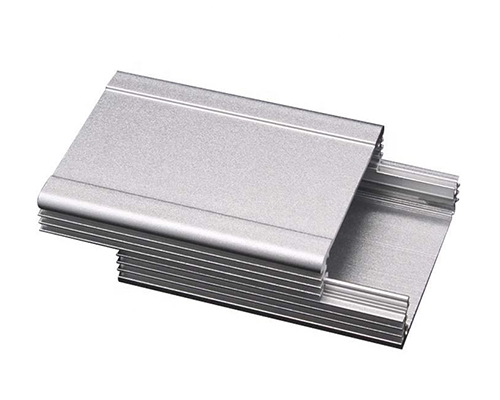
Heat sinks and thermal management components
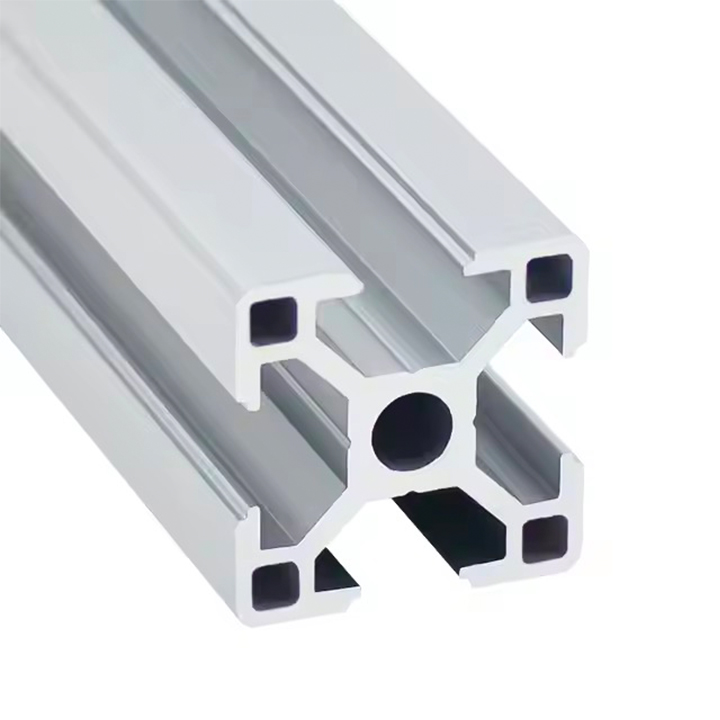
Industrial framing and modular systems
Furniture components and decorative trims
Transportation and aerospace structures
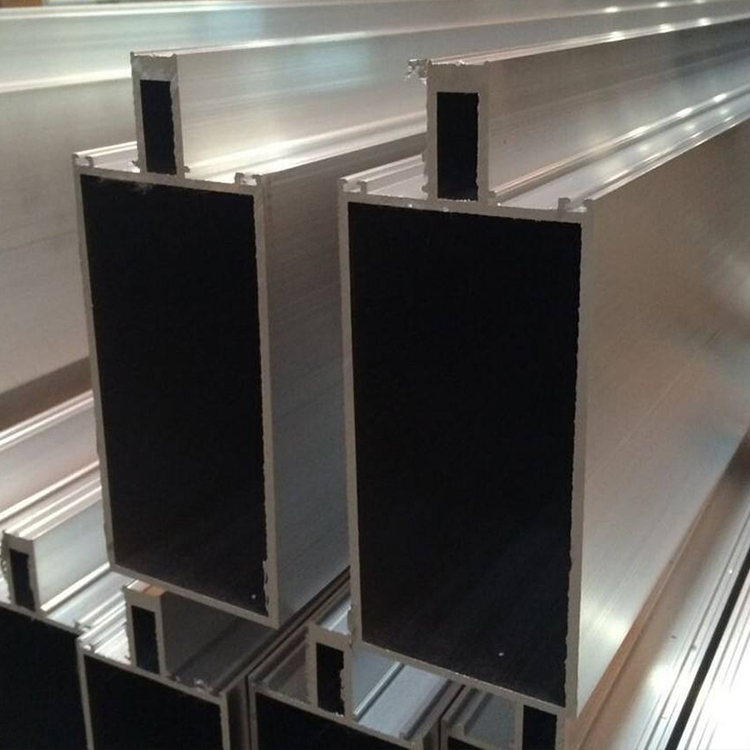
What Is Die-Cast Aluminum?
Die-cast aluminum is produced by melting aluminum alloy and injecting it under high pressure into a precision steel mold (die). The molten metal fills every detail of the mold cavity, then cools and solidifies to form the final part. Unlike extrusion, which produces continuous lengths, die casting creates discrete parts with complex three-dimensional shapes in a single operation.
Key Characteristics of Die-Cast Aluminum
Grain Structure: The molten metal cools rapidly against the mold walls, creating a chaotic, random grain boundary network. This structure can trap gases and create micro-porosity that weakens the material.
Porosity: Die-cast components typically contain 2-5% porosity by volume. These microscopic voids act as stress concentrators under cyclic loading, reducing fatigue life and pressure resistance.
Mechanical Properties: While die-cast aluminum has good hardness, its tensile strength (typically 180-240 MPa) and elongation (2-6%) are lower than extruded equivalents. The porosity limits heat treatment capabilities.
Surface Finish: Die casting delivers superior surface finish directly from the mold, typically Ra 0.4-1.6 μm, often eliminating the need for secondary machining.
Common Alloys Used in Die Casting
A380 / ADC12: The most common die-casting alloys with high silicon content for fluidity
ALSi9Cu3: Good castability and mechanical properties
Zinc-aluminum alloys: Higher strength but lower thermal conductivity
Typical Applications
Automotive engine blocks, transmission cases, and housings
Consumer electronics enclosures
Decorative architectural components and hardware
Pump housings and industrial machinery parts
Cookware and small appliances
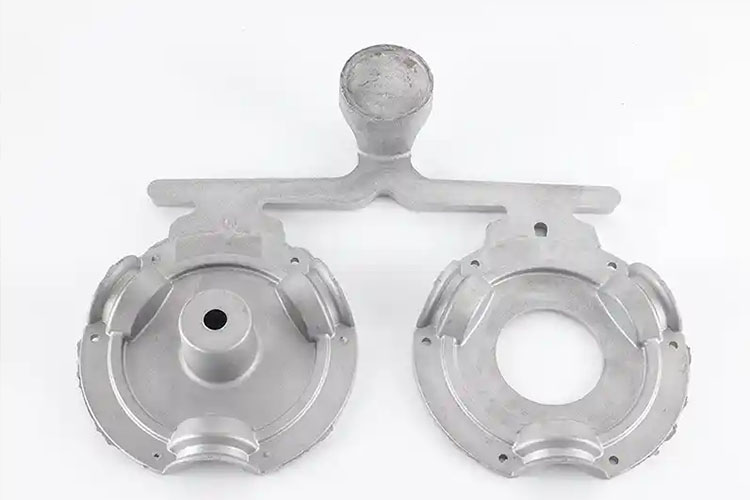
Extruded Aluminum vs Die-Cast Aluminum: Key Differences
1. Manufacturing Principle
Process Type: Extrusion is a solid-state processing method where aluminum remains solid throughout, while die casting is a liquid forming process where aluminum is fully melted.
Temperature: Extrusion operates at 400-500°C (below the melting point of aluminum), whereas die casting requires temperatures above 660°C.
Pressure: Extrusion applies 10,000-15,000 psi to force the billet through the die, while die casting involves high-pressure injection into a mold.
Material State: In extrusion, the heated billet remains malleable but solid; in die casting, the alloy is in a molten liquid state.
2. Mechanical Properties
Porosity: Extruded aluminum typically contains less than 0.5% porosity, while die-cast aluminum contains 2-5%. This makes extrusion the superior choice for pressure-critical applications.
Tensile Strength: Extruded aluminum (6061-T6) offers 250-310 MPa compared to die-cast aluminum's 180-240 MPa. The aligned grain structure of extrusion provides predictable, superior strength characteristics.
Elongation: Extruded aluminum provides 8-15% elongation, indicating ductility and ability to absorb impact without fracturing. Die-cast aluminum offers only 2-6% elongation and is more brittle.
Fatigue Life: The minimal porosity in extruded aluminum results in longer fatigue life under cyclic loading, making it essential for structural and load-bearing applications.
Thermal Conductivity: Extruded aluminum has significantly higher thermal conductivity (approximately 180-190 W/m·K) than die-cast aluminum (approximately 80-90 W/m·K).
3. Geometric Capabilities
Cross-Section: Extrusion produces continuous profiles with a completely uniform cross-section along their length. This is ideal for linear components like window frames, rails, and structural beams.
3D Complexity: Die casting can manufacture hollow, multi-directionally connected three-dimensional parts with undercuts, ribs, bosses, and complex internal features—geometries impossible to achieve through extrusion.
Wall Thickness: Extrusion typically handles wall thicknesses from 2-50mm, while die casting excels at producing thin walls of 0.5-5mm. This is why die casting is preferred for lightweight electronic enclosures.
Length: Extruded profiles can be produced up to 40+ meters in length, while die-cast parts are limited by machine size.
4. Production Considerations
Tooling Investment: Extrusion dies are significantly more affordable, typically $5,000-$15,000 for simple profiles and $15,000-$50,000 for complex designs. Die-casting molds cost substantially more—$50,000-$150,000 for simple parts and $150,000-$500,000+ for complex, multi-cavity molds with cooling systems.
Production Volume: Extrusion is cost-effective for low to medium production volumes (100-10,000 parts), while die casting achieves economies of scale at higher volumes (1,000-1M+ parts).
Material Efficiency: Extrusion uses 95-98% of the raw material, making it highly efficient. Die casting achieves 75-85% material utilization due to sprues and runners.
Setup Time: Extrusion die changes take 2-4 hours, while die-casting mold changes are typically faster at 30-60 minutes.
5. Surface Quality and Finishing
As-Produced Surface: Die casting provides superior as-cast surface finish (Ra 0.4-1.6 μm) that often requires no additional machining. Extruded surfaces (Ra 1.6-6.3 μm) typically require post-processing for cosmetic applications.
Anodizing Compatibility: Extruded aluminum can be anodized directly, providing excellent corrosion protection and aesthetic finishes. Die-cast aluminum anodizing is more challenging due to porosity and silicon content variations.
Coating: Both processes accept powder coating effectively, with die-cast surfaces often requiring less preparation.
Cost Comparison: Extrusion vs Die Casting
Initial Tooling Investment
Extrusion dies: $5,000 - $50,000
Die-casting molds: $50,000 - $500,000+
Unit Production Costs (Per Kilogram)
Extrusion (low volume): $3-12
Extrusion (medium volume): $2-8
Extrusion (high volume): $1.5-6
Die casting (low volume): $8-25
Die casting (medium volume): $4-15
Die casting (high volume): $2-10
Break-Even Analysis
Die casting becomes cost-competitive with extrusion at approximately 5,000-15,000 parts for simple components and 15,000-50,000 parts for complex components. Below these volumes, extrusion typically offers better total cost of ownership.
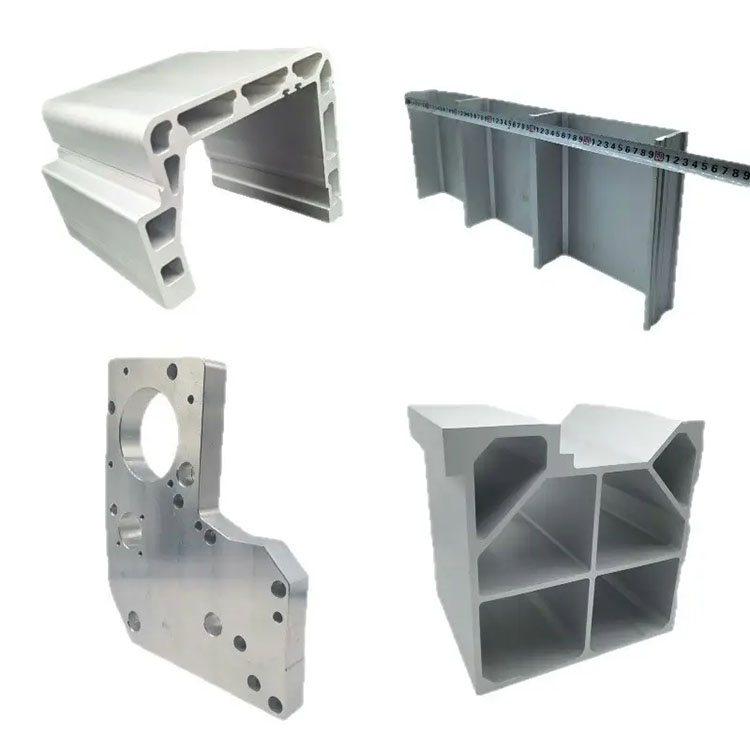
How to Choose: Decision Framework
Choose Extruded Aluminum When:
Your part requires structural strength and load-bearing capacity. The aligned grain structure and minimal porosity of extrusion provide superior tensile strength, fatigue resistance, and impact absorption. Our industrial structural profiles are engineered to meet demanding mechanical requirements.
Your design involves continuous, uniform cross-sections. Extrusion excels at producing linear profiles—window frames, rails, channels, and beams—where cross-section remains consistent along the length.
You need long lengths. Extruded profiles can be produced up to 40+ meters, making them ideal for construction and transportation applications.
Your production volume is low to medium. Lower tooling investment makes extrusion economically viable for smaller runs.
Thermal management is critical. Extruded aluminum's higher thermal conductivity (180-190 W/m·K) makes it the preferred choice for heat sinks and cooling applications.
You require surface finishing like anodizing. Extruded aluminum can be anodized directly, providing durable, attractive finishes for architectural profiles and furniture/decorative profiles.
Choose Die-Cast Aluminum When:
Your part has complex 3D geometry with internal cavities, undercuts, or multi-directional features. Die casting can produce shapes impossible to achieve through extrusion in a single manufacturing step.
You require tight dimensional tolerances and excellent as-cast surface finish. Die casting typically achieves ±0.05-0.1mm tolerances and Ra 0.4-1.6 μm surface finish directly from the mold.
Your production volume is high. Die casting's higher tooling investment is justified by lower per-unit costs at high volumes (typically 1,000-1M+ parts).
Your part is relatively compact. Die casting is limited by machine size and cannot produce long, continuous profiles.
Your design includes thin walls. Die casting excels at wall thicknesses of 0.5-5mm, making it suitable for lightweight electronic enclosures.
Common Application Examples
Construction and Architectural
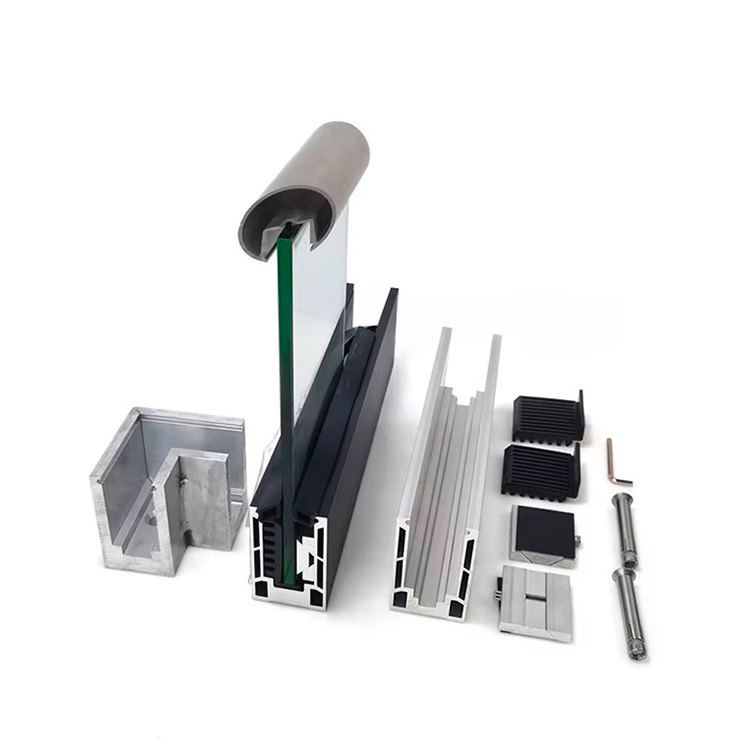
Extrusion: Window and door frames, curtain walls, handrails, structural beams, solar panel frames
Die Casting: Decorative hardware, hinges, locks, architectural trim components
Automotive
Extrusion: Space frames, roof rails, crash management systems, battery enclosures for EVs
Die Casting: Engine blocks, transmission cases, cylinder heads, pump housings
Electronics and Thermal Management
Extrusion: Heat sinks, LED housings, busbars, telecommunications components
Die Casting: Device enclosures, connectors, EMI shielding components
Furniture and Interior
Extrusion: Frame structures, sliding door tracks, shelving systems, curtain tracks
Die Casting: Decorative fittings, hinges, handles, accent pieces
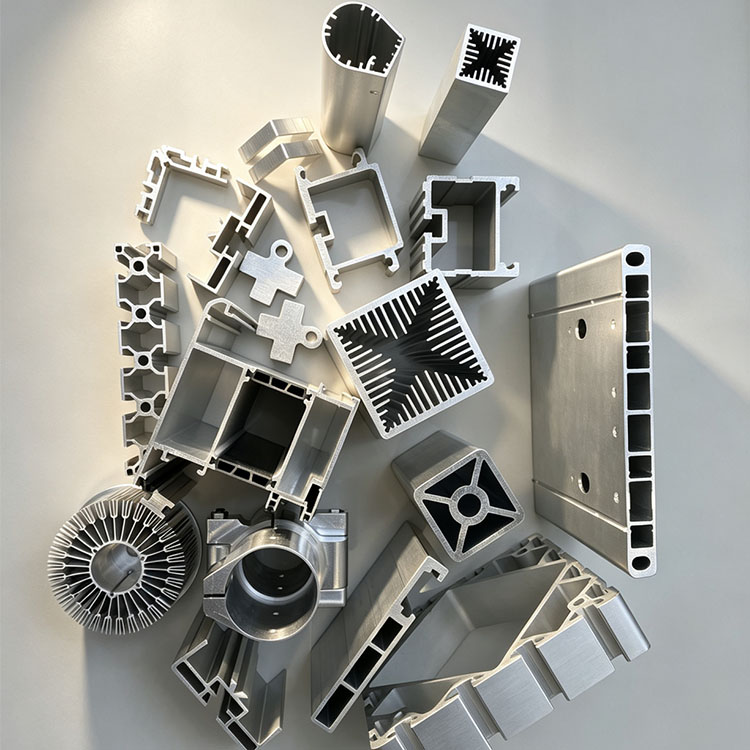
Frequently Asked Questions (FAQ)
Q: Which is stronger—extruded or die-cast aluminum?
A: Extruded aluminum is generally stronger, with tensile strength of 250-310 MPa (6061-T6) compared to 180-240 MPa for die-cast aluminum. Extrusion's aligned grain structure and minimal porosity provide superior mechanical properties.
Q: Why is die-cast aluminum more porous?
A: Die casting involves injecting molten aluminum into a mold under high pressure. The rapid cooling traps gases, creating micro-porosity of 2-5% by volume. Extrusion, as a solid-state process, produces minimal porosity (below 0.5%).
Q: Which process is more cost-effective?
A: Extrusion has lower tooling costs ($5,000-$50,000 vs $50,000-$500,000+) and is cost-effective for low to medium production volumes. Die casting achieves economies of scale at higher volumes (typically 5,000-50,000+ parts).
Q: Can both processes produce complex shapes?
A: Extrusion is limited to uniform cross-sections along the length, while die casting can produce complex 3D geometries with internal cavities, undercuts, and multi-directional features in a single operation.
Q: Which is better for heat sinks?
A: Extruded aluminum is significantly better for heat sinks due to higher thermal conductivity (approximately 180-190 W/m·K versus 80-90 W/m·K for die-cast aluminum). Extrusion also allows for complex fin geometries that maximize surface area for heat dissipation.
Q: Can extruded aluminum be anodized?
A: Yes, extruded aluminum can be directly anodized, providing excellent corrosion protection and a wide range of aesthetic finishes. Die-cast aluminum anodizing is more challenging due to porosity and silicon content.
Related Posts
To deepen your understanding of aluminum processing and make more informed sourcing decisions, we recommend exploring these related articles from our blog:
Guide to Aluminum Extrusion Die Design and Lifespan — Learn about die types, failure mechanisms, and strategies to maximize tooling performance.
Aluminum Extrusion Process: 11 Key Steps Explained — A comprehensive walkthrough from billet heating to final aging.
Aluminum Extrusion Cost Breakdown: A Complete Guide — Understand cost components and implement cost-saving strategies.
Aluminum Alloy 6063 vs 6061: Which One to Choose — Detailed comparison to help you select the right material for your project.
Applications of Aluminum Extrusion in Different Industries — Explore how extrusion is used across construction, automotive, electronics, and furniture.
About Aluleader
With over 15 years of experience in the aluminum extrusion industry, Aluleader provides high-quality architectural profiles, industrial profiles, and furniture/decorative profiles. Our integrated capabilities—from die design and extrusion to CNC machining, surface finishing, and fabrication—ensure consistent quality across every project.
Our engineering team collaborates with clients to select the optimal manufacturing process for each application, balancing performance requirements, production volume, and cost considerations. For project-specific questions or detailed inquiries about extrusion capabilities, our experts are available to provide technical guidance.