Welcome to Aluleader Metal
Aluminum Extrusion Profiles Explained: Types, Sizes & Applications
Aluminum extrusion profiles are widely used in construction, industrial automation, furniture manufacturing, transportation, electronics, and many other industries. Their combination of relatively low weight, corrosion resistance, and flexible cross-sectional design makes them suitable for a broad range of structural and decorative applications.
However, choosing the right aluminum profile involves more than selecting a shape or size.
Buyers must also consider the aluminum alloy, temper, wall thickness, dimensional tolerances, surface finish, and compatibility with other components.
Aluminum extrusion profiles are aluminum products manufactured by forcing heated aluminum alloy through a shaped die to produce a continuous cross-section. Common examples include aluminum channels, angles, tubes, T-slot profiles, window frames, and custom-designed structural sections.
This guide explains the main types of aluminum extrusion profiles, commonly available sizes, material options, and practical selection considerations for engineers, manufacturers, distributors, and international buyers.
1. What Are Aluminum Extrusion Profiles?
Aluminum extrusion is a manufacturing process used to create products with a consistent cross-sectional shape along their length.
During production, an aluminum billet is heated and pressed through a specially designed die. The extruded material is then cooled, stretched or straightened where appropriate, cut, and processed according to the required specifications.
Depending on the alloy, temper, and intended application, additional processing may include heat treatment, machining, anodizing, or powder coating.
The extrusion process allows manufacturers to produce both simple and complex profiles.
Common shapes include:
-
Solid aluminum bars and rods
-
Aluminum angles and channels
-
Round, square, and rectangular tubes
-
T-shaped and H-shaped profiles
-
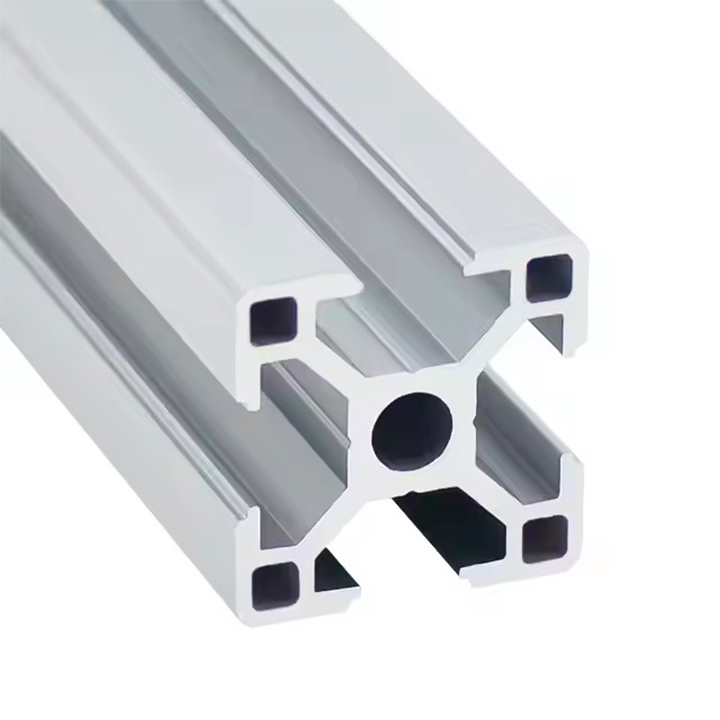
T-slot aluminum framing profiles
-
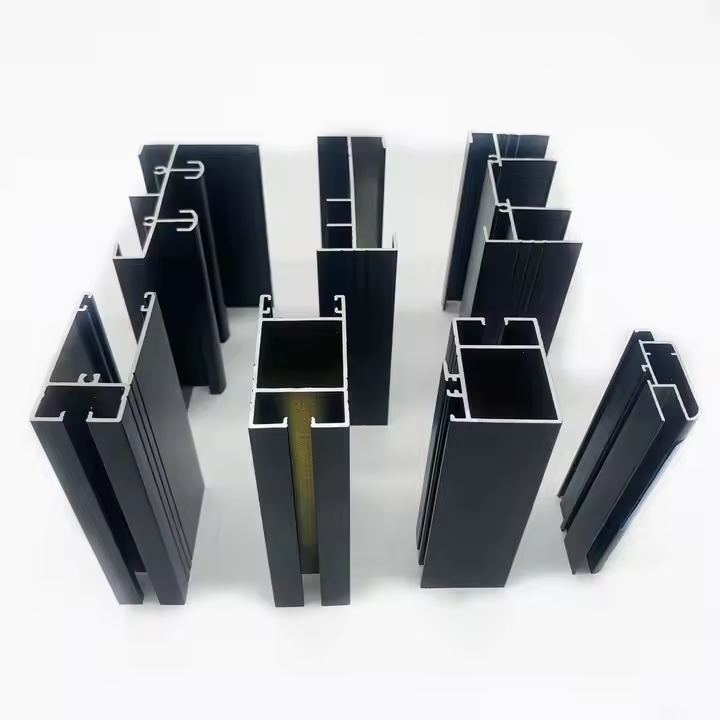
Architectural window and door sections
-
Custom hollow and semi-hollow profiles
-
Specialized industrial components
Unlike aluminum sheets or plates, extruded profiles are typically selected when the product requires a particular cross-sectional geometry.
Why Aluminum Extrusions Are Widely Used
Aluminum profiles offer several advantages:
Lightweight construction: Aluminum has a density of approximately 2.7 g/cm³, significantly lower than that of steel.
Corrosion resistance: Aluminum naturally forms a protective oxide layer, although environmental conditions and alloy selection still matter.
Design flexibility: Extrusion dies can create channels, grooves, ribs, and other features directly within the profile.
Secondary processing: Many extruded profiles can be cut, drilled, machined, or surface-finished.
Recyclability: Aluminum can be recycled, although the environmental impact of a specific product depends on material sourcing, production methods, and recycling conditions.
These characteristics make aluminum extrusion suitable for products ranging from decorative trim to industrial equipment structures.
2. Main Types of Aluminum Extrusion Profiles
Aluminum extrusion profiles can be classified by cross-sectional geometry, intended application, or whether they use a standard or custom design.
Understanding these categories helps buyers identify suitable products and communicate requirements to manufacturers.
2.1 Solid Aluminum Profiles
Solid profiles contain no fully enclosed internal voids in their cross-section.
Examples include aluminum bars, rods, flat bars, and certain angles.
They are commonly used for:
-
Machined components
-
Brackets and mounting parts
-
Structural connectors
-
Decorative trim
-
General fabrication
Solid profiles may be relatively straightforward to extrude, but production feasibility still depends on alloy, shape, dimensions, and required tolerances.
2.2 Hollow Aluminum Profiles
Hollow profiles contain one or more enclosed internal cavities.
Typical examples include:
-
Round aluminum tubes
-
Square aluminum tubes
-
Rectangular aluminum tubes
-
Multi-chamber structural profiles
-
Certain window and door frame sections
Hollow profiles can provide useful stiffness-to-weight characteristics and may accommodate fasteners, cables, or other components.
However, hollow profile manufacturing often requires more complex tooling than simple solid shapes.
2.3 Semi-Hollow Aluminum Profiles
Semi-hollow profiles contain partially enclosed spaces or narrow openings that may complicate die design.
Examples can include deep channels and certain specialized architectural sections.
A profile's formal classification depends on its geometry and the applicable extrusion-design criteria.
Buyers should not assume that a shape is easy to manufacture simply because it has no completely enclosed cavity.
Comparison of Profile Types
| Profile type | Common examples | Typical applications | Main considerations |
|---|---|---|---|
| Solid | Bars, rods, angles | Machining, brackets, supports | Material usage, dimensions |
| Hollow | Tubes, multi-chamber profiles | Frames, structures, enclosures | Die design, wall thickness |
| Semi-hollow | Deep channels, specialized sections | Tracks, frames, custom parts | Geometry, extrusion feasibility |
The best profile type depends on functional requirements rather than shape alone.
3. Common Aluminum Extrusion Shapes
Different aluminum extrusion shapes serve different engineering and assembly purposes.
Aluminum Angle Profiles
Aluminum angle profiles typically have an L-shaped cross-section.
They are used for corner reinforcement, mounting brackets, frame connections, edge protection, and general fabrication.
Angles may have equal or unequal legs.
For example, an equal angle has two legs of the same nominal length, while an unequal angle has different leg dimensions.
When purchasing aluminum angles, specify leg dimensions, wall thickness, length, alloy, and temper.
Aluminum U-Channels
U-shaped aluminum channels have a base and two side walls.
They are commonly used in:
-
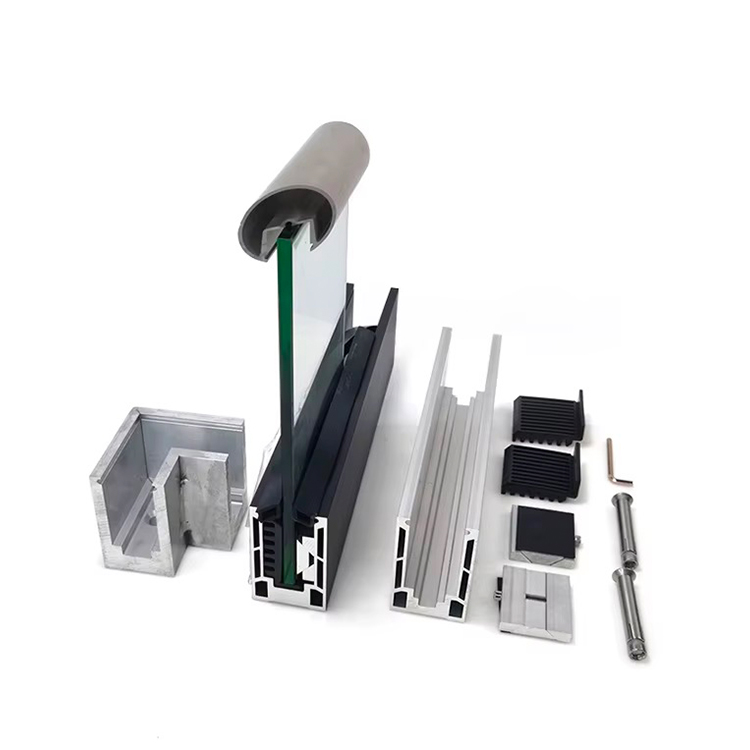
Glass and panel support systems
-
Furniture and cabinet manufacturing
-
Equipment housings
-
Edge protection
-
Sliding and guiding applications
Important dimensions include the external width, internal opening, channel depth, and wall thickness.
The internal dimensions are often particularly important when the channel must accommodate another component.
Aluminum T-Profiles
T-shaped aluminum profiles can be used for joining, reinforcement, support, and decorative applications.
They should not be confused with T-slot framing profiles, which incorporate grooves designed for compatible connectors and accessories.
Aluminum H-Profiles
H-shaped profiles are often used for joining panels, supporting sections, or creating specialized frame assemblies.
The appropriate design depends on the required load conditions and assembly arrangement.
Aluminum Tubes
Extruded aluminum tubes are available in various shapes, including round, square, and rectangular sections.
They are commonly used in furniture, machinery, transportation, structural assemblies, and fabricated products.
Tube selection requires attention to outside dimensions, wall thickness, internal clearance, and mechanical requirements.
Custom Aluminum Shapes
Standard shapes are not suitable for every project.
A custom extrusion may combine several features into one cross-section, such as mounting slots, screw ports, ribs, channels, and decorative surfaces.
This can reduce the number of separate components required in an assembly.
However, the design must remain practical for extrusion, tooling, inspection, and downstream processing.
4. What Are the Most Common Aluminum Extrusion Sizes?
There is no single universal size system covering every aluminum extrusion profile.
Common aluminum extrusion sizes depend on the profile family, industry, regional product catalog, and manufacturer.
For example, industrial modular framing frequently uses nominal metric series such as 20, 30, 40, and 45 mm, while some markets and applications use inch-based framing systems.
Architectural profiles, aluminum channels, tubes, and custom sections follow different dimensional conventions.
Common Industrial T-Slot Profile Sizes
The following table shows examples of nominal metric framing sizes commonly encountered in industrial profile catalogs.
| Nominal profile size | Typical application examples |
|---|---|
| 20 × 20 mm | Small equipment frames, guards, light-duty assemblies |
| 20 × 40 mm | Compact structures and mounting systems |
| 30 × 30 mm | Equipment frames and modular structures |
| 30 × 60 mm | Frames requiring greater depth in one direction |
| 40 × 40 mm | Machine frames and industrial workstations |
| 40 × 80 mm | Machine structures and larger framing assemblies |
| 45 × 45 mm | Modular industrial framing |
| 45 × 90 mm | Larger industrial structures |
These are nominal size examples, not universal dimensions or guaranteed Aluleader stock specifications.
Actual profile geometry, slot dimensions, wall thickness, weight, and mechanical performance vary by product series and manufacturer.
For example, two 40 × 40 mm profiles may have different slot widths, internal reinforcement, weight per meter, and load-bearing characteristics.
They should not be considered interchangeable without checking their technical drawings.
Common Aluminum Tube Sizes
Aluminum tubes are usually specified using outside dimensions and wall thickness.
For a round tube, the main dimensions are outside diameter, wall thickness, and length.
For a rectangular tube, the specification generally includes width, height, wall thickness, and length.
Examples of nominal tube dimensions encountered in product catalogs include:
-
Round tube: 20 mm outside diameter
-
Round tube: 30 mm outside diameter
-
Square tube: 25 × 25 mm
-
Square tube: 40 × 40 mm
-
Rectangular tube: 20 × 40 mm
-
Rectangular tube: 40 × 80 mm
These examples do not imply a particular wall thickness, tolerance, or material grade.
Buyers should confirm availability and detailed specifications with the supplier.
Standard Dimensions vs Custom Dimensions
A standard profile is typically based on an existing product design or established catalog series.
A custom profile is designed to meet specific project requirements.
Custom profiles may be useful when a standard size cannot provide the required:
-
Assembly clearance
-
Mounting features
-
Structural geometry
-
Decorative appearance
-
Internal channels
-
Wall thickness distribution
-
Component integration
Custom dimensions usually require technical review and may require new extrusion tooling.
5. Standard Aluminum Profiles vs Custom Aluminum Profiles
One of the most important purchasing decisions is whether to use a standard profile or develop a custom extrusion.
Standard Aluminum Profiles
Standard profiles are based on established shapes or existing product series.
They may offer advantages such as:
-
Reduced initial tooling requirements when suitable dies already exist
-
Easier comparison between catalog products
-
Familiar dimensions and accessories
-
Potentially shorter sourcing preparation
However, standard profiles may require additional machining or assembly to achieve the desired function.
Custom Aluminum Extrusion Profiles
Custom profiles are designed around the buyer's specific product requirements.
They may incorporate multiple functions into one cross-section.
Potential advantages include:
-
Improved component integration
-
Reduced assembly complexity
-
Better use of available space
-
Application-specific geometry
-
Customized mounting and connection features
The trade-offs may include tooling investment, design review, sample approval, and production minimums.
Which Option Should You Choose?
| Consideration | Standard profile | Custom profile |
|---|---|---|
| Initial tooling | Often unnecessary if an appropriate existing die is available | May require new tooling |
| Design flexibility | Limited to available profiles | Tailored to project requirements |
| Initial development | Often simpler | Requires design and tooling review |
| Assembly optimization | May require additional parts | Can integrate multiple functions |
| Reordering | Depends on supplier availability | Depends on tooling and supply arrangements |
| Best suited for | General-purpose and modular applications | Application-specific products |
For simple frames or standard assemblies, an existing profile may be sufficient.
For products with unique functional or aesthetic requirements, custom extrusion may provide better long-term value.
Explore Aluleader's standard aluminum profiles for relevant product categories.
6. Common Aluminum Alloys Used for Extrusion Profiles
Aluminum extrusion profiles are manufactured from different alloys.
The choice of alloy affects extrusion behavior, mechanical properties, corrosion resistance, finishing performance, and machining characteristics.
Two widely used alloys are 6063 and 6061.
6063 Aluminum Profiles
6063 is commonly used for architectural and decorative extrusions.
Typical applications include:
-
Window and door profiles
-
Curtain wall components
-
Furniture profiles
-
Decorative channels
-
General architectural sections
6063 is valued for its extrusion characteristics and suitability for many visible finished products.
Read our guide to 6063 aluminum window and door profiles for more information.
6061 Aluminum Profiles
6061 is widely used in industrial and structural applications.
Depending on the required temper and product specification, it may be selected for:
-
Machine components
-
Structural frames
-
Mounting systems
-
Transportation components
-
Fabricated industrial parts
6061 can be more challenging to extrude into certain complex or thin-wall geometries than 6063.
This is one reason alloy selection should be considered during the design stage.
6005A and Other Extrusion Alloys
6005A is also used in various structural extrusion applications.
Other aluminum alloys may be appropriate depending on mechanical requirements, corrosion conditions, processing needs, and applicable specifications.
A manufacturer should evaluate the intended use rather than selecting an alloy solely because it is common or readily available.
Alloy Comparison
| Alloy | General characteristics | Common application areas |
|---|---|---|
| 6063 | Good extrudability and surface finish potential | Architectural and decorative profiles |
| 6061 | Useful strength and machining characteristics in suitable tempers | Industrial and structural components |
| 6005A | Used in structural extrusion applications | Frames, structural sections, industrial systems |
Actual mechanical properties depend on the temper, product form, dimensions, and applicable material standard.
The table is intended for initial material selection, not structural design calculations.
7. Understanding Aluminum Profile Wall Thickness
Wall thickness is an important factor in aluminum extrusion design.
It can influence:
-
Profile weight
-
Structural performance
-
Extrusion feasibility
-
Dimensional stability
-
Tooling complexity
-
Material consumption
-
Cost
However, thicker aluminum profiles are not automatically better for every application.
A suitable wall thickness depends on the alloy, profile geometry, loading conditions, support arrangement, and intended service environment.
Why Uniform Wall Thickness Matters
Large differences in wall thickness within one cross-section can complicate extrusion.
Where practical, more consistent wall thickness may help improve material flow and manufacturing feasibility.
Nevertheless, certain applications require local reinforcement or intentionally varied wall sections.
Such designs should be reviewed with the extrusion manufacturer.
Thin-Wall Aluminum Extrusions
Thin-wall profiles can help reduce material consumption and weight.
However, the minimum practical wall thickness depends on several factors, including:
-
Alloy
-
Profile size
-
Shape complexity
-
Extrusion equipment
-
Die design
-
Required tolerances
It is not technically appropriate to claim that one minimum wall thickness applies to every aluminum extrusion.
For architectural applications, buyers should also consider the requirements of the complete window or door system.
Our aluminum profile wall thickness guide explains these considerations in more detail.
8. Dimensional Tolerances for Aluminum Extrusion Profiles
Dimensional tolerances define the allowable variation between a specified dimension and the finished profile.
They are important because aluminum extrusions often need to fit other components.
A profile may look acceptable but still cause problems during assembly if a critical slot, opening, or mating surface is outside its agreed tolerance.
Common Tolerance Considerations
Relevant characteristics include:
-
Cross-sectional dimensions
-
Wall thickness
-
Straightness
-
Twist
-
Flatness
-
Angularity
-
Cut length
-
Critical grooves and openings
Tolerance requirements depend on the product design and applicable specification.
Standard vs Precision Requirements
For general-purpose profiles, standard extrusion tolerances may be suitable.
For precision assemblies, selected dimensions may require tighter control.
Rather than applying unnecessarily strict limits to every dimension, buyers should identify the features that directly affect fit or function.
Applicable Standards
Depending on the market and product, aluminum extrusion dimensions and tolerances may be specified using recognized standards such as EN 755-9 or ANSI H35.2.
These standards are not interchangeable in every respect.
The applicable edition, product form, and agreed acceptance criteria should be confirmed before production.
For more information, read our aluminum extrusion tolerance guide.
9. Surface Finishing Options for Aluminum Profiles
Surface finishing may improve appearance, provide additional surface protection, or meet application-specific requirements.
Common options include mill finish, anodizing, powder coating, and mechanical surface treatments.
Mill Finish
Mill finish describes aluminum profiles supplied without a separately specified decorative surface treatment.
The surface may show normal extrusion-related appearance characteristics.
Mill finish does not necessarily mean a perfectly smooth or visually uniform surface.
Anodizing
Anodizing creates a controlled oxide layer on the aluminum surface.
It is commonly used for architectural and decorative profiles.
Finish appearance and performance depend on the alloy, surface preparation, anodizing process, and specified requirements.
Powder Coating
Powder coating provides a decorative coating and can be specified for various indoor or outdoor applications.
Its performance depends on the coating system, pretreatment, application, and service environment.
Brushing and Mechanical Finishing
Brushing and other mechanical treatments can create particular surface textures.
They may be used before additional finishing, depending on the desired appearance.
For a comparison of two widely used architectural finishes, see powder coated vs anodized aluminum profiles.
10. Aluminum Extrusion Profiles for Different Industries
Different industries use aluminum profiles for different reasons.
A profile that works well for a decorative frame may not be suitable for a heavily loaded machine structure.
Architectural Aluminum Profiles
Architectural profiles are used in:
-
Windows and doors
-
Curtain walls
-
Facade systems
-
Partitions
-
Decorative trim
-
Building-related assemblies
Important considerations may include surface finish, dimensional compatibility, corrosion exposure, hardware fit, and the requirements of the complete building system.
Explore Aluleader's architectural aluminum profiles.
Industrial Aluminum Profiles
Industrial aluminum profiles are used for machine frames, workstations, equipment supports, automation systems, and other manufacturing applications.
Important factors may include:
-
Profile stiffness
-
Connection design
-
Load conditions
-
Dimensional compatibility
-
Machining requirements
-
Accessory availability
Explore our industrial aluminum profiles.
Furniture Aluminum Profiles
Furniture profiles are used in cabinets, shelving, glass doors, display systems, and other interior applications.
Buyers often prioritize appearance, ease of assembly, surface protection, and compatibility with panels or hardware.
Explore our furniture aluminum profiles.
Solar and Equipment Frames
Aluminum profiles may also be used in solar mounting systems and equipment enclosures.
These applications can require careful evaluation of loading, fastening, corrosion exposure, and relevant engineering standards.
Material selection and structural design should be verified for the intended service conditions.
11. How to Choose the Right Aluminum Extrusion Profile
Choosing an aluminum extrusion profile is a technical and commercial decision.
The following process can help buyers narrow their options.
Step 1: Define the Application
Determine whether the profile is primarily decorative, structural, functional, or a combination of these.
Identify any requirements involving loads, assembly, environmental exposure, or appearance.
Step 2: Select the Profile Geometry
Decide whether an angle, channel, tube, T-slot section, or custom shape is suitable.
Consider how the profile will connect to other parts.
Step 3: Choose the Alloy and Temper
Select an alloy and temper based on the intended function, mechanical requirements, finishing needs, and extrusion feasibility.
Step 4: Specify Dimensions and Tolerances
Provide the overall dimensions, wall thickness, length, and critical tolerances.
If the profile must fit another component, identify the mating dimensions clearly.
Step 5: Define the Surface Finish
Specify whether the profile requires mill finish, anodizing, powder coating, or another treatment.
For visible products, agree on appearance and acceptance criteria.
Step 6: Confirm Processing Requirements
Determine whether cutting, drilling, CNC machining, punching, or other operations are required.
These processes can affect cost, lead time, and dimensional requirements.
Step 7: Request a Technical Review
For custom profiles, submit drawings to a manufacturer for feasibility review.
If the design is complex, discuss possible changes before opening a die.
Step 8: Approve Samples When Necessary
For new custom designs, evaluate samples before authorizing full production.
Check fit, function, dimensions, and surface finish against the agreed requirements.
12. What Information Should You Send to an Aluminum Extrusion Manufacturer?
A clear RFQ helps manufacturers provide more accurate quotations.
Include the following information where available:
| Item | Recommended information |
|---|---|
| Drawing | 2D cross-section and/or 3D CAD file |
| Profile type | Standard or custom |
| Alloy | Required aluminum grade |
| Temper | Required material condition |
| Dimensions | Cross-section, wall thickness, length |
| Tolerances | Critical and general acceptance requirements |
| Surface finish | Type, color, and finish specification |
| Quantity | Initial order and estimated recurring demand |
| Processing | Cutting, drilling, machining, assembly |
| Application | Intended use and relevant functional requirements |
| Destination | Delivery country and shipping terms |
If you are comparing multiple suppliers, use the same RFQ specification for each quotation.
This makes it easier to evaluate pricing, technical feasibility, and delivery conditions fairly.
For a more detailed supplier assessment process, see our guide to evaluating aluminum extrusion manufacturers.
13. Frequently Asked Questions
What are the most common aluminum extrusion profiles?
Common profiles include aluminum angles, U-channels, T-profiles, tubes, bars, rods, T-slot framing sections, and custom architectural or industrial shapes.
What sizes do aluminum extrusion profiles come in?
Sizes vary by profile family and manufacturer. Industrial framing catalogs commonly include nominal metric sizes such as 20 × 20 mm, 30 × 30 mm, and 40 × 40 mm. Other profiles use different dimensional systems.
What is the difference between standard and custom aluminum profiles?
Standard profiles use established shapes or catalog designs. Custom profiles are developed for specific product requirements and may require dedicated extrusion tooling.
Which aluminum alloy is best for extrusion profiles?
There is no single best alloy for every application. 6063 is common in architectural and decorative profiles, while 6061 is widely used for industrial and structural components. The correct choice depends on design and performance requirements.
Are aluminum extrusion profiles strong enough for structural applications?
Some aluminum extrusions are suitable for structural applications when properly selected and engineered. Their suitability depends on alloy, temper, geometry, loading, connections, and applicable design requirements.
Can aluminum extrusion profiles be customized?
Yes. Manufacturers can develop custom cross-sections based on technical drawings, subject to extrusion feasibility, tooling requirements, and production capabilities.
What is the difference between aluminum extrusion and aluminum casting?
Extrusion creates a continuous profile with a consistent cross-section by forcing material through a die. Casting forms parts by introducing molten metal into a mold. The processes suit different geometries, properties, and manufacturing requirements.
How do I calculate the weight of an aluminum extrusion profile?
The theoretical weight can be estimated from the profile's cross-sectional area, length, and material density.
For a typical aluminum alloy, a preliminary calculation may use a density of approximately 2.7 g/cm³. Actual density depends on the alloy.
For a complex profile, the cross-sectional area is usually obtained from the CAD drawing or manufacturer specification.
Can aluminum profiles be anodized or powder coated?
Many aluminum extrusion profiles can receive these finishes, but the results depend on the alloy, surface condition, finishing process, and application requirements.
How do I request a quotation for custom aluminum extrusion profiles?
Send the manufacturer your drawing, alloy and temper requirements, dimensions, tolerances, surface finish, order quantity, processing needs, and delivery destination.
Conclusion: Select Aluminum Extrusion Profiles Based on Your Application
Aluminum extrusion profiles are available in many shapes, sizes, alloys, and finishes.
Understanding the differences between solid, hollow, semi-hollow, standard, and custom profiles helps buyers select suitable products for their projects.
However, profile selection should not be based on nominal dimensions alone.
Wall thickness, alloy, temper, tolerances, connections, finishing, and manufacturing feasibility all influence the final result.
For international buyers, clear technical specifications and communication with the manufacturer are essential to obtaining consistent products.
Explore Aluminum Extrusion Solutions From ALULEADER
ALULEADER supplies aluminum profile solutions for architectural, industrial, and custom manufacturing applications.
Browse our product categories:
If you need a custom aluminum extrusion profile, send your CAD drawing, alloy requirements, dimensions, and estimated quantity to ALULEADER for technical review and quotation.