Welcome to Aluleader Metal
How to Evaluate an Aluminum Extrusion Manufacturer
Choosing the right aluminum extrusion manufacturer is one of the most important decisions for businesses sourcing aluminum profiles. Whether you purchase architectural profiles, industrial aluminum extrusions, or custom-designed components, the manufacturer's technical capabilities and quality management practices can directly affect your product performance, production costs, and delivery reliability.
For international buyers, comparing suppliers involves more than reviewing quotations. A low unit price may appear attractive, but inconsistent dimensions, unsuitable alloys, poor surface finishes, or unclear tooling arrangements can create expensive problems after production begins.
To evaluate an aluminum extrusion manufacturer, focus on seven areas: manufacturing capabilities, alloy selection, dimensional tolerances, quality control, tooling management, surface finishing, and communication reliability. A qualified supplier should be able to explain how it will meet your drawings, verify product quality, and manage the order from sampling through shipment.
This guide explains how importers, distributors, fabricators, engineers, and procurement teams can evaluate aluminum extrusion suppliers before placing an order.
1. Understand Your Aluminum Extrusion Requirements First
Before contacting manufacturers, define what you actually need. A supplier cannot provide an accurate technical assessment or reliable quotation without sufficient product information.
Aluminum extrusions are used across many industries, including:
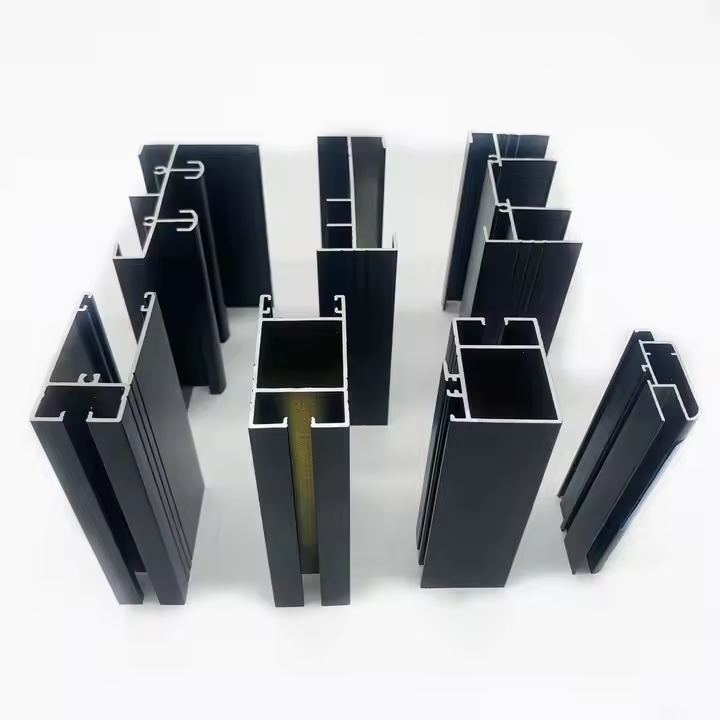
Windows, doors, curtain walls, and building systems
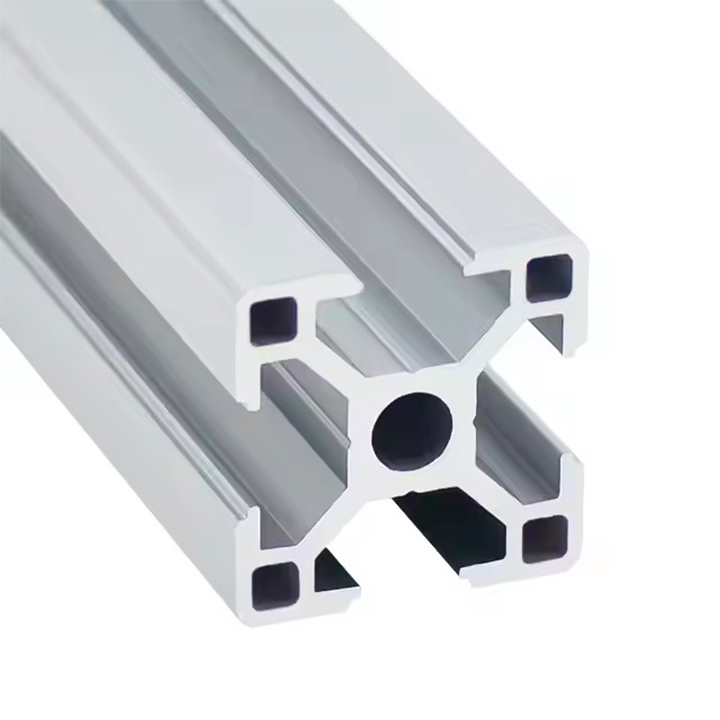
Industrial automation and machine frames
Furniture, cabinets, and interior systems
Solar mounting structures and equipment frames
Electronic enclosures and heat dissipation components
Transportation and general manufacturing
Each application may require different mechanical properties, dimensional tolerances, surface finishes, and processing methods.
For example, a decorative aluminum furniture profile may place greater emphasis on surface appearance, while a machine frame may require dimensional consistency and reliable mechanical connections.
A window profile must also fit its intended glazing, hardware, seals, and assembly system.
Prepare a Clear Request for Quotation (RFQ)
A useful RFQ should include the following information:
| Requirement | Information to provide |
|---|---|
| Product design | CAD drawing, cross-section drawing, or reference sample |
| Aluminum alloy | 6063, 6061, or another specified grade |
| Temper | T5, T6, or another required condition |
| Dimensions | Cross-section dimensions, wall thickness, and cut length |
| Tolerances | Critical dimensions and acceptance limits |
| Surface finish | Mill finish, anodizing, powder coating, or another finish |
| Order quantity | Estimated initial and recurring demand |
| Additional processing | CNC machining, drilling, cutting, punching, or assembly |
| Destination | Importing country and required shipping terms |
| Inspection | Test reports, samples, or third-party inspection requirements |
If you are still developing the product, explain which specifications are fixed and which can be adjusted.
A manufacturer may be able to suggest changes that improve extrusion feasibility without compromising the product's intended function.
2. Evaluate the Manufacturer's Production Capabilities
Not every aluminum extrusion supplier has the same production capabilities.
Some companies focus on standard profiles, while others specialize in custom dies, complex cross-sections, thin-wall profiles, or secondary fabrication.
The first step is to determine whether the manufacturer can produce your particular profile consistently.
Check the Extrusion Equipment and Capacity
Aluminum extrusion production involves forcing heated aluminum billets through a shaped die to create the required cross-section.
The size and configuration of the extrusion press influence which profiles can be manufactured.
However, a larger press does not automatically mean better quality.
When evaluating a supplier, ask:
What extrusion press sizes are available?
What is the maximum profile size the equipment can accommodate?
What alloys and tempers are regularly produced?
Can the factory handle hollow, semi-hollow, and solid profiles?
What profile lengths can be produced and processed?
Are there limitations on minimum wall thickness or complex geometries?
Which production processes are completed internally or by subcontractors?
The answers should be specific to your drawing rather than general statements about factory capacity.
Check Experience With Similar Profiles
A manufacturer experienced in architectural aluminum profiles may understand the assembly requirements of sliding windows and doors.
A supplier focused on industrial profiles may be more familiar with T-slot systems, structural frames, and machining requirements.
Ask whether the supplier has manufactured profiles with similar geometry, alloy, surface finish, or end-use requirements.
You can also request relevant product photographs, sample cross-sections, or anonymized technical examples where confidentiality permits.
The goal is to establish whether the manufacturer understands the engineering challenges involved in your project.
3. Assess Aluminum Alloy and Temper Knowledge
Alloy selection influences strength, corrosion resistance, extrudability, machinability, and surface appearance.
Two widely used extrusion alloys are 6063 and 6061.
6063 Aluminum Extrusions
6063 is commonly used for architectural profiles, window and door frames, decorative components, and applications requiring a good surface finish.
It is frequently specified in T5 or T6 tempers, depending on the mechanical and production requirements.
You can read more about this material in our guide to 6063 aluminum for window and door profiles.
6061 Aluminum Extrusions
6061 is often selected for structural and industrial applications where mechanical performance is an important consideration.
Its properties depend on the temper, product form, and applicable material specification.
A supplier should not recommend 6061 or 6063 based only on which alloy is cheaper.
Instead, it should consider:
Required strength and stiffness
Profile geometry and wall thickness
Surface finish expectations
Machining and assembly requirements
Corrosion environment
Applicable engineering standards
Why Temper Matters
The temper designation describes the material's processing or heat-treatment condition.
For example, 6061-T6 identifies 6061 aluminum in a particular heat-treated condition. It is not a separate alloy.
When requesting quotations, specify both the alloy and the temper where they are important.
A quotation that lists only “aluminum 6061” may not adequately define the required material condition.
Questions to Ask
A technically competent supplier should be able to explain why a particular alloy and temper are suitable for your application.
Ask whether it can provide material certificates, chemical composition information, and mechanical-property documentation when required.
For critical applications, agree on the applicable material standard and testing requirements before production.
4. Evaluate Aluminum Extrusion Quality Control
Aluminum extrusion quality control should cover incoming materials, die preparation, extrusion conditions, dimensional inspection, surface treatment, and final product acceptance.
A supplier's quality management system matters because defects can arise at different stages of production.
A final visual inspection alone may not detect incorrect alloy composition, unsuitable mechanical properties, or dimensions that cause assembly problems.
Raw Material Verification
Ask how the manufacturer identifies and controls incoming aluminum billets.
Relevant checks may include:
Alloy grade identification
Material traceability
Supplier documentation
Chemical composition verification where required
Separation of different material grades
For demanding applications, clarify whether the supplier can provide traceability from incoming material to finished production batches.
Extrusion Process Control
During extrusion, process conditions affect profile shape, dimensional stability, and surface quality.
Manufacturers should have procedures for monitoring relevant process parameters and responding to deviations.
Ask how they handle:
Die condition and maintenance
Extrusion-related surface defects
Profile distortion
Cooling and subsequent processing
Production abnormalities
Nonconforming material
You do not need access to every internal production parameter. However, the supplier should be able to explain its general control and inspection process.
Dimensional Inspection
Dimensional accuracy is especially important for profiles that must fit other components.
Common inspection items include:
| Inspection item | Why it matters |
|---|---|
| Wall thickness | Influences weight, strength, and functional requirements |
| Overall dimensions | Affects assembly and compatibility |
| Straightness | Important for long profiles and visible installations |
| Twist | Can interfere with assembly or alignment |
| Flatness | Important for mounting and mating surfaces |
| Angles | Relevant to frames, channels, and structural sections |
| Cut length | Affects downstream fabrication and installation |
| Critical slots and openings | Determines whether hardware and mating parts fit |
The required tolerance depends on the profile design, alloy, dimensions, manufacturing method, and application.
Do not assume that every aluminum extrusion can meet the same tolerance.
For a more detailed explanation, see our aluminum extrusion tolerances guide.
Visual and Surface Inspection
Visual inspection may identify scratches, dents, die lines, uneven coating, color differences, or other visible defects.
However, acceptance criteria should be agreed upon in advance.
For decorative or architectural profiles, buyers should specify which surfaces are visible after installation and what appearance is acceptable.
A minor mark on a concealed surface may have a different significance from a defect on the front face of a finished window frame.
Ask for Inspection Records
A reliable quality-control process should produce evidence appropriate to the order.
Depending on the project, this may include dimensional inspection reports, material certificates, coating inspection results, or agreed sample approval records.
The specific documentation should be defined in the purchase requirements.
5. Check Dimensional Tolerances Before Approving Production
Dimensional tolerances define the acceptable variation between the specified dimensions and the manufactured profile.
For aluminum extrusions, tolerance requirements should be established during drawing review rather than after production.
Relevant industry references include the Aluminum Association's dimensional tolerance publications and ANSI H35.2, where applicable.
However, a standard tolerance is not automatically suitable for every critical assembly dimension.
For example, a narrow slot designed to hold a particular fastener may need a tighter tolerance than an external dimension that does not affect function.
Identify Critical Dimensions
Review your drawing and distinguish between:
Dimensions essential for assembly
Dimensions affecting structural or functional performance
Cosmetic dimensions
Noncritical reference dimensions
This helps the manufacturer understand where precision is most important.
Avoid Unnecessary Tight Tolerances
Specifying extremely tight tolerances across an entire drawing can increase manufacturing difficulty and inspection requirements.
Instead, apply tighter limits where they are genuinely needed.
For complex parts, geometric dimensioning and tolerancing (GD&T) may help communicate requirements more clearly.
A useful supplier should identify potentially difficult dimensions and discuss them before die manufacturing begins.
Approve Samples Before Mass Production
For new custom profiles, sample approval is an important risk-control step.
The sample review should verify more than the overall appearance.
Check critical dimensions, mating components, surface finish, and relevant functional requirements.
If modifications are necessary, document the changes and agree on a revised drawing before full production.
6. Review Custom Extrusion Die and Tooling Management
Custom aluminum extrusions usually require a dedicated extrusion die.
The die determines the cross-sectional shape of the finished profile, making tooling design an important part of manufacturing quality.
Ask About Tooling Design and Feasibility
Before opening a new die, the manufacturer should review the profile drawing for potential manufacturing issues.
These may involve:
Thin or uneven wall sections
Deep and narrow features
Hollow chambers
Complex internal geometry
Tight dimensional requirements
Surface finish requirements
Profile size and extrusion feasibility
Design adjustments may improve manufacturability or reduce the risk of dimensional problems.
However, any proposed change should be approved by the buyer before the drawing is finalized.
Clarify Tooling Ownership
Tooling arrangements can differ between suppliers.
Before paying a die charge, confirm:
Whether the tooling fee is a one-time payment
Who owns the die after payment
Whether the die is reserved for your company
How tooling maintenance is handled
Whether additional charges apply for modifications
What happens if the die becomes unusable
Whether the die can be transferred, if contractually permitted
These questions are particularly important for custom profiles that may be reordered over several years.
Understand the Sampling Process
New tooling may require trial extrusion and adjustments before the profile meets the agreed specifications.
Ask the supplier to describe its sample approval procedure and how changes are documented.
Do not treat a quotation for die manufacturing as a guarantee that the first trial will meet every requirement without adjustment.
7. Evaluate Surface Finishing Capabilities
Surface finishing affects appearance, corrosion protection, wear behavior, and suitability for different environments.
Common aluminum profile finishing options include anodizing, powder coating, brushing, and other mechanical or chemical treatments.
Not every supplier offers every finish or completes every process in-house.
Anodizing
Anodizing creates an oxide layer on the aluminum surface through an electrochemical process.
It is commonly used for architectural and decorative applications.
When specifying anodizing, clarify the finish appearance, color, coating thickness requirements, and applicable acceptance criteria.
Powder Coating
Powder coating applies a protective and decorative coating to the profile surface.
It is available in many colors and finishes, but performance depends on factors such as pretreatment, coating material, application, and curing.
For outdoor projects, coating requirements should reflect the actual service environment.
Our existing guide explains the differences between powder coated and anodized aluminum profiles.
Verify the Finish, Not Just the Color
Two suppliers may quote the same color designation but offer different coating specifications or inspection requirements.
For finished profiles, ask about:
Color reference and approved samples
Surface preparation
Coating or anodized layer specifications
Visible surface acceptance
Packaging protection
Inspection and testing documentation
A finish sample should be approved before bulk production when appearance is commercially important.
8. Compare Aluminum Extrusion Quotations Correctly
The cheapest quotation is not necessarily the lowest-cost purchasing option.
Aluminum extrusion pricing depends on several factors, including material, profile design, tooling, order quantity, finishing, secondary processing, and logistics.
When comparing suppliers, make sure their quotations are based on equivalent specifications.
What Should an Aluminum Extrusion Quotation Include?
| Quotation item | What buyers should confirm |
|---|---|
| Alloy and temper | Exact material specification |
| Profile dimensions | Drawing revision and approved design |
| Weight | Estimated or agreed theoretical weight basis |
| Unit price | Price per kilogram, meter, piece, or other unit |
| Tooling | Die charges and payment arrangements |
| MOQ | Minimum order quantity and production conditions |
| Surface finish | Finish type and specification |
| Processing | Cutting, machining, drilling, or other services |
| Packaging | Protection method and packing unit |
| Lead time | Tooling, samples, and production stages |
| Incoterms | Agreed trade term and named location |
| Payment terms | Deposit, balance, and payment conditions |
| Inspection | Required reports, samples, and acceptance criteria |
Compare Total Procurement Cost
Consider more than the quoted unit price.
Additional costs can include tooling, secondary machining, packaging, transportation, import-related charges, inspection, and rework.
The lowest initial quote may become more expensive if the product fails to meet assembly requirements.
Conversely, a higher-priced quotation may be justified when it includes necessary processing or more suitable specifications.
The comparison should reflect your actual project requirements rather than assumptions about supplier quality.
9. Evaluate Communication and Engineering Support
Good communication is particularly important when sourcing custom aluminum extrusions internationally.
Technical misunderstandings can result in incorrect tooling, unsuitable materials, or production delays.
A capable supplier should be able to discuss drawings and specifications clearly.
Look for Specific Technical Responses
A useful response to an RFQ should identify important details rather than simply promise that every requirement is possible.
For example, if your drawing includes an unusually thin wall, the supplier should review whether it is feasible for the chosen alloy and profile geometry.
If a dimension is difficult to control, it should explain the concern and propose an appropriate solution.
Confirm Drawing Revision Control
Custom extrusion projects may involve several drawing revisions.
Both buyer and manufacturer should work from the same approved version.
A practical approval process should record:
Drawing number and revision
Approved alloy and temper
Surface finish
Critical tolerances
Sample approval status
Authorized changes
This reduces the risk of producing parts from outdated specifications.
Assess Responsiveness
Response speed matters, but technical accuracy is more important.
A supplier that asks relevant questions before quoting may be more useful than one that immediately offers a price without reviewing the requirements.
Evaluate whether communication is consistent during quotation, sampling, production, and shipment.
10. Verify Certifications and Supplier Claims
Quality management certifications can help buyers assess a supplier's management systems, but certification alone does not guarantee that a specific aluminum extrusion will meet your requirements.
ISO 9001 is an internationally recognized quality management system standard.
If a manufacturer claims ISO 9001 certification, request the certificate and verify its validity, scope, and certification body.
Check whether the certificate covers the relevant company and activities.
The same principle applies to other claimed certifications or product-specific approvals.
What Certification Does Not Replace
A quality management certificate should not replace:
Drawing review
Material verification
Sample approval
Dimensional inspection
Surface finish requirements
Contractual quality agreements
For high-value or technically demanding orders, consider additional verification such as factory audits or independent inspection.
Choose the level of verification according to the project's risk and commercial importance.
11. Review Packaging, Shipping, and Export Experience
Even correctly manufactured aluminum profiles can be damaged during handling and transportation.
Long extrusions are particularly vulnerable to bending, scratches, impact damage, and poor load distribution.
Before confirming an international order, discuss how the profiles will be protected.
Packaging Considerations
Depending on the product, suitable packaging may involve protective film, separators, bundled profiles, cartons, reinforced supports, or other agreed arrangements.
The correct method depends on profile length, finish, shape, shipment mode, and destination.
For decorative profiles, preventing surface-to-surface contact may be especially important.
Export Documentation
Confirm which commercial and shipping documents the supplier can provide and which additional documents are required for your destination.
Requirements vary by country, product classification, shipment terms, and transaction.
Do not assume that every destination has identical customs procedures.
For a practical example of destination-specific purchasing considerations, see our guide to importing aluminum profiles from China to Ethiopia.
Although that article focuses on Ethiopia, the broader lesson applies to international procurement: verify specifications, shipping terms, and import requirements before placing the order.
12. Use a Supplier Evaluation Scorecard
A structured scorecard helps procurement teams compare manufacturers more consistently.
The following example assigns weights according to common custom-extrusion purchasing concerns. Adjust them to your project.
| Evaluation criterion | Suggested weight |
|---|---|
| Technical and production capability | 20% |
| Quality control and inspection | 25% |
| Alloy and material expertise | 10% |
| Tooling and engineering support | 15% |
| Pricing and commercial terms | 10% |
| Communication and responsiveness | 10% |
| Packaging and delivery planning | 10% |
| Total | 100% |
Score each supplier from 1 to 5 for every criterion, where 1 means poor and 5 means excellent.
Multiply the score by the criterion's weight to obtain a weighted result.
For example, a supplier receiving 4 out of 5 for a criterion weighted at 20% earns 16 points toward a total of 100.
The scorecard is a decision aid, not proof of product quality.
A manufacturer should still meet all mandatory technical and contractual requirements before being approved.
13. Red Flags When Selecting an Aluminum Extrusion Supplier
Certain warning signs deserve closer investigation.
Quotations Without Technical Review
A supplier that quotes a complex custom extrusion without reviewing the drawing may overlook important requirements.
Unclear Material Specifications
Descriptions such as “high-quality aluminum” do not identify an alloy, temper, or applicable standard.
No Agreed Inspection Criteria
Without defined acceptance requirements, buyers and suppliers may disagree about whether delivered profiles are acceptable.
Unclear Tooling Arrangements
If tooling ownership, modifications, and future use are not documented, disputes may arise during repeat orders.
Unverifiable Certifications
Certification claims should be supported by documentation that can be checked independently.
Unrealistic Promises
Be cautious of unconditional claims about perfect quality, universal tolerance capability, or guaranteed lead times regardless of design complexity.
A reliable supplier should communicate limitations and risks as well as capabilities.
14. Questions to Ask Before Placing an Order
Use the following checklist when evaluating an aluminum extrusion manufacturer:
Can you manufacture this profile according to the attached drawing?
Which alloy and temper do you recommend, and why?
Are the specified wall thickness and dimensions feasible?
Which dimensional tolerances can you achieve and verify?
What quality inspection procedures apply to this order?
Can you provide material and inspection documentation?
Is a new extrusion die required?
What are the tooling costs and ownership terms?
Can we approve samples before mass production?
Which surface finishes and secondary processes are available?
What are the MOQ and pricing basis?
What are the estimated tooling, sampling, and production lead times?
How will the profiles be packed for international transportation?
How are nonconforming products and quality complaints handled?
Can you provide a written quotation referencing the approved drawing revision?
These questions help turn a general supplier inquiry into a more meaningful technical and commercial discussion.
15. Frequently Asked Questions
How do I choose a reliable aluminum extrusion manufacturer?
Start by checking whether the manufacturer can produce your required profile, alloy, temper, dimensions, and finish. Review its quality-control procedures, technical communication, sample approval process, tooling arrangements, and commercial terms. For critical projects, request relevant documentation or arrange additional inspection.
What should I check in aluminum extrusion quality control?
Focus on material identification, process controls, dimensional inspection, surface quality, mechanical-property requirements where applicable, and final acceptance records. The exact inspection plan should match the product's intended use.
What certifications should an aluminum extrusion manufacturer have?
The appropriate certifications depend on the project and market. ISO 9001 may provide evidence of a quality management system, while certain applications may require additional product-specific approvals or testing. Verify the validity and scope of any claimed certification.
Can aluminum extrusion manufacturers produce custom profiles?
Many manufacturers offer custom extrusion services, but capabilities vary. A new profile generally requires drawing review and may require dedicated tooling, sample trials, and adjustments before bulk production.
How can I compare aluminum extrusion prices from different suppliers?
Compare quotations using the same alloy, temper, drawing revision, tolerances, finish, order quantity, processing requirements, packaging, and shipping terms. Include tooling and other relevant procurement costs rather than comparing unit prices alone.
Are standard aluminum extrusion tolerances suitable for every project?
No. Standard tolerances provide a useful reference, but critical assembly features may require additional review or agreed tighter limits. The manufacturer should assess the drawing and confirm achievable requirements before production.
Is a factory audit necessary before ordering?
Not every order requires an on-site audit. However, audits or third-party inspections may be appropriate for high-value purchases, safety-critical components, new suppliers, or projects with demanding quality requirements.
What information should I send to request a custom aluminum extrusion quotation?
Provide a drawing or sample, alloy and temper requirements, dimensions, critical tolerances, finish, estimated quantity, secondary processing requirements, and destination. Clear information improves quotation accuracy and reduces misunderstandings.
Conclusion: Choose an Aluminum Extrusion Manufacturer Based on Capability and Consistency
Selecting an aluminum extrusion manufacturer requires more than finding a competitive price.
The right supplier should understand your product's technical requirements, communicate manufacturing limitations clearly, and establish practical methods for controlling quality.
Before placing an order, review the manufacturer's production capabilities, alloy knowledge, dimensional inspection, tooling arrangements, surface finishing, and export preparation.
For custom projects, clear drawings, agreed acceptance criteria, and sample approval are especially important.
A structured evaluation process helps reduce sourcing risks and supports more reliable long-term procurement.
Discuss Your Aluminum Extrusion Requirements With ALULEADER
If you are sourcing aluminum profiles for architectural, industrial, or custom manufacturing applications, ALULEADER can be contacted to discuss your project requirements.
Explore our architectural aluminum profiles and industrial aluminum profiles to identify relevant product categories.
You can also review our guide to custom aluminum profiles and drawing-to-production considerations.
Send your CAD drawings, required alloy, surface finish, and estimated order quantity to request a technical review and quotation.