Welcome to Aluleader Metal
2026 Aluminum Extrusion Market Trends: AI, Automation & Outlook | Aluleader
The aluminum extrusion industry is at a pivotal moment. After an uneven 2025 characterized by tariff volatility and regional demand divergence, the sector is entering 2026 with cautious optimism and a clear recognition that technology and sustainability are reshaping the competitive landscape.
Global aluminum extrusion consumption reached approximately 34.27 million tons in 2024 and is projected to grow steadily through 2026, with the market valued at an estimated US$87.3 billion in 2025 and expected to reach US$142.8 billion by 2034, representing a compound annual growth rate (CAGR) of approximately 5.6%. Other industry analyses project even stronger growth, with the market potentially hitting US$170 billion by 2030 at a 7.2% CAGR.
This guide provides a comprehensive analysis of the key trends shaping the aluminum extrusion market in 2026 and beyond—from the integration of artificial intelligence and automation to the rise of sustainable manufacturing and the shifting regional demand landscape. At Aluleader, with extensive experience manufacturing architectural profiles, industrial profiles, and furniture/decorative profiles, we track these developments closely to help our clients navigate an evolving market.
The AI Revolution in Aluminum Extrusion
Perhaps the most significant technological development in the extrusion industry is the integration of artificial intelligence into manufacturing processes. AI is no longer a future concept—it is actively transforming how extrusions are designed, monitored, and quality-controlled.
AI-Driven Temperature Prediction
Temperature control is critical in aluminum extrusion. The profile temperature during extrusion directly determines product quality, mechanical properties, and dimensional stability. Traditional temperature monitoring relies on periodic measurements and operator experience, leaving room for variation and defects.
Recent research has demonstrated the effectiveness of AI-driven cyberphysical systems that autonomously predict profile temperatures by collecting real-time sensor data. These systems leverage machine learning methods such as eXtreme Gradient Boosting (XGBoost) to achieve highly accurate temperature identification across diverse extrusion methods.
The practical benefits are substantial:
Reduced scrap rates: Precise temperature prediction minimizes defects caused by overheating or underheating
Improved product consistency: Real-time adjustments maintain tight quality control throughout production runs
Lower energy costs: Optimized temperature profiles reduce unnecessary energy consumption
Enhanced efficiency: Automated monitoring reduces the need for manual intervention and testing
The first cyberphysical system for aluminum extrusion that autonomously predicts profile temperatures has already been implemented and validated in real-world scenarios, demonstrating practical adaptability across different extrusion methods.
Data-Driven Through-Process Modeling
Beyond temperature prediction, machine learning is being applied to predict final product mechanical properties based on manufacturing process data. A recent study comparing data-driven modeling (DDM) using machine learning with traditional physics-based modeling (PBM) found that ML-based DDM is more accurate than state-of-the-art physics-based models when sufficient relevant observations are available.
The key insight: machine learning excels at interpolation—predicting outcomes for process configurations that fall within observed ranges. This makes it particularly valuable for optimizing established extrusion operations where large datasets exist. Physics-based models, on the other hand, remain valuable for exploratory analysis of new configurations and scenarios where historical data is limited.
For manufacturers, hybrid approaches that combine both methods offer the most robust solution, with researchers actively exploring hybrid modeling techniques that leverage the strengths of both approaches.
AI as a Market Driver
The integration of AI in manufacturing is being credited for significantly reducing scrap rates and improving precision in complex profiles. For extrusion companies, this translates directly to improved profitability and competitiveness. Industry reports now highlight AI-driven innovation as a key trend shaping the market over the next decade, alongside automation and sustainability initiatives.
Automation and Industry 4.0
AI is just one component of the broader Industry 4.0 transformation sweeping through the extrusion sector. Automation is increasing efficiency across the entire production chain—from billet handling to die changes to finishing operations.
Smart Factories and Cyberphysical Systems
In the Industry 4.0 environment, manufacturing instruments, sensors, and equipment are connected to form industrial Internet of Things (IIoT) networks. Cyberphysical systems integrate computational and physical components to make production more flexible, efficient, and responsive.
Key developments include:
Real-time process monitoring: Sensors track temperature, pressure, speed, and dimensional data continuously
Predictive maintenance: AI analyzes equipment data to predict failures before they occur, reducing downtime
Automated die changes: Robotics and automation reduce setup times, improving production flexibility
Digital twins: Virtual models of extrusion processes enable simulation and optimization without interrupting production
These advancements are particularly important for manufacturers serving demanding industries like automotive, aerospace, and electronics, where precision and consistency are non-negotiable.
Automation Investment Challenges
While the benefits of automation are clear, the need for substantial financial resources to acquire modern extrusion presses, dies, automation equipment, and finishing techniques poses a significant challenge. Some manufacturers—especially small and medium-scale businesses—may find it difficult to adapt to new technological advances due to high implementation and maintenance costs.
For companies like Aluleader that have invested in advanced automation capabilities, this creates a distinct competitive advantage in serving quality-conscious clients across architectural, industrial, and furniture sectors.

Regional Market Dynamics
The aluminum extrusion market is increasingly regionalized, with distinct growth patterns and demand drivers across different geographies.
Asia-Pacific: The Growth Engine
Asia-Pacific remains the largest and fastest-growing aluminum extrusion market, driven by rapid urbanization, infrastructure development, and industrial expansion. China and India are the primary growth drivers, with strong demand across construction, automotive, consumer electronics, and renewable energy sectors.
Key trends in Asia-Pacific:
China: Shifting demand from construction toward transport, EVs, rail, and renewables
India: Surging infrastructure projects and manufacturing initiatives fuel robust demand
Southeast Asia: Rapid urbanization and manufacturing growth create strong demand for extrusions across multiple sectors
Government initiatives promoting infrastructure development and manufacturing are playing a key role in regional expansion, making Asia-Pacific a critical market for extrusion manufacturers worldwide.
North America: Cautious Optimism
The US aluminum extrusion market experienced a challenging 2025, characterized by unfulfilled expectations and demand volatility. The first half of 2025 brought a surge in demand driven by onshoring trends and tariff extensions, but momentum faded significantly by June.
Key 2025-2026 dynamics:
The Section 232 import tariff on extrusions increased from 10% to 25% in March, then to 50% in June
Despite tariff increases, ample US stocks of aluminum raw materials temporarily kept the Platts US Midwest premium from covering the tariff, disincentivizing both imports and domestic price increases
The Aluminum Association reported new orders for extruded products up 5.1% through November 2025 compared to 2024, but shipments down 1.4% through September
Within extruded products, shipments of shapes fell 2.2%, pipe and tube rose 4.6%, and rod and bar remained flat
Outlook for 2026: Outlooks are mixed. Some extruders report January 2026 as "one of their biggest Januarys ever," while others describe business as "in the doldrums". Factors that could boost demand include:
Further US interest rate reductions
Consumer tax cuts
Tighter tariff rules for midstream importers
Possible easing of tariffs on P1020 aluminum
Extruders continue to see new business from solar applications, data centers, electric vehicle charging stations, and selective automotive segments. However, the truck trailer sector was described as "dismal," and building and construction ended flat or sharply down depending on the company.
Europe: Sustainability at the Forefront
Europe's aluminum extrusion market is characterized by strong emphasis on sustainability, innovation, and stringent building codes. Key drivers include:
Energy efficiency standards driving demand for advanced thermal-break profiles
Circular economy principles promoting recycled aluminum content
Building renovation initiatives supporting construction demand
Automotive lightweighting requirements
The region's focus on sustainability has made European manufacturers leaders in developing low-carbon extrusion technologies and recycled aluminum products.
Emerging Markets
Latin America, the Middle East, and Africa present moderate but growing opportunities for aluminum extrusions. Infrastructure development, urbanization, and increasing industrialization are driving demand in these regions.
Notable developments include the September 2025 partnership between Asia Aluminum Group and ALUPCO to build the largest integrated downstream aluminum industrial base in Saudi Arabia, with a total investment of up to US$500 million focused on aluminum extrusion, modular housing, and solar panel frames.
Sustainability: From Niche to Necessity
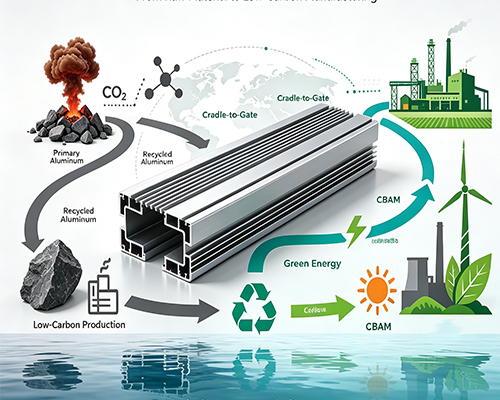
Sustainability has transitioned from a niche preference to a primary market requirement in the aluminum extrusion industry. The shift toward "Green Billets" and recycled content is reshaping material sourcing, production processes, and customer expectations.
Recycled Aluminum and Low-Carbon Production
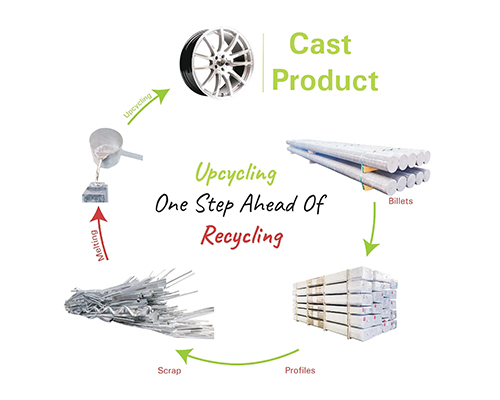
Aluminum is infinitely recyclable without loss of properties, making it an attractive material for circular economy applications. Key trends include:
Recycling-focused extrusion processes: Manufacturers increasingly incorporate recycled content in billets
Lower carbon emissions: Extrusion technologies have become more popular among manufacturers due to sustainability concerns
Energy-efficient buildings: Demand for aluminum extrusions in sustainable construction continues to grow
Europe leads in this area due to stringent regulatory frameworks, but sustainability is becoming a global differentiator. Companies that can demonstrate low-carbon production capabilities are increasingly preferred by major OEMs and architectural firms.
Application Shift in China
The Outlook 2026 from AL Circle observes a significant shift in China's extrusion demand away from construction toward transport, EVs, rail, and renewables. This structural change supports extrusions even as growth is capped by weak real estate and policy constraints.

Emerging Application Segments
Renewable Energy
Solar energy and renewable energy infrastructure represent one of the fastest-growing application areas for aluminum extrusions. Aluminum's lightweight, corrosion-resistant properties make it ideal for solar panel frames and mounting systems. The growing investment in solar power projects has created numerous opportunities for extrusion companies.
Electric Vehicles
The automotive and electric vehicle industry continues to drive demand for aluminum extrusions through lightweighting initiatives. Key EV applications include:
Battery enclosures and trays
Crash management systems
Body structures
Charging station components
Data Centers
Extruders have seen continued new business from data centers, which require aluminum extrusions for cooling systems, cable management, and structural support.
Industrial Automation
The machinery and equipment sector, particularly robotics and conveyor systems, maintains steady demand for aluminum extrusions.
Industry Consolidation and Strategic Partnerships
The aluminum extrusion industry is experiencing significant strategic activity, with companies capitalizing on rising infrastructure development, growing EV adoption, and increasing emphasis on energy efficiency and sustainable materials.
Notable developments:
Montana Aerospace secured a multi-year contract extension with Airbus in November 2025 to supply aluminum extrusions across the full Airbus aircraft family
Asia Aluminum Group partnered with ALUPCO in September 2025 to build the largest integrated downstream aluminum industrial base in Saudi Arabia with up to US$500 million investment
These developments signal growing industry confidence and investment in capacity expansion, particularly in regions with strong infrastructure and manufacturing growth prospects.
Challenges Facing the Industry
Energy Costs
The extrusion process requires significant energy, and increasing energy prices continue to pressure operating costs. Manufacturers in regions without efficient energy utilization facilities face particular challenges.
Competition from Alternative Materials
Competition from lightweight materials like composites and plastic alloys used in automotive and industrial applications presents an ongoing threat. Aluminum's sustainability advantages—particularly its recyclability—help counter this challenge.
Tariff Uncertainty
The US market faces continued uncertainty regarding trade tariffs and their impact on imports and domestic pricing. Extruders fear substitution with other materials if aluminum prices remain too high, and competition from low-value extrusions from Turkey, Malaysia, South Korea, and Taiwan continues.
Technical Challenges
Achieving accuracy and uniformity in dimension, surface finish, and mechanical properties during the manufacture of intricate aluminum profiles remains an ongoing technical challenge.
Strategic Implications for Extrusion Companies
Based on the current market trends, extrusion companies should consider the following strategies:
Invest in AI and Automation: AI-driven quality control and automation are becoming competitive necessities rather than optional enhancements. Companies that adopt these technologies early will have a significant advantage.
Embrace Sustainability: Offering recycled-content and low-carbon extrusion products is increasingly becoming a customer requirement, particularly in Europe and for OEM clients.
Diversify End-Markets: The downstream demand environment is becoming more fragmented. Companies should avoid over-dependence on a single end-use sector and instead build portfolios around structurally resilient demand baskets.
Monitor Regional Shifts: Understanding regional demand patterns—whether it's Asia's infrastructure boom, Europe's sustainability push, or North America's tariff-driven volatility—is essential for strategic capacity planning.
Partner with Full-Service Suppliers: As applications become more complex and requirements more demanding, partnering with suppliers who offer integrated capabilities—from die design through finishing—provides a distinct advantage.

Frequently Asked Questions (FAQ)
Q: What is the current size of the global aluminum extrusion market?
A: The market was valued at approximately US$87.3 billion in 2025** and is projected to reach **US$142.8 billion by 2034, representing a CAGR of 5.6%. Other estimates suggest the market could reach US$170 billion by 2030 at a 7.2% CAGR.
Q: Which region is the fastest-growing aluminum extrusion market?
A: Asia-Pacific is the fastest-growing region, driven by rapid urbanization, infrastructure development, and industrial expansion in China and India.
Q: How is AI being used in aluminum extrusion?
A: AI is being used for real-time temperature prediction in cyberphysical systems, predicting mechanical properties through machine learning, and reducing scrap rates by improving precision in complex profiles.
Q: What are the key growth drivers for the aluminum extrusion market?
A: Key drivers include electrification of transportation, sustainable construction mandates, automotive lightweighting, and renewable-energy infrastructure expansion.
Q: How is sustainability affecting the extrusion industry?
A: The shift toward "Green Billets" and recycled content has moved from a niche preference to a primary market requirement. Manufacturers are increasingly adopting recycling-focused extrusion processes and lower-carbon production technologies.
Q: What challenges does the industry face in 2026?
A: Key challenges include high energy costs, competition from alternative materials, tariff uncertainty in the US market, and technical challenges in achieving precision for intricate profiles.
Related Posts
To deepen your understanding of aluminum extrusion and make more informed sourcing decisions, we recommend exploring these related articles from our blog:
Aluminum Extrusion Market Trends and Applications — A comprehensive overview of market dynamics and end-use sectors.
Extruded Aluminum vs Die Cast: Comparison Guide — Compare manufacturing processes for optimal project decisions.
Applications of Aluminum Extrusion in Different Industries — Explore how extrusion is used across construction, automotive, electronics, and furniture.
Aluminum Extrusion Cost Breakdown: A Complete Guide — Understand cost components and implement cost-saving strategies.
Guide to Aluminum Extrusion Die Design and Lifespan — Learn about die types, failure mechanisms, and performance optimization.
About Aluleader
With over 15 years of experience in the aluminum extrusion industry, Aluleader provides high-quality architectural profiles, industrial profiles, and furniture/decorative profiles. Our integrated capabilities—from die design and extrusion to CNC machining, surface finishing, and fabrication—ensure consistent quality across every project.
Our engineering team stays at the forefront of industry trends, helping clients leverage the latest technologies and market insights to make informed sourcing decisions. For project-specific questions or detailed inquiries about our extrusion capabilities, our experts are available to provide technical guidance.