Welcome to Aluleader Metal
Aluminum Extrusion in Modular Construction: Faster, Lighter, Smarter Buildings | Aluleader
The construction industry is undergoing a fundamental transformation. Labor shortages, rising material costs, and urgent sustainability demands are pushing builders to seek faster, more efficient methods. Modular construction—where building components are prefabricated off-site and assembled on location—has emerged as a compelling solution.
At the heart of this shift lies a material and process uniquely suited to the demands of modern modular building: aluminum extrusion. With its exceptional strength-to-weight ratio, design flexibility, and ease of assembly, extruded aluminum is enabling a new generation of construction systems that are faster, lighter, and more sustainable than traditional methods.
This guide explores how aluminum extrusion is reshaping modular construction, examining the key properties, design principles, and real-world applications that make it an essential technology for the future of building.

Why Modular Construction Needs Aluminum Extrusion
Traditional construction methods rely heavily on site-based, labor-intensive processes. Steel framing is heavy and requires welding or bolting. Wood framing is lighter but limited in span and susceptible to moisture and fire. Both materials demand significant on-site labor for cutting, fitting, and assembly.
Aluminum extrusion offers a fundamentally different approach. The extrusion process creates continuous profiles with precise, consistent cross-sections that can be manufactured to tight tolerances. These profiles arrive on-site ready for assembly, eliminating the need for cutting, welding, or other fabrication. The result is a construction system that dramatically reduces on-site labor, accelerates project timelines, and delivers consistent quality.
A study of an innovative extruded aluminum panel system designed for modular homes concluded that the system's intrinsic qualities—design versatility, transportability, lightness, and ease of assembly—guarantee its viability without compromising production efficiency .
Key Properties of Extruded Aluminum for Modular Construction
Strength-to-Weight Ratio
Aluminum has approximately one-third the density of steel while offering comparable strength when properly alloyed and designed. This lightweight characteristic is transformative for modular construction. Components are easier to transport, require lighter foundations, and can be handled and assembled with less heavy equipment .
In the MHS Building Systems, an interlocking structural aluminum framing system, testing has demonstrated that the system is twenty times stronger than conventional wood or light steel stud framing used in Type 5 light building construction .
Design Freedom and Function Integration
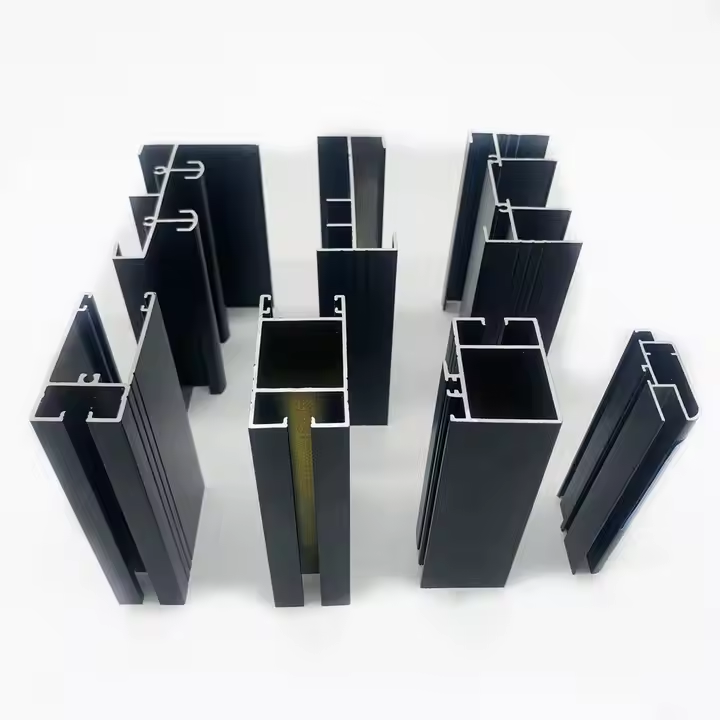
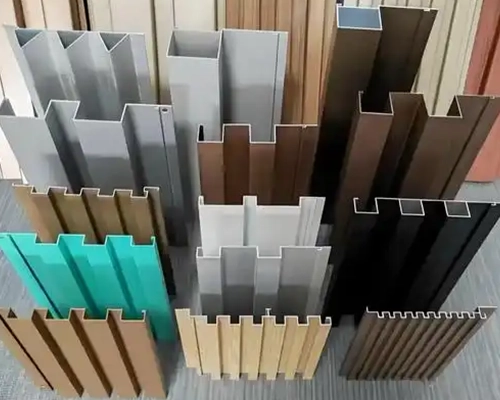
Aluminum extrusion offers unique design freedom. The process can create complex geometries—including chambers, ribs, snap-fit connections, and cable ducts—within a single profile . This capability allows designers to integrate multiple functions into a single component, simplifying assembly and reducing part counts.
Extrusion makes it possible to design profiles that meet functional requirements, aesthetic preferences, and technical specifications with exact accuracy, enabling modular and scalable solutions particularly suitable for prefabricated building concepts .
Corrosion Resistance and Durability
Aluminum naturally forms a protective oxide layer that provides excellent corrosion resistance without additional treatment. For modular buildings exposed to varied environmental conditions, this inherent durability reduces maintenance requirements and extends service life.
Thermal Performance
Aluminum's high thermal conductivity—approximately 160–218 W/m·K—can be both an advantage and a challenge. In modular construction, this property enables the building envelope to function as a solar collector, improving energy efficiency . The Walluminium system, for example, integrates three functions in a single extruded aluminum panel: structural bearing wall, ventilated facade, and solar collector .
Extruded Aluminum Systems in Modular Construction
Structural Framing Systems
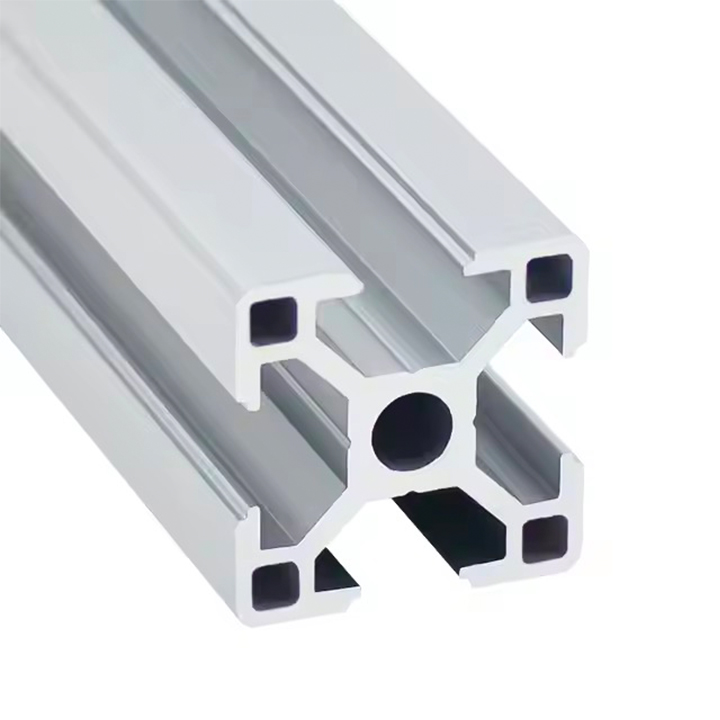
Extruded aluminum T-slot framing systems have become a standard in industrial automation and are increasingly adopted in modular construction. These systems use profiles with standardized slots that accept connectors, brackets, and fasteners without drilling or welding.
Key advantages include:
Ease of assembly: Components can be assembled with simple hand tools and without specialized skills
Modularity: Systems can be easily modified, expanded, or reconfigured
Repurposability: Structures can be disassembled and reused, supporting circular economy principles
Self-aligning aluminum framing systems, with their angled bolts and high-strength connections, offer an alternative to traditional T-slots, providing joints that approach the stiffness of welded steel while maintaining the lightweight and modular advantages of aluminum .
Integrated Building Envelope Systems
More advanced modular construction systems use extruded aluminum panels as complete building envelope solutions. The Walluminium system, developed through research at the University of A Coruña, uses EN AW 6005A-T6 aluminum alloy panels that serve structural, envelope, and solar collection functions .
The panels measure 300 mm × 90 mm × 3 mm thickness and can be extruded up to 14 meters in length . The asymmetric panel section creates a tight seal between adjacent panels, while the wings of each panel join to adjacent panels to form stiffeners every 300 mm .
This system has been demonstrated in passive modular homes with near-zero energy consumption, achieving regulatory compliance for thermoacoustic performance, airtightness, and fire resistance .
Aluminum-Wood Hybrid Systems
Innovative hybrid systems combine the strengths of aluminum and wood. One Chinese patent describes an aluminum-wood modular structure system using extruded special-section aluminum profiles with a dual-clamping-groove connection . The aluminum frame members provide structural strength and precise connections, while wood components contribute insulation and aesthetic warmth.
Connection Innovations
The historical challenge with aluminum extrusions in building construction has been connecting hollow profiles. While aluminum welding is precise, it is prohibitively expensive for on-site work, and simple bolting fails to adequately handle lateral loads .
Recent innovations address this challenge. The MHS Building System uses an interlocking clamping system for modular aluminum profiles, a breakthrough inspired by Buckminster Fuller's geodesic dome joints. This system enables strong, rigid connections without welding or complex hardware . The dual-clamping-groove connection system similarly uses mechanical interlocking with stainless steel bolts, avoiding the complexity and cost of field welding .
Applications and Industry Adoption
Residential Modular Homes
Extruded aluminum systems are particularly well-suited for single-family homes up to two or three stories. A patented MHS Building System in California is designed to meet the creative demands of modular projects with "endless possibilities," enabling designers and contractors to deliver sustainable prefabricated projects .
Commercial and Industrial Buildings
Extruded aluminum's strength and precision make it suitable for commercial buildings, offices, and retail spaces. The modular nature of aluminum framing allows for rapid construction and future adaptability.
Large-Scale Infrastructure Projects
The demand for aluminum in modular construction is scaling globally. In November 2025, a US$500 million partnership between Saudi Arabia's ALUPCO and Hong Kong-based Asia Aluminum Group (AAG) established a 150-hectare aluminum processing base in Saudi Arabia . The project includes an annual production capacity exceeding 200,000 tons of aluminum extrusions and a capability to produce 30,000 aluminum residential modules per year . This initiative targets Saudi Arabia's "Neom" mega-projects, reflecting the growing global appetite for aluminum-based modular construction.
Design Considerations for Aluminum Extrusion in Modular Construction
Alloy Selection
For structural applications, EN AW 6005A-T6 aluminum alloy is a common choice due to its excellent mechanical properties . It offers compression resistance exceeding 15 tons, with density of 2800 kg/m³, thermal conductivity of 160 W/m·K, and specific heat of 880 J/kg·K . This alloy complies with EN 15088:2005 for structural aluminum applications.
Profile Design Principles
Designers should consider several factors when developing extruded profiles for modular construction:
Function integration: Extrusion allows multiple functions to be incorporated into a single profile—structural ribs, connection features, cable channels, and aesthetic surfaces .
Modularity: Profiles should be designed for compatibility with standardized connectors and fasteners, enabling easy assembly, modification, and disassembly.
Manufacturability: At the design phase, factors such as minimum wall thickness, radii, die complexity, and processing options must be considered to ensure efficient production .
Connection strategy: The chosen connection method—mechanical interlocking, bolting, or clamping—must provide adequate structural performance while maintaining ease of assembly.
Sustainability Benefits
Aluminum is infinitely recyclable without loss of properties. Modular aluminum structures can be disassembled and the materials reused in new configurations—a significant advantage for circular economy goals. The MHS system, for example, is designed to make building structures "recyclable, relocatable, and renewable" .
Frequently Asked Questions (FAQ)
Q: Is extruded aluminum stronger than steel for modular construction?
A: While steel has higher absolute strength, aluminum's strength-to-weight ratio is comparable or superior for many applications. The key advantage is weight—aluminum structures can achieve similar strength at approximately one-third the weight of steel, reducing transport and handling costs.
Q: What alloys are commonly used for structural aluminum extrusions?
A: EN AW 6005A-T6 is a common choice for building applications, offering compression resistance exceeding 15 tons. 6063-T6 is also widely used for architectural profiles where thermal conductivity is a primary concern.
Q: Can extruded aluminum be used for multi-story buildings?
A: Yes. Research and testing have demonstrated the resistance and stability of aluminum panel systems for construction of up to five stories in top-to-bottom construction . Systems like MHS are certified for buildings up to three stories .
Q: How does aluminum extrusion compare to welded steel for modular construction?
A: Extruded aluminum systems require no on-site welding, reducing labor costs and accelerating assembly. They are lighter, easier to modify, and more resistant to corrosion than steel. However, connection design is critical—innovative clamping and interlocking systems have overcome the historical challenge of joining hollow aluminum profiles.
Q: Is aluminum extrusion more expensive than wood framing?
A: Initial material costs are higher than wood, but total project costs can be lower due to reduced labor, faster construction, lower transport costs, and longer service life with minimal maintenance.
Related Posts
Extruded Aluminum vs Die Cast: Comparison Guide — Understand the manufacturing process behind modular building components.
Corrosion Protection for Aluminum Extrusions — Learn about surface treatments that protect building components.
Aluminum Extrusion Process: 11 Key Steps Explained — A comprehensive walkthrough from billet heating to final aging.
Precision Aluminum Extrusion Tubes in AI Data Centers — Explore advanced extrusion applications in high-tech environments.
Applications of Aluminum Extrusion in Different Industries — Discover how extrusion serves construction, electronics, automotive, and more.
About Aluleader
With over 15 years of experience in the aluminum extrusion industry, Aluleader provides high-quality architectural profiles, industrial profiles, and furniture/decorative profiles. Our integrated capabilities—from die design and extrusion to CNC machining, surface finishing, and fabrication—ensure consistent quality across every project.
For customers in the building and construction industries, we offer custom-extruded profiles with precise tolerances, integrated connection features, and a variety of surface finishing options to meet specific aesthetic and performance requirements.
For project-specific questions or detailed inquiries about our extrusion capabilities for modular construction, our engineering team is available to provide technical guidance.