Welcome to Aluleader Metal
Aluminum Extrusion Market Outlook 2026-2027: Trends & Forecast | Aluleader
The global aluminum extrusion market is entering a period of measured growth and structural transformation. After reaching an estimated consumption of 35.25 million tons in 2025, the market is projected to expand to 36.14 million tons in 2026, representing a 2.5% increase. This growth, while steady, masks significant regional and sectoral divergences that are reshaping the competitive landscape.
This market outlook examines the key trends, downstream demand drivers, and regional dynamics shaping the aluminum extrusion industry in 2026 and 2027.
Market Size and Growth Trajectory
The global aluminum extrusion market demonstrated resilience in 2025, growing 2.9% from 34.27 million tons in 2024. Looking ahead, the market is expected to maintain a compound annual growth rate of approximately 5.8% through 2032, with the market value projected to reach USD 137.8 billion by 2032.
The aluminum extrusion market is transitioning from a volume-driven to a value-driven paradigm. The industry is moving toward "system capabilities" rather than simply selling profiles. This shift is evident in three key trends:
Low-carbon and circularity becoming hard constraints – Recycled material supply, scrap flows, and policy decisions directly impact cost structures and order patterns
EV and safety structures driving high-value extrusions – Battery enclosures, crash-management systems, and modular structural profiles are commanding premium pricing
Digitalization and quality traceability – From die life management to carbon footprint disclosure, these are moving from competitive advantages to market entry requirements
Construction: The Volume Heavy weight
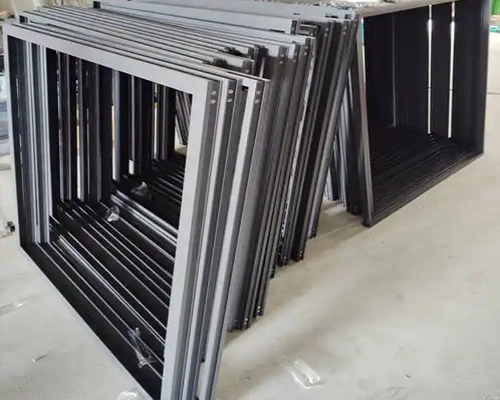
Construction continues to carry the bulk of extrusion demand, accounting for more than 60% of global consumption. The sector consumed 18.57 million tons in 2024, projected to reach 18.98 million tons in 2025, with growth of approximately 2.53% through 2026.
Why Construction Remains Dominant
Aluminum has become the material of choice for modern buildings. It is strong yet light, resists corrosion without rusting, and does not burn. From façades to windows and curtain walls, it fits both structural and design requirements. Lighter materials reduce overall building loads, supporting energy-efficient design.
Regional Dynamics in Construction
China continues to set the tone, consuming 22.87 million tons in 2025, accounting for roughly 60-65% of global capacity. The country produces about 23.5 million tons annually—more than it consumes. The excess feed is exported, which reached around 1.1 million tons in 2025. Chinese extruders are investing heavily in "green billets," produced using renewable energy or post-consumer scrap, as part of carbon-neutrality objectives.
North American construction, while mature, offers steady demand. Building and construction consumed an estimated 842,000 tons in 2023, with demand forecast to reach 910,000 tons by 2030. Growth is increasingly linked to energy-efficient buildings, green construction, and infrastructure investment rather than new building volumes.
Europe's construction market is gradually recovering after two years of contraction. Usage in the sector is expected to decline from 1.52 million tons in 2025 to 1.50 million tons in 2026 before resuming growth. Total construction output is improving, providing support for extruders serving building and construction applications.
Transportation and Automotive: The High-Growth Engine
Transportation is the second-largest extrusion consumer, using 6.31 million tons in 2024 and projected to reach 6.53 million tons in 2025, growing at about 2.45% CAGR through 2026. The sector represents one of the fastest-growing application areas, driven by automotive lightweighting and the electric vehicle transition.
The EV Opportunity
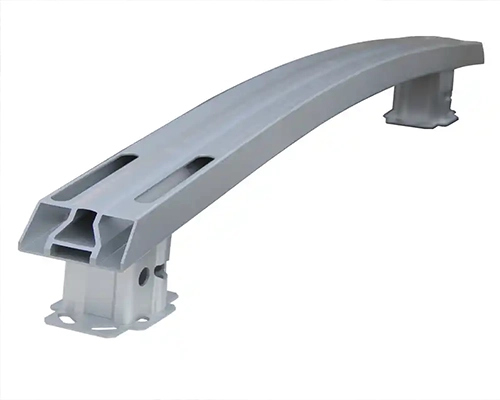
The shift toward electric mobility is fundamentally changing extrusion demand patterns. Battery-electric vehicles are expected to contain more extrusions than internal-combustion vehicles, with applications including battery enclosures, crash-management systems, structural components, and thermal-management parts. Total aluminum content per vehicle is projected to exceed 556 lb by 2030.
Europe represents a particularly significant opportunity. Aluminium extrusion usage in the transport sector is forecast to rise from 970,000 tons in 2025 to 1 million tons in 2026, an increase of 6.2%. Over 2026-2035, transport extrusion demand in Europe is expected to grow at a CAGR of approximately 3.06%.
The scale of the EV opportunity is substantial. European EV production, which exceeded 4 million units in 2024, is projected to reach 8-10 million units by 2030. EVs represented approximately 28% of European vehicle sales in 2025, and this share is expected to rise to 33% in 2026 and exceed 90% by 2035.
Alloy Developments
The industry is developing specialized alloys for automotive applications. In China, 6061, 6063, and other common alloys are being scaled to 1.5 million tons per year capacity. Meanwhile, 6xxx and 7xxx series alloys are increasingly specified for structural automotive applications requiring high strength and crash performance.
Regional Contrasts
India offers one of the strongest downstream demand profiles, driven by infrastructure expansion, automotive and EV growth, and renewables. However, high energy costs and supply-side challenges may constrain the market.
Southeast Asia benefits from rapid urbanization, infrastructure development, and manufacturing growth, ensuring stronger demand for extrusions.
North American automotive extrusion demand faces pressure from higher tariffs and reduced EV incentives, which could impact FRP consumption in 2025.
Electrical and Electronics: The Fastest-Growing Segment
The electrical and electronics sector represents a smaller volume market but offers the strongest growth potential of the major end-use sectors. Extrusion usage stood at 2.42 million tons in 2024 and is projected to reach 2.48 million tons in 2025.
Key Applications and Growth Drivers
Aluminum extrusions are used in busbars, electrical hardware, lighting fixtures, heat sinks, enclosures, and other thermal-management applications. The North American electrical and electronics extrusion consumption is projected to rise from 259,000 tons in 2023 to 322,000 tons in 2030, representing a CAGR of 3.16%—the fastest growth among major traditional end-use sectors.
The expansion of renewable energy infrastructure strengthens this segment. Aluminum extrusion applications extend to components associated with solar power systems and electrical infrastructure, adding another demand stream beyond conventional electronics.
Industrial Applications and Consumer Durables
The industrial sector recorded 3.86 million tons in 2024, with usage expected to grow at approximately 2.60% CAGR through 2026. Consumer durables rose from 1.81 million tons in 2024 to a projected 1.84 million tons in 2025.
Product Mix Trends
In 2024, downstream aluminum demand was led by extrusions (34%), followed by flat-rolled products including foil (32%), castings (23%), and wires and cables (8%). This mix reveals that downstream is not a single market but several markets running simultaneously, each driven by different industries, buyers, and economic realities.
Regional Market Dynamics
China: Production Leader with Structural Shift
China consumed 22.87 million tons in 2025, accounting for about 60-65% of global capacity. The country produces approximately 23.5 million tons annually, with exports of around 1.1 million tons in 2025.
A significant structural shift is underway in China's extrusion market: demand is moving away from construction toward transport, EVs, rail, and renewables. This shift supports extrusions even as growth is capped by weak real estate and policy constraints.
Rest of Asia-Pacific: Demand Outpaces Supply
Across the rest of Asia-Pacific, consumption increased from 3.16 million tons in 2024 to 3.31 million tons in 2025, with growth of about 2.42% expected in 2026. The region's capacity is insufficient to meet demand, leading to heavy reliance on imports. Vietnam, for example, imported 168,008 tons in 2025.
India and Southeast Asia: High-Confidence Markets
India presents one of the strongest downstream demand profiles, with multiple demand drivers running at once: infrastructure expansion, automotive and EV growth, renewables, and packaging. Southeast Asia benefits from rapid urbanization, infrastructure, and manufacturing growth, ensuring stronger demand for extrusions, cables, and foil.
Europe: Stable But Cautious
Europe remains subdued due to slow growth and high energy costs. Construction and EV-related automotive show restraints while packaging and power infrastructure provide stability. European extrusion demand improved modestly in H1 2026, with Q2 demand increasing 0.4% year on year following a weaker first quarter.
North America: Resilience in Some Sectors, Vulnerability in Others
North America sees packaging and infrastructure support, but faces pressure from higher tariffs and reduced EV incentives, which impacts automotive demand. The Section 232 import tariff on extrusions increased from 10% to 25% in March 2025, then to 50% in June, creating significant market uncertainty.
Strategic Implications for 2026-2027
Based on current market trends, several strategic priorities emerge:
Focus on Resilient Demand Baskets: Infrastructure, mobility, and EV-related applications offer the most reliable growth. Companies should build portfolios around sectors flagged as structurally supported.
Invest in Sustainability: Low-carbon production and recycled content are becoming market entry requirements. Europe is already discussing restrictions on aluminum scrap exports to protect domestic recycling and decarbonization goals, suggesting that regional availability of recycled material will reshape extrusion trade patterns.
Adopt System Capabilities: The industry is moving from selling profiles to providing system solutions—integrating alloy development, extrusion, fabrication, and validation. Automakers increasingly prefer suppliers with these integrated capabilities.
Regional Capacity Planning: Where you add capacity matters as much as what you produce. India and Southeast Asia show stronger structural momentum; Europe and parts of North America require selective bets, with packaging and grid-linked demand as safer anchors.
Embrace Digitalization: From die life management and online measurement to material traceability and carbon footprint disclosure, digital capabilities are moving from competitive advantages to market entry requirements.
Frequently Asked Questions (FAQ)
Q: What is the current size of the global aluminum extrusion market?
A: Global aluminum extrusion consumption reached approximately 35.25 million tons in 2025, with the market valued at roughly USD 93.38 billion. Projections indicate growth to 36.14 million tons in 2026, with a CAGR of 5.8% through 2032.
Q: Which industry consumes the most aluminum extrusions?
A: Construction is the dominant sector, accounting for more than 60% of global extrusion consumption. The sector consumed 18.57 million tons in 2024.
Q: How is the electric vehicle transition affecting extrusion demand?
A: The EV transition is driving significant demand for high-value extrusions in battery enclosures, crash-management systems, lightweight structures, and thermal-management components. EVs are expected to contain more extrusions than internal-combustion vehicles.
Q: Which region is the fastest-growing extrusion market?
A: India and Southeast Asia show the strongest structural momentum, driven by infrastructure expansion, urbanization, and manufacturing growth. China remains the largest market but is shifting away from construction toward transport, EVs, and renewables.
Q: What are the key trends shaping the extrusion industry in 2026-2027?
A: Key trends include: 1) Low-carbon and circularity becoming hard constraints; 2) EV and safety structures driving high-value extruded components; 3) Digitalization and traceability moving from advantages to requirements; and 4) Industry shift from selling profiles to providing system capabilities.
Q: How are tariffs affecting the aluminum extrusion market?
A: US Section 232 import tariffs on extrusions increased from 10% to 25% in March 2025, then to 50% in June 2025. This has created significant market uncertainty and is reshaping trade flows, particularly for North American markets.
Related Posts
Aluminum Extrusions in Renewable Energy Systems — Explore solar, wind, and storage applications driving extrusion demand.
Aluminum Extrusion in Modular Construction — Learn how extruded profiles are accelerating modern building projects.
Precision Aluminum Extrusion Tubes in AI Data Centers — Discover advanced cooling applications driving electronics demand.
Extruded Aluminum vs Die Cast: Comparison Guide — Understand manufacturing process selection for EV and industrial components.
Applications of Aluminum Extrusion in Different Industries — Explore how extrusion serves construction, automotive, electronics, and more.
About Aluleader
With over 15 years of experience in the aluminum extrusion industry, Aluleader provides high-quality architectural profiles, industrial profiles, and furniture/decorative profiles. Our integrated capabilities—from die design and extrusion to CNC machining, surface finishing, and fabrication—ensure consistent quality across every project.
For customers across construction, automotive, and industrial sectors, we offer custom-extruded profiles with precise tolerances and a variety of surface finishing options to meet specific application requirements.
For project-specific questions or detailed inquiries about our extrusion capabilities, our engineering team is available to provide technical guidance.