Welcome to Aluleader Metal
Aluminum Extrusions in Renewable Energy: Solar, Wind & Storage Solutions | Aluleader
The global transition to renewable energy is accelerating at an unprecedented pace. Solar and wind power installations are being deployed at record levels, driven by climate targets, falling technology costs, and supportive policies. At the heart of this clean energy transformation lies a material uniquely suited to the demands of renewable energy infrastructure: aluminum extrusion.
With its exceptional strength-to-weight ratio, natural corrosion resistance, design flexibility, and full recyclability, extruded aluminum has become the material of choice for solar panel frames, mounting systems, and wind power components. This guide explores the specific applications and material advantages of aluminum extrusions in renewable energy systems, drawing on industry data and real-world case studies.
The Scale of Opportunity
The aluminum extrusion market is experiencing significant growth driven by renewable energy demand. The global aluminum extruded products market was valued at approximately USD 90.2 billion in 2024 and is projected to reach USD 292.1 billion by 2037, expanding at a compound annual growth rate (CAGR) of 9.4% . Renewable energy infrastructure is a primary growth driver, with countries around the world investing in durable, modular construction materials for solar and wind installations .
The solar panel market alone has been a major driver of growth in aluminum extrusions, particularly in China, where massive deployment of photovoltaic energy has taken place. In recent years, Chinese solar panel demand has topped 2 million tons per year of aluminum extrusions .
Solar Photovoltaic Applications
Aluminum extrusions are used extensively in solar photovoltaic systems for three primary components: panel frames, mounting systems, and tracking mechanisms .
Solar Panel Frames
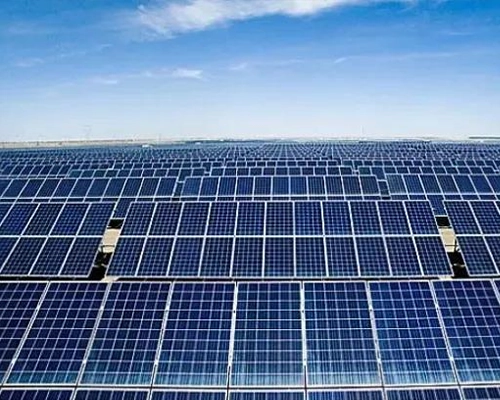
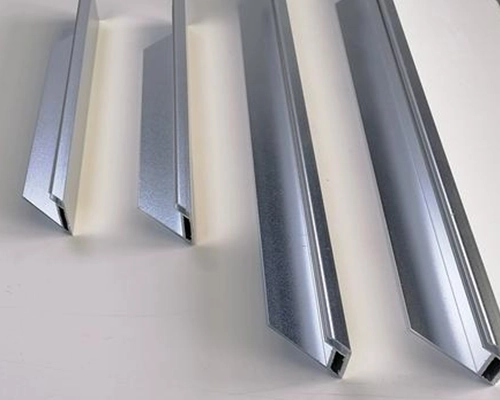
The solar panel frame is the most recognizable application of aluminum extrusions in renewable energy. Extruded aluminum profiles provide the structural support that protects photovoltaic modules from environmental stresses while enabling easy installation and long-term durability.
Why Aluminum for Frames?
Lightweight and Strong: Aluminum has approximately one-third the density of steel, significantly reducing transportation and installation costs. Solar panel frames typically represent about 8% of an installation's total weight, with residential frames weighing approximately 40 pounds and utility-scale frames around 70 pounds . This translates to 3.2 to 5.6 pounds of aluminum per frame .
Corrosion Resistance: Aluminum naturally forms a protective oxide layer that resists corrosion in harsh outdoor environments. This is critical for solar installations exposed to rain, humidity, salt spray, and temperature extremes. Anodized or powder-coated aluminum frames can withstand coastal salt spray and desert sand, with service life exceeding 25 years .
Longevity: Under normal conditions, unfinished aluminum extruded frame components will outlast the 20- to 30-year life expectancy of current solar panel technology .
Design Flexibility: Extrusion technology allows for profiles with integrated features such as snap-together joints, drainage channels, and cable management—reducing assembly time and component count .
Alloy Considerations: For high-strength applications, specialized aluminum alloys have been developed for solar panel frames. One patent describes an alloy with composition of Si 0.59-0.64%, Mg 0.51-0.56%, Mn 0.05-0.15%, Cr 0.05-0.15%, Ti 0.02-0.03%, and B 0.004-0.006%, achieving tensile strength of ≥260 MPa, yield strength of ≥240 MPa, and elongation after fracture of ≥12% . This enables lightweight, thin-frame designs without compromising structural integrity.
Field Experience: In real-world applications, 6063-T5 aluminum alloy frames offer corrosion resistance three times that of steel, with weight only one-third that of stainless steel while bearing loads exceeding 500 kg/m². Customers report zero maintenance costs over five years after switching from steel frames .
Mounting Systems and Racking
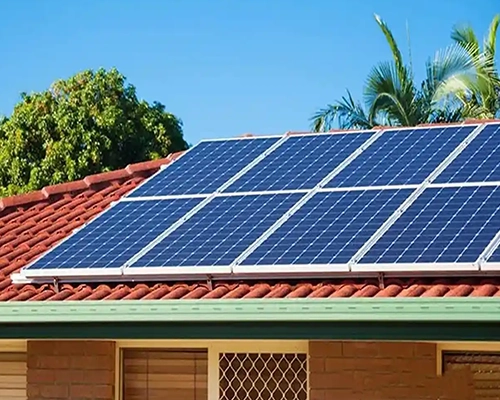
Mounting structures support solar panels on roofs or ground installations. Aluminum extrusions dominate this segment due to weight considerations and environmental durability .
Roof-Mounted Systems: Designers must decide between penetration and ballast mounts. Penetration systems place less weight on the roof structure but may void roof warranties. Ballast mounts avoid roof penetration but add significant weight. For most applications, a ballast mount system with a low angle to minimize wind exposure is preferred .
Ground-Mounted Systems: These require adjustability for differences in land contours and may benefit from self-leveling designs, especially for uneven areas like landfills where the ground shifts over time .
Modularity: Extruded aluminum mounting systems can be designed for modularity and scalability, allowing solar installations to fit available space and expand as needed . The ease with which extrusion profiles can be adapted to different size requirements enables adjustable frame designs that accommodate varying panel sizes .
Market Dynamics and Demand
The U.S. added 49.9 gigawatts (GW) of solar capacity in 2024, with utility-scale installations accounting for 83% of total . Global demand is driven by policies making solar installation mandatory for new buildings in key markets like Tokyo . China remains the dominant market, while North America and Europe are key growth regions driven by new climate legislation .
However, market dynamics differ by region. In Europe, aluminum demand for solar is estimated at 16.5 tons per megawatt (t/MW) of capacity, including frames (4.6 t/MW), mountings (10.3 t/MW), and inverters (1.6 t/MW). In the U.S., utility-scale solar installations use steel for mounting due to cost, reducing aluminum mounting demand to only 1.75 t/MW .
Wind Power Applications
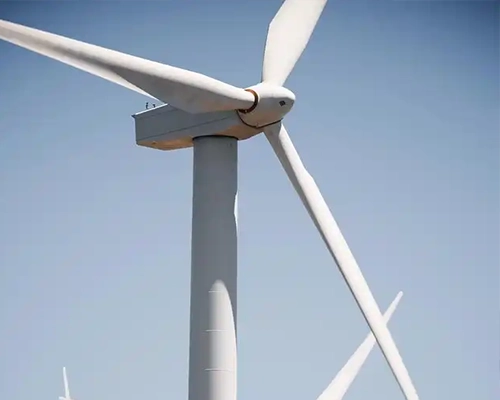
Aluminum extrusions are increasingly used in wind power generation, playing a prominent role in both structural and functional components .
Key Applications in Wind Turbines
Bus Bars: Aluminum extrusions carry the electricity generated by the turbine .
Inner-Tower Structural Elements: Extrusions are used for platforms, ladders, and structural supports within turbine towers .
Heat Exchanger Components: Extruded aluminum tubing has been proven for handling hot liquids in demanding applications, making it suitable for thermal management in wind power systems .
Advantages for Wind Applications
Strength-to-Weight Ratio: Aluminum's lightweight nature reduces structural loads on towers and foundations.
Corrosion Resistance: Wind turbines are often located in coastal or offshore environments where salt spray presents significant corrosion challenges. Aluminum's natural resistance and the availability of protective coatings make it ideal for these conditions.
Design Flexibility: Extrusion enables complex cross-sections that integrate multiple functions—structural support, cable management, and mounting features—in a single profile.
Energy Storage and Grid Infrastructure
Beyond solar and wind, aluminum extrusions are increasingly used in energy storage systems, including frames and housing for large-scale battery packs . These systems store excess energy produced by solar and wind farms, enabling grid stability and reliable energy supply .
Aluminum's heat dissipation properties help manage temperature within energy storage units, enhancing performance and safety. Energy storage units must be both lightweight for ease of transportation and installation and durable for long-term use—characteristics that aluminum extrusions deliver .
Sustainability and Circular Economy
Aluminum is "the green metal," offering significant sustainability advantages . An aluminum frame will outlast the life of solar panels yet remains cost-competitive with steel structures that may rust out before the panels wear .
Recyclability: Aluminum is infinitely recyclable without loss of properties. Using recycled aluminum in solar frames lowers lifecycle emissions while retaining strength .
Durability: Components designed for long-lasting performance reduce replacement frequency and minimize environmental impact over time .
End-of-Life Management: Extrusion designs can incorporate features allowing for easy disassembly and recycling at end of life .
Design Considerations
Ease and Speed of Assembly
A good solar design optimizes the number of parts needing on-site assembly, reducing labor costs and training requirements. Lower labor costs and fast installation are competitive advantages from proper aluminum extrusion design .
Tight Tolerances
Design frames so that they snap together without gaps allowing moisture penetration. Aluminum extruded components can be designed for quick, easy snap-together construction with tight-fitting joints .
Adjustable PV Frame Design
Design frame structures to be adaptable for different size panels. An adjustable frame design gives solar panel vendor selection flexibility. One extrusion profile can be fabricated to different lengths and assembly requirements (holes, notches, etc.) for ready-to-assemble delivery .
Clips, Connectors, and Fasteners
Include methods for fastening modules to frames and rack systems. Since speed and ease of assembly are major cost considerations, joining methods should support quick installation with minimum labor .
Frequently Asked Questions (FAQ)
Q: Why is aluminum preferred over steel for solar panel frames?
A: Aluminum offers a superior strength-to-weight ratio, natural corrosion resistance, and lighter weight—approximately one-third the density of steel. Aluminum frames outlast the life of solar panels (20-30 years) and require less maintenance. While steel penetrates the utility-scale mounting market, aluminum dominates residential and commercial solar applications.
Q: What aluminum alloy is commonly used for solar frames?
A: 6063-T5 aluminum alloy is widely used for solar panel frames, offering good extrudability, corrosion resistance, and strength. Specialized alloys developed for high-strength applications can achieve tensile strength exceeding 260 MPa.
Q: How much aluminum is used in a typical solar installation?
A: In Europe, total aluminum demand for solar is estimated at 16.5 tons per megawatt of capacity. Frames account for approximately 4.6 t/MW, mounting systems 10.3 t/MW, and inverters 1.6 t/MW. Residential frames weigh about 40 pounds each; utility-scale frames weigh around 70 pounds.
Q: Can aluminum extrusions withstand extreme weather conditions?
A: Yes. Aluminum has excellent natural resistance to corrosion and can be anodized or powder-coated for enhanced protection against UV degradation, salt spray, and weathering. Extrusions used in solar frames and mounting systems prevent rust and degradation, ensuring long-term integrity even in coastal regions.
Q: Are aluminum extrusions recyclable at end of life?
A: Yes. Aluminum is infinitely recyclable without loss of properties. Components can be designed for easy disassembly and recycling. Using recycled aluminum in solar frames lowers lifecycle emissions while maintaining strength.
Q: How is aluminum used in wind power applications?
A: Aluminum extrusions are used for bus bars carrying electricity generated by turbines, inner-tower structural elements, platforms, ladders, and heat exchanger components. Their lightweight and corrosion-resistant properties are particularly valuable for offshore installations.
Related Posts
Aluminum Extrusion in Modular Construction — Explore how extruded profiles accelerate modern building projects.
Corrosion Protection for Aluminum Extrusions — Learn about surface treatments that protect components in harsh environments.
Precision Aluminum Extrusion Tubes in AI Data Centers — Discover advanced extrusion applications in high-tech thermal management.
Aluminum Extrusion Process: 11 Key Steps Explained — Understand the manufacturing process behind renewable energy components.
Applications of Aluminum Extrusion in Different Industries — Explore how extrusion serves construction, automotive, electronics, and more.
About Aluleader
With over 15 years of experience in the aluminum extrusion industry, Aluleader provides high-quality architectural profiles, industrial profiles, and furniture/decorative profiles. Our integrated capabilities—from die design and extrusion to CNC machining, surface finishing, and fabrication—ensure consistent quality across every project.
For customers in the renewable energy sector, we offer custom-extruded solar panel frames, mounting profiles, and structural components with precise tolerances and a variety of surface finishing options to meet specific environmental and performance requirements.
For project-specific questions or detailed inquiries about our extrusion capabilities for renewable energy applications, our engineering team is available to provide technical guidance.