Welcome to Aluleader Metal
- October 07, 2026
Aluminum Profile Wall Thickness for Windows & Doors: Buyer’s Guide
When buying aluminum profiles for windows and doors, wall thickness is one of the most important specifications to confirm before comparing prices.
Two aluminum profiles can look almost identical from the outside but have different wall thicknesses, profile weights and material costs.
This can affect:
Aluminum consumption
Weight per meter
Profile rigidity
Extrusion feasibility
Fabrication
Finished window performance
Purchasing cost
For this reason, buyers should never compare aluminum window profiles based only on photographs, outside dimensions or price per ton.
This guide explains what aluminum extrusion wall thickness means, why it matters, how it affects profile weight and what buyers should specify before ordering window and door profiles.
1. What Is Aluminum Extrusion Wall Thickness?
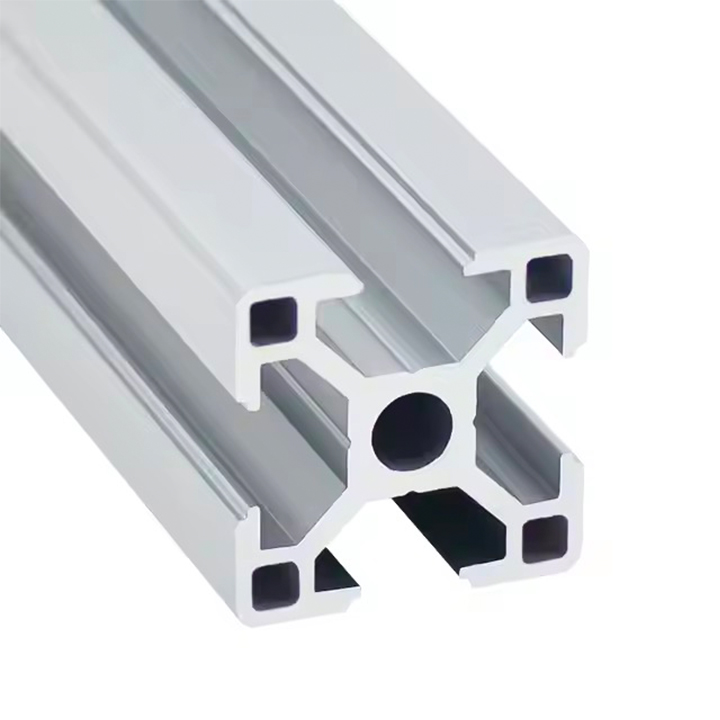
Wall thickness refers to the thickness of the aluminum walls that form the cross-section of an extruded profile.
A simple aluminum extrusion may have only a few walls.
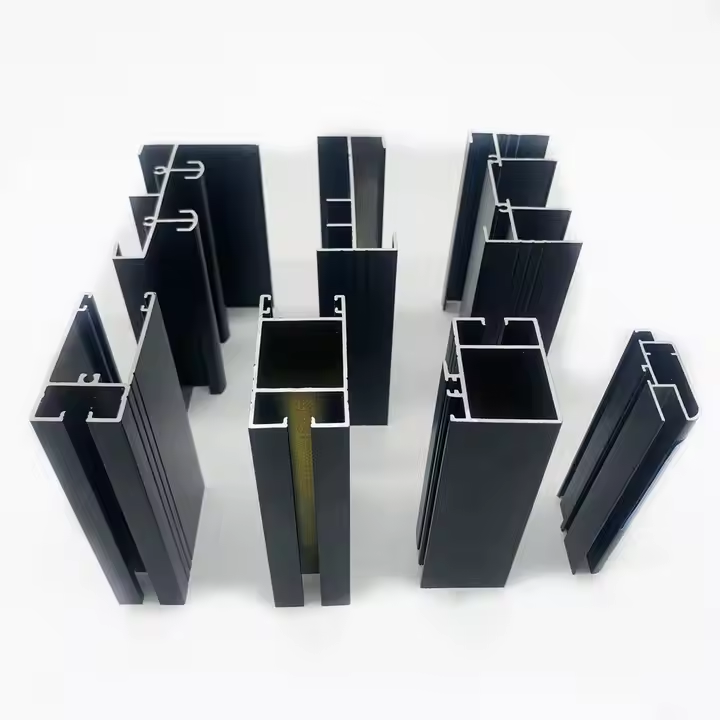
A complex window profile can contain:
Outer walls
Internal ribs
Hollow cavities
Glass grooves
Screw channels
Sliding tracks
Interlocking features
The wall thickness may not necessarily be identical at every point of the extrusion.
This is why a cross-sectional drawing is much more useful than simply describing a profile as:
“heavy profile”
or:
“thin profile.”
For architectural aluminum profiles, the wall-thickness requirement should ideally be shown directly on the technical drawing.
2. Why Does Wall Thickness Matter?
Wall thickness affects several characteristics of an aluminum profile.
Profile Weight
Increasing wall thickness generally increases the cross-sectional area of aluminum.
More aluminum means greater weight per meter.
Material Cost
Because aluminum consumption increases with profile weight, wall thickness can directly affect material cost.
Rigidity
Changing wall thickness can influence the rigidity of a profile, although thickness is not the only factor.
Extrusion Feasibility
Very thin walls or large differences between thick and thin areas can make some profile designs more difficult to extrude consistently.
Assembly
Certain walls may need sufficient thickness for screws, connections or other functional requirements.
Therefore, wall thickness should be treated as a technical specification, not simply as a way to increase or reduce price.
3. Does a Thicker Aluminum Profile Mean a Better Profile?
Not automatically.
This is one of the most important points for buyers to understand.
A thicker profile contains more aluminum, but that does not necessarily mean it is the correct profile for every application.
The required performance of an aluminum window depends on several factors, including:
Profile geometry
Wall thickness
Alloy and temper
Window dimensions
Glass
Hardware
Connection design
Installation
Overall system design
A profile that is unnecessarily thick may simply increase material consumption and cost.
A profile that is too thin for the intended design may create fabrication or performance problems.
The objective is therefore not:
Choose the thickest profile possible.
It is:
Choose the appropriate wall thickness for the actual window or door system.
4. Why Two Similar Aluminum Profiles Can Have Different Weights
Imagine two sliding-window profiles with the same:
Overall width
Overall height
External appearance
Profile length
They may still have different weights per meter.
Why?
Because their internal cross-sections may be different.
For example:
Profile A
Wall thickness: 1.2mm
Profile B
Wall thickness: 1.4mm
If the rest of the cross-section is similar, Profile B will generally contain more aluminum.
But wall thickness is not the only reason for a weight difference.
Other factors include:
Number of internal ribs
Rib thickness
Hollow cavity dimensions
Reinforcement features
Local wall-thickness changes
This is why buyers should compare the complete cross-sectional drawing, not only the outside dimensions.
5. Why Profile Weight Matters When Comparing Prices
Aluminum profiles are often quoted using weight-based pricing.
This means that the amount of aluminum in the profile has a direct relationship with cost.
Suppose two suppliers quote the same-looking window profile.
Supplier A appears cheaper.
But if Supplier A's profile is significantly lighter because the walls are thinner, the two quotations are not actually based on the same product.
A meaningful comparison should therefore use the same:
Drawing + alloy + temper + wall thickness + length + surface finish
If these specifications are different, comparing only the final price can be misleading.
6. What About 1.4mm Aluminum Profiles for Ethiopia?
For Ethiopia window projects, some buyers request 1.4mm wall thickness according to their existing window system, customer requirement or project specification.
Aluleader can manufacture LTZ Series 1.4mm Sliding Window Aluminum Profiles for Ethiopia according to the relevant profile design and technical requirements.
These profiles can include sections used in LTZ-type sliding window systems, such as:
L
T
Z
Zekolo
Fasha
Other matching profiles
However, 1.4mm should not be treated as a universal thickness for every aluminum profile in Ethiopia.
Different customers and projects may require different specifications.
When requesting a quotation, buyers should clearly state the required wall thickness rather than asking only for an “Ethiopia profile.”
7. Nominal Wall Thickness vs Actual Production
Another important concept is the difference between nominal wall thickness and actual manufactured dimensions.
If a drawing specifies:
1.4mm
that is the nominal design requirement.
Aluminum extrusion is a manufacturing process, so the finished profile is produced within applicable dimensional tolerances rather than as a mathematically perfect dimension at every point.
The acceptable tolerance depends on factors such as:
Profile geometry
Wall location
Profile size
Applicable standard
Customer specification
Agreed drawing requirements
Therefore, buyers should not treat wall thickness separately from extrusion tolerances.
Our next dedicated article on aluminum extrusion tolerances will explain this subject in more detail.
8. Should Every Wall Have the Same Thickness?
Not necessarily.
A profile may contain different wall thicknesses depending on its design and function.
For example, certain areas may need additional material because they:
Hold screws
Connect to hardware
Support another section
Form a structural rib
Need additional local rigidity
Other non-critical areas may not require the same thickness.
However, large or poorly designed thickness transitions can make extrusion more difficult.
For custom profiles, the manufacturer should therefore review the complete cross-section before die development.
9. Wall Thickness and Profile Geometry Work Together
It is easy to focus too much on one number.
For example:
“This profile is 1.4mm, so it must be stronger than another profile.”
That conclusion may not always be correct.
Consider two profiles:
Profile A
1.4mm wall thickness with a simple cross-section
Profile B
Different wall thickness but a larger or differently reinforced cross-section
The final behavior of the profiles may be different because the geometry of the extrusion also matters.
Features such as:
Profile depth
Profile width
Hollow cavities
Reinforcement ribs
Section shape
can significantly affect rigidity.
Therefore:
Wall thickness should always be evaluated together with the complete profile design.
10. Wall Thickness and 6063-T5 Aluminum
6063-T5 is widely used for architectural window and door extrusions.
However, specifying:
6063-T5
does not tell the supplier how much aluminum should be in the profile.
Two profiles can both use exactly the same alloy and temper while having very different:
Wall thicknesses
Profile weights
Cross-sectional areas
Rigidity
This is why material grade and wall thickness should always be specified separately.
If you want to understand why this alloy is widely used for windows and doors, see our article:
Why 6063 Aluminum Is Widely Used for Window and Door Profiles
That article focuses specifically on 6063, 6063-T5 and architectural extrusion, so we will not repeat the complete alloy discussion here.
11. Wall Thickness and Aluminum Window Profiles
Window profiles are not single-purpose aluminum sections.
A typical window system may include:
Outer frame
Sash
Sliding track
Interlock
Fixed profile
Glass section
Accessory profiles
Different profiles within the same system can have different cross-sectional designs.
Therefore, buyers should not automatically assume that every section should be treated identically.
For example, the profile carrying a particular hardware component may have different functional requirements from a decorative or accessory section.
When sourcing aluminum window profiles, it is better to provide the complete system drawings so the manufacturer can evaluate the profiles together.
12. How Is Aluminum Profile Wall Thickness Checked?
Wall thickness can be checked during sample inspection and production quality control.
The exact inspection method depends on the profile and quality-control requirements.
A practical inspection process may include:
Confirm the approved drawing.
Identify the walls that need to be measured.
Measure representative profile samples.
Compare measurements with the agreed specification and tolerance.
Record the inspection results.
Check whether the mating profiles still assemble correctly.
For a new custom extrusion die, sample inspection should be completed before full mass production.
13. Which Walls Should Buyers Pay the Most Attention To?
Not every wall necessarily has the same functional importance.
Particular attention should be given to areas that affect:
Glass Installation
The dimensions around the glass groove need to work with the intended glazing system.
Hardware
Rollers, locks, screws and other accessories may depend on specific dimensions.
Interlocking Profiles
Two matching extrusions must fit together correctly.
Screw Channels
Wall dimensions can affect screw engagement and connection details.
Sliding Tracks
Track geometry needs to match the rollers and sash system.
This is why buyers should mark critical dimensions clearly on drawings rather than relying only on a general thickness description.
14. Can Wall Thickness Be Customized?
Yes.
For custom aluminum extrusion projects, wall thickness can be designed according to the required application, subject to extrusion feasibility.
Customers may request customized profiles because they want to:
Match an existing profile
Increase profile weight
Reduce unnecessary material
Change a local-market window system
Modify hardware compatibility
Meet a specific project requirement
However, changing wall thickness can also affect other aspects of the extrusion.
For example, changing an internal wall may alter:
Profile weight
Die design
Material flow
Internal dimensions
Assembly with other profiles
Therefore, modifications should be reviewed on the complete CAD drawing before tooling.
15. Can an Existing Profile Be Made Thicker?
In many cases, the design can be modified, but it is not always as simple as changing one number.
Suppose an existing window profile has a nominal wall thickness of 1.2mm and the customer wants 1.4mm.
The manufacturer needs to determine:
Which walls need to change?
Should internal dimensions remain unchanged?
Should external dimensions remain unchanged?
Will the modified profile still match existing hardware?
Will it still connect correctly with the other profiles in the system?
Is a new die required?
This is particularly important for window systems because one modified profile may need to fit several existing sections.
16. Wall Thickness and Custom Extrusion Design
If you are developing a completely new profile, wall thickness should be considered during the design stage.
The extrusion manufacturer can review factors such as:
Thin sections
Thick sections
Thickness transitions
Hollow cavities
Internal ribs
Overall profile size
Extrusion ratio
Critical tolerances
The objective is to produce a profile that meets the functional requirements while remaining practical to manufacture.
This is one of the main advantages of discussing a custom profile with the extrusion manufacturer before the die is produced.
17. What Should You Send When Requesting a Quote?
A request such as:
“Please quote 1.4mm aluminum window profiles.”
is still incomplete.
For an accurate quotation, provide:
Aluminum Profile Wall Thickness RFQ Checklist
| Information | What to Provide |
|---|---|
| Application | Window, door or other application |
| Profile drawing | DWG, DXF or dimensioned PDF |
| Alloy | For example, 6063 |
| Temper | For example, T5 |
| Wall thickness | For example, 1.4mm |
| Critical dimensions | Mark on the drawing |
| Profile length | Required length |
| Surface finish | Powder coated, anodized, etc. |
| Color | Required color |
| Quantity | Required quantity for each profile |
| Destination | Country or delivery port |
If you are unsure how to prepare a complete extrusion specification, our guide to choosing the right aluminum extrusion explains the broader purchasing requirements.
18. Common Mistakes When Specifying Wall Thickness
Mistake 1: Comparing Profiles From Photographs
A photograph does not show the actual wall thickness.
Better approach: Compare cross-sectional drawings.
Mistake 2: Assuming Heavier Is Always Better
More aluminum does not automatically mean better design.
Better approach: Match the profile to the actual application.
Mistake 3: Comparing Prices Without Comparing Weight
A cheaper profile may simply contain less aluminum.
Better approach: Compare identical specifications.
Mistake 4: Specifying Thickness Without Tolerance
A nominal thickness should be considered together with the applicable manufacturing tolerance.
Better approach: Confirm the drawing and tolerance requirements.
Mistake 5: Changing One Profile Without Checking the Whole Window System
Increasing wall thickness can change internal dimensions and connections.
Better approach: Check all mating profiles, hardware and glass before approving the change.
Frequently Asked Questions About Aluminum Profile Wall Thickness
What is aluminum extrusion wall thickness?
Aluminum extrusion wall thickness is the thickness of the walls forming the profile's cross-section. A complex extrusion may contain several walls with different functional requirements.
Does thicker aluminum mean stronger aluminum?
Not necessarily. Wall thickness can affect rigidity, but profile geometry, alloy, temper, span and overall system design also influence performance.
Why do two aluminum profiles with the same size have different weights?
They may have different wall thicknesses, internal ribs, cavities or cross-sectional designs. Profiles with more aluminum cross-sectional area generally weigh more per meter.
Is 1.4mm available for Ethiopia aluminum window profiles?
Yes. Aluleader can manufacture 1.4mm LTZ Series aluminum profiles for Ethiopia, subject to the specific profile geometry and technical requirements.
Does every Ethiopia window profile need to be 1.4mm?
No. The required wall thickness should be confirmed according to the customer's window system and project requirements.
Can I customize aluminum extrusion wall thickness?
Yes, subject to extrusion feasibility. The complete profile drawing should be reviewed because changing thickness may affect weight, internal dimensions and compatibility with other components.
Should wall thickness be shown on the drawing?
Yes. The technical drawing should clearly identify the required nominal dimensions and any critical areas.
Need 1.4mm or Custom Wall Thickness Aluminum Profiles?
Aluleader manufactures architectural aluminum profiles for window, door and building applications with customized cross-sections and wall-thickness options.
For Ethiopia window projects, view our LTZ Series 1.4mm Sliding Window Aluminum Profiles for Ethiopia.
To request a quotation, send:
Profile drawing or sample + required wall thickness + alloy/temper + finish + color + quantity
If you already have an existing profile but want to change it from another thickness to 1.4mm, send the existing drawing or sample so the complete cross-section and matching profiles can be reviewed before tooling.
Product Categories
Popular Products
Recent News
Copyright ©2024 All Rights Reserved by Foshan Aluleader Metal Materials Co., Ltd.