Welcome to Aluleader Metal
Aluminum Extrusions in EV Battery Enclosures: Design for Structure, Thermal & Crash | Aluleader
The transition to electric mobility represents one of the most significant engineering challenges of the modern era. At the heart of every electric vehicle lies its battery pack—a component that must be simultaneously lightweight, structurally robust, thermally managed, and crash-resistant. Aluminum extrusions have emerged as the enabling technology for meeting these demanding requirements.
This guide examines the critical role of aluminum extrusions in EV battery enclosures, analyzing their contributions to structural performance, thermal management, and crash safety, along with key design considerations for engineers and procurement professionals.
Why Aluminum Extrusions for Battery Enclosures?
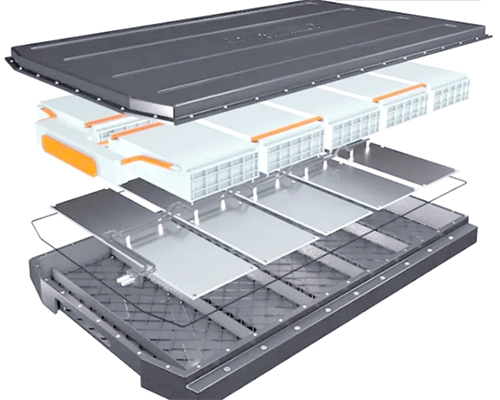
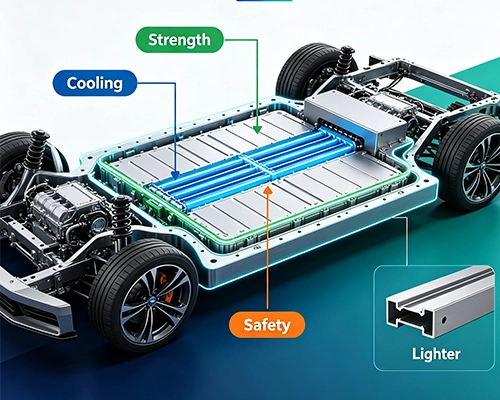
Battery enclosures must satisfy multiple, often conflicting, requirements. They must protect sensitive cells from impact, manage heat generated during operation, provide a rigid platform for the vehicle structure, and contribute to overall weight reduction. Aluminum extrusion addresses each of these requirements through its unique combination of properties.
The extrusion process creates continuous profiles with precise, consistent cross-sections that can be manufactured with integrated features—channels for cooling, mounting points for cells, and crash structures that absorb energy . This ability to integrate multiple functions into a single profile reduces part count, assembly time, and weight. The ALIVE project, a collaborative research initiative, demonstrated that aluminum battery enclosures can achieve weight savings between 12% and 35% compared to existing steel and aluminum designs, while meeting stringent performance targets .
Structural Performance: The Foundation of Battery Protection
The battery enclosure serves as the structural backbone of the EV, connecting the battery pack to the vehicle body. It must withstand static loads from the battery weight and dynamic loads during driving, while maintaining dimensional stability to protect sensitive cells.
Component Consolidation and Integration
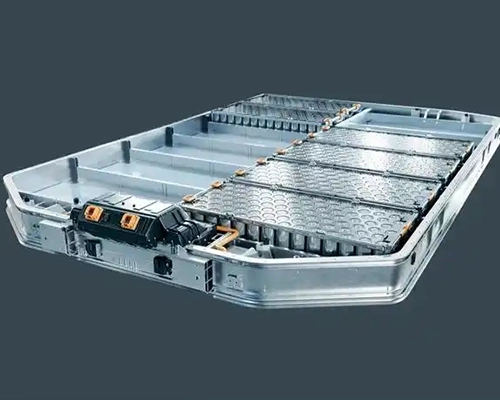
One of the most significant advantages of aluminum extrusions is the ability to create monolithic structures that replace multi-piece welded assemblies. Single-piece extrusions distribute loads evenly without the stress points introduced by welds, bolts, and rivets. This integration simplifies supply chains, reduces assembly time, and improves structural integrity.
Research has demonstrated the feasibility of producing thin-walled, large-scale aluminum extrusion profiles for modular battery housings using AA6063 alloy, achieving up to 38% weight reduction compared to conventional designs . The streamlined die designs developed in these studies enable defect-free extrusion of profiles with circumscribing circle diameter-to-minimum-wall-thickness ratios of 138, confirming the capability of modern extrusion technology to produce complex, lightweight structural components .
Alloy Development for Structural Applications
Automotive-grade aluminum alloys have advanced significantly to meet the specific demands of battery enclosures. Hydro's S-grade alloy portfolio represents a notable development, designed to offer superior energy absorption in side impact crush load cases compared to conventional crash grades . The S24 and S28 grades are particularly suited for sill-type products, while higher-strength variants (S32, S34, S37) are better aligned with bumper beams and side impact beams.
These alloys also address sustainability requirements by enabling high recycled content (exceeding 75% post-consumer scrap) while maintaining consistent performance. This approach avoids the use of elements that compromise recyclability, such as vanadium, which is frequently used in high-strength C-grades .
Thermal Management: Integrated Cooling Solutions
Effective thermal management is essential for battery performance, longevity, and safety. During fast charging or high-power output, cells generate significant heat that must be dissipated to prevent degradation or thermal runaway. Aluminum extrusions offer a pathway to integrated cooling solutions.
Integrated Cooling Channels
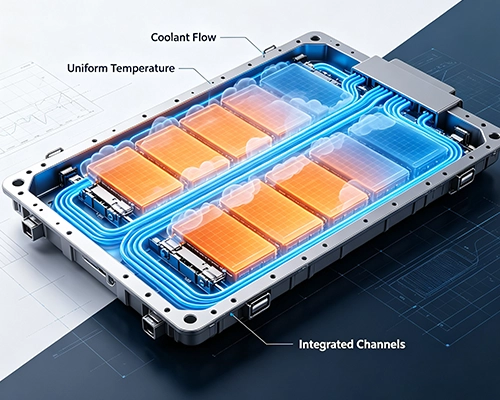
The extrusion process allows cooling channels to be incorporated directly into the profile design, eliminating the need for separate cooling plates or tubes. In advanced designs, the coolant structure is fully embedded into the frame profile, forming an integral part that simplifies assembly and improves thermal contact . This integration enables efficient heat transfer between the battery cells and the cooling medium, maintaining optimal operating temperatures.
The Reliefed project has developed innovative 3D extrusion manufacturing technology that enables the creation of tab-cooled battery packs with integrated cooling channels . The profiles, typically 90 mm wide and 8 mm thick, provide grooves for cell fixation and integrated cooling channels for heat transfer. Computational fluid dynamics simulations indicate very good cooling performance, with physical validation underway.
Flow Channel Design
UACJ Corporation has demonstrated the design of flow channels leveraging the properties of aluminum to achieve housing structures that incorporate battery temperature control as a built-in feature . This approach optimizes material utilization while ensuring uniform temperature distribution across the battery pack.
Crash Safety: Protecting the Battery in Impact Events
Crash safety is perhaps the most critical function of the battery enclosure. In a side impact or pole crash scenario, the enclosure must absorb energy and prevent intrusion into the battery cell area, avoiding short circuits or thermal events.
Energy Absorption Performance
Aluminum extrusions are inherently well-suited for energy absorption applications. The multi-chamber cross-sections that are readily producible through extrusion provide excellent crash energy absorption characteristics. Research comparing 7xxx-series aluminum extruded beams against high-strength steel demonstrates that aluminum extrusions can meet or exceed steel performance at significantly lower weight. A 3.0 mm aluminum beam achieved a peak load 21% higher than the steel reference and delivered 45% higher specific energy absorption, while reducing component mass by approximately 24% .
Advanced Alloys for Crash Performance
The development of specialized crash alloys has further enhanced aluminum extrusion performance. The HCA6® and HSA6® alloy families from Constellium have been specifically developed for high-crash applications in EV battery enclosures . These alloys provide the energy absorption characteristics required to meet side pole crash, side impact, bottom intrusion, acceleration, shock, and vibration testing requirements.
Testing of thick-walled multi-chamber aluminum extruded profiles for battery tray protection has compared AA6082 and AA6005 alloys in peak-strength conditions under pole-crushing scenarios . These studies calibrate material models and validate simulations, supporting the optimization of cross-section designs for maximum specific energy absorption.
Joining Technologies for Assembly
The assembly of extrusion-based battery enclosures requires joining technologies that maintain both structural integrity and leak tightness. Friction stir welding (FSW) has become a standard method for creating sealed joints in battery trays. However, alternative approaches are being developed.
Mechanical joining processes offer the potential for single-stroke longitudinal joining of extrusion profiles, eliminating the need for complex, time-consuming welding operations . These processes use flat steel contact surfaces as joining tools, forming joints in a single press stroke. The resulting joints must meet demanding requirements: leak tightness, high load-bearing capacity, and compliance with homologation standards for high-voltage systems.
Design Considerations for Battery Enclosure Extrusions
Profile Complexity and Extrudability
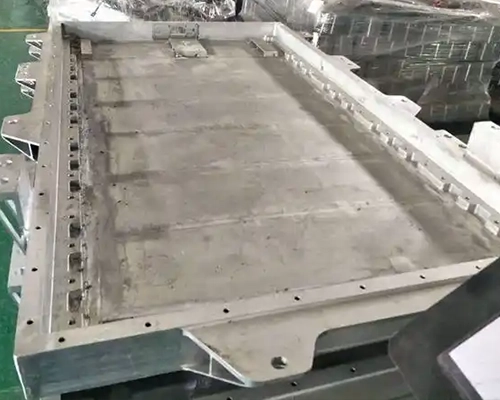
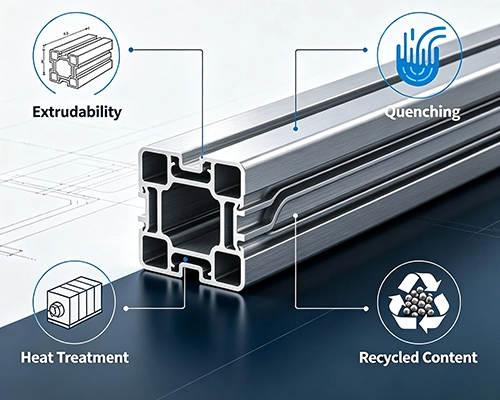
The design of extrusion profiles for battery enclosures must balance structural performance with manufacturing feasibility. Factors such as circumscribing circle diameter (CCD), minimum wall thickness, and profile complexity directly affect extrusion capability . A narrow process window exists for defect-free extrusion of thin-walled, large-scale profiles, requiring careful optimization of die design and process parameters.
Quenching and Mechanical Properties
The quenching method used after extrusion significantly affects the mechanical properties of the finished profile. Studies on AA6060 profiles demonstrate that spray cooling achieves 10% higher tensile strength compared to air cooling on the cooling bed, with critical quenching rates of approximately 50 K/min . For thin-walled geometries, however, active cooling methods affect surface deformation but have negligible influence on mechanical properties or microstructure due to efficient heat extraction inherent to the geometry .
Heat Treatment and Temper Selection
Artificial aging after extrusion is essential for achieving the target mechanical properties. For AA6060, a T6 temper is achieved through aging at 190°C for 7 hours . The choice of temper affects both strength and crash performance, with peak-strength conditions providing optimal energy absorption.
Sustainability and Recycled Content
The automotive industry's push toward sustainability has driven the development of alloys compatible with high recycled content. The S-grade portfolio from Hydro, designed for consistent performance with over 75% post-consumer scrap content, demonstrates that sustainability and performance are not mutually exclusive . Life cycle assessments of aluminum battery enclosures confirm the environmental benefits of aluminum solutions over steel alternatives .
Frequently Asked Questions (FAQ)
Q: How much weight can aluminum extrusions save in EV battery enclosures?
A: The ALIVE project demonstrated weight savings of 12% to 35% compared to existing steel and aluminum designs . Thin-walled profile designs can achieve up to 38% weight reduction compared to conventional solutions .
Q: What aluminum alloys are best for EV battery enclosures?
A: AA6063 is commonly used for structural extrusions . Specialized alloys such as HSA6® and HCA6® are designed for high-crash applications , while the S-grade portfolio from Hydro offers a range of strength levels (S24-S37) with high recycled content .
Q: How does extrusion enable integrated cooling?
A: The extrusion process allows cooling channels to be incorporated directly into the profile cross-section. Advanced designs embed the coolant structure integrally into the frame profile, eliminating separate cooling plates and improving thermal efficiency .
Q: Can aluminum extrusions meet crash safety requirements?
A: Yes. Aluminum extrusions can match or exceed steel crash performance at significantly lower weight. A 3.0 mm aluminum beam achieved 21% higher peak load and 45% higher specific energy absorption than a steel reference .
Q: What joining technologies are used for extrusion-based battery trays?
A: Friction stir welding is widely used for leak-tight joints. Alternative mechanical joining processes are being developed that enable single-stroke longitudinal joining, potentially reducing assembly time and cost .
Related Posts
Aluminum Extrusions in Military and Defense Applications — Explore lightweight structural applications across defense platforms.
Aluminum Welding Guide — Understand welding challenges and solutions for joining aluminum extrusions.
Large-Section Aluminum Extrusion Design — Learn design principles for large, complex profiles used in battery enclosures.
Aluminum Extrusion Market Outlook 2026-2027 — Understand market trends affecting EV-related extrusion demand.
Applications of Aluminum Extrusion in Different Industries — Discover how extrusion serves automotive, electronics, construction, and more.
About Aluleader
With over 15 years of experience in the aluminum extrusion industry, Aluleader provides high-quality architectural profiles, industrial profiles, and furniture/decorative profiles. Our integrated capabilities—from die design and extrusion to CNC machining, surface finishing, and fabrication—ensure consistent quality across every project.
While our primary focus is on architectural and industrial applications, our engineering team is well-versed in the technical requirements of structural applications, including those in the automotive sector. We collaborate with clients to develop profiles that meet demanding performance requirements, balancing structural integrity, weight, and manufacturability.
For project-specific questions or detailed inquiries about our extrusion capabilities, our experts are available to provide technical guidance.