Welcome to Aluleader Metal
Aluminum Profile Connection Methods: T-Slot, Brackets, Welding & More | Aluleader
Aluminum extrusion profiles are the backbone of modern modular structures—from industrial automation frames and workstations to furniture, display systems, and building facades. But a profile is only as strong and functional as the connections that hold it together.
Choosing the right joining method directly impacts structural integrity, assembly efficiency, maintenance flexibility, and visual appearance. This guide provides a comprehensive overview of the most common aluminum extrusion connection technologies—mechanical fastening, welding, and adhesive bonding—analyzing their strength characteristics, suitable applications, and installation efficiency to help you make informed decisions for your projects.
The Role of Connection Technology in Aluminum Structures
Aluminum extrusions offer exceptional design flexibility, but their hollow or slotted cross-sections present unique joining challenges. Unlike solid steel sections that can be welded or bolted directly, aluminum profiles often require specialized connectors, pre-drilling, or surface preparation.
The choice of connection method depends on several factors: structural load requirements, whether the joint needs to be permanent or reusable, aesthetic considerations, assembly speed, and the skill level available on-site. Understanding the trade-offs between these factors is essential for successful project outcomes.
Mechanical Fastening: The Versatile Workhorse
Mechanical fastening is the most widely used connection method for aluminum extrusions, offering a range of options from simple bolts to sophisticated modular connector systems. The primary advantage is reversibility—mechanical joints can typically be disassembled and reassembled, making them ideal for structures that may need modification or relocation.
T-Slot Systems and Modular Connectors
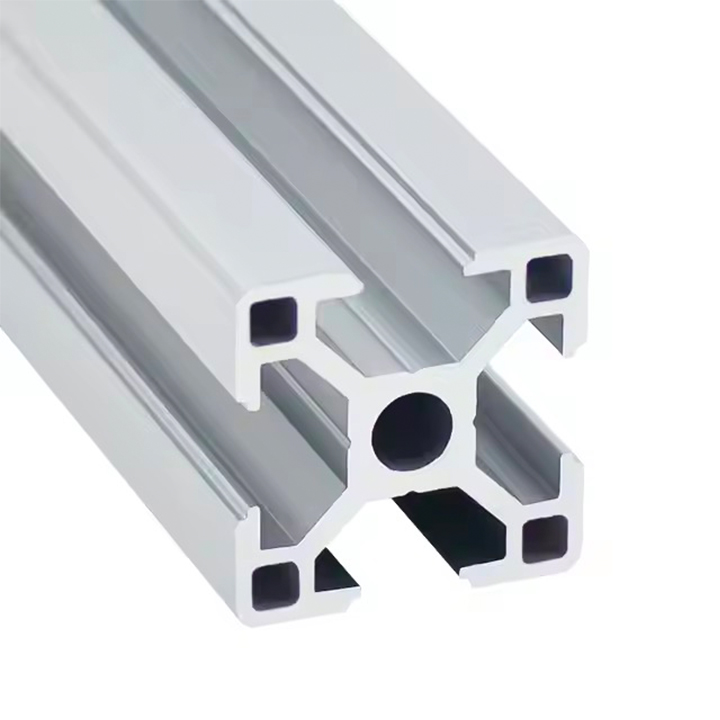
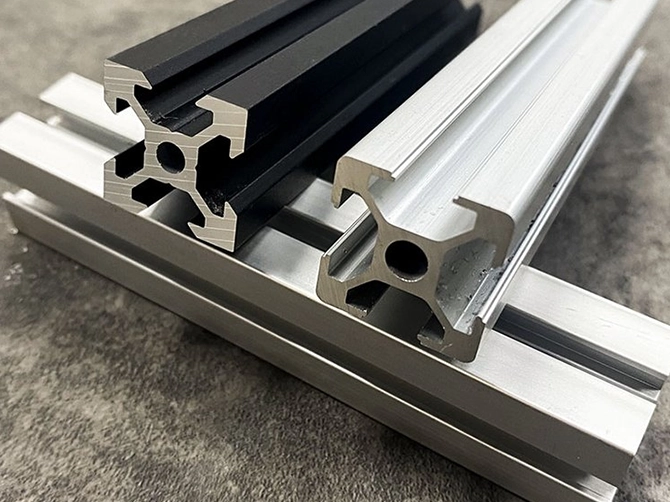
The T-slot profile is one of the most significant innovations in aluminum extrusion design. The longitudinal slot along the profile accepts a wide range of standard nuts, bolts, and connectors, enabling assembly without drilling, welding, or specialized fabrication.
T-Slot Nuts and Bolts: T-slot nuts are inserted into the profile slot from the end or side, then rotated to lock into position. Standard T-bolts and flange nuts provide secure clamping without damaging the profile. This system is widely used for machine frames, workstations, and automation lines because it allows rapid assembly, easy adjustment, and future modifications.
Built-in or Concealed Connectors: Some profile systems accept hidden fasteners and connecting blocks inserted into internal cavities, secured with set screws or expanding mechanisms. These maintain a clean, uncluttered appearance—ideal for display stands, enclosures, and furniture where visible fasteners would detract from the design.
Pull-in Tension Connectors: For maximum strength, tension connectors use a wedge or expanding mechanism to draw profiles tightly together. Installations by experienced workers can achieve high clamping forces, although assembly requires more skill than basic T-bolt connections.
Typical Applications: Machine frames, workstations, industrial automation lines, display systems, modular furniture.
Installation Efficiency: High—T-slot assemblies require only basic hand tools and minimal training. A skilled worker can complete 4-6 node connections per minute using standard angle brackets.
Load Capacity: Medium to high—T-slot connections, especially with tension-type connectors, can achieve substantial structural rigidity. Built-in connectors typically provide 65-75% of the tensile strength of angle bracket connections.
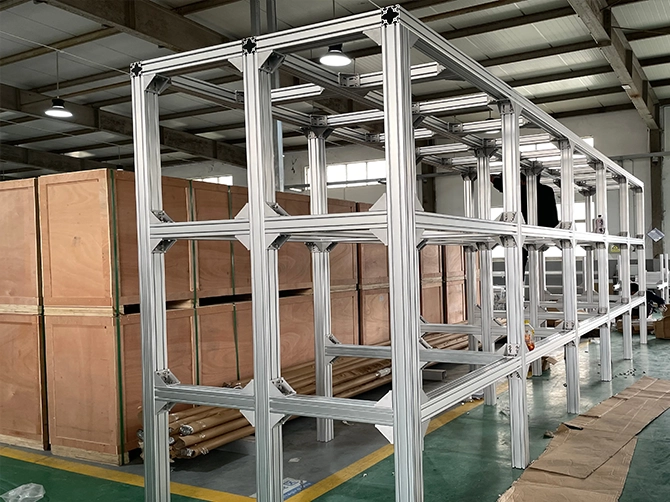
Angle Brackets and Corner Connectors
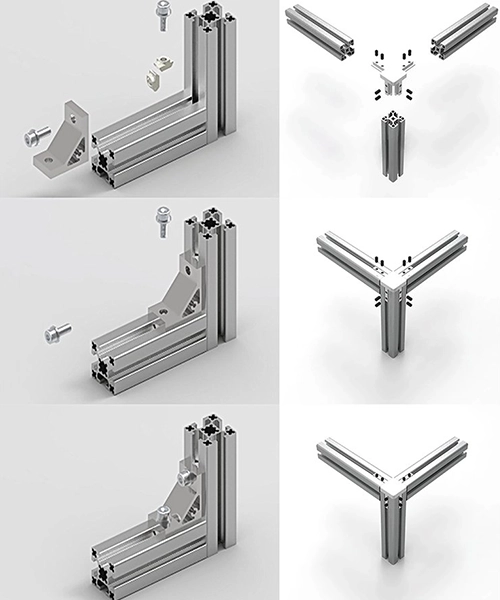
Angle brackets—also known as corner braces or L-brackets—are the most common and economical method for joining profiles at 90°, 45°, or 135° angles.
These brackets use T-bolts and flange nuts for fast installation without drilling or machining. They are available in aluminum, steel, and stainless steel, with load capacity varying by material and size. Steel or stainless steel brackets offer higher strength but may introduce galvanic corrosion risks if not properly isolated.
Advantages: Simple installation with basic tools, support multiple reassembly cycles, widely available in standard sizes for different profile series (2020, 3030, 4040, 5050, etc.).
Limitations: Protruding hardware visible on the outside of the structure; moderate load capacity; requires compatible T-slot access.
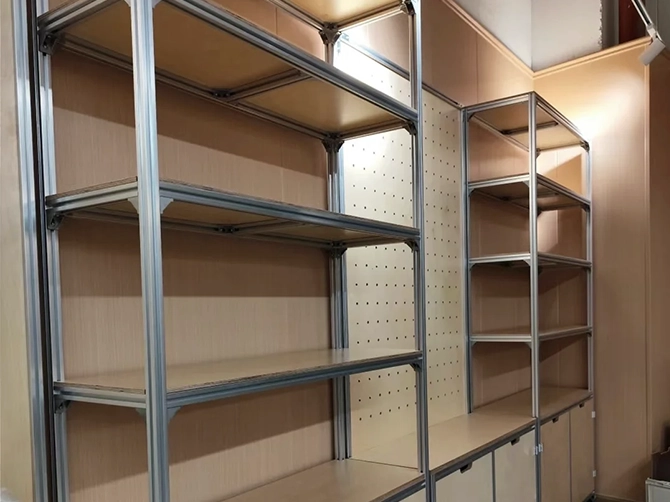
Typical Applications: Industrial equipment frames, protective enclosures, workstations, shelving units, heavy-duty racks.
Installation Efficiency: High—no drilling required; assembly can be completed rapidly with standard tools.
Load Capacity: Medium to high—steel angle brackets with dual-slot connections can achieve torsional resistance exceeding 200 N·m under static loads, making this one of the most reliable mechanical connection options.
End-Face Connections
For maximum structural strength, end-face connections involve drilling and tapping directly into the profile end face, then bolting another profile to the end. This direct load path eliminates the leverage effect of external brackets, significantly increasing joint strength.
Advantages: Highest load capacity of mechanical connection methods (shear strength approximately 35% higher than angle brackets); compact and clean appearance.
Limitations: Requires precise machining; modifications difficult after assembly; not suitable for structures needing frequent disassembly.
Typical Applications: Heavy-load bearing structures, machinery bases, equipment supports.
Installation Efficiency: Low—requires precise drilling and tapping, which adds to production time.
Load Capacity: Very high—the direct load path creates the strongest mechanical joint available for aluminum profiles.
Self-Piercing Riveting and Press Joining
For joining aluminum sheets and thin-walled profiles, self-piercing riveting (SPR) offers a high-speed alternative to drilling and bolting. A punch drives a rivet through the upper sheet, expanding it into the lower sheet to form a mechanical interlock without piercing the bottom layer.
Press joining (clinching) uses a punch to deform sheets into a die, creating a button-shaped interlock on one side. Both methods are highly automatable and can join aluminum to other materials—including steel and some plastics—that cannot be resistance spot welded to aluminum.
Typical Applications: Automotive body panels, appliance housings, electronic enclosures.
Installation Efficiency: Very high—suitable for automated production lines with cycle times of seconds per joint.
Load Capacity: Medium—primarily used for sheet materials rather than structural profiles.
Welding: Permanent, High-Strength Joints
Welding creates permanent, high-strength connections between aluminum components. However, aluminum welding requires specific techniques due to the material's high thermal conductivity, low melting point, and tenacious oxide layer.
TIG Welding
Tungsten Inert Gas (TIG) welding produces precise, clean welds with excellent heat control. This makes it suitable for thin-walled profiles and fine components where heat distortion must be minimized. TIG welding is commonly used in aerospace, industrial enclosures, and precision equipment frames.
Advantages: Excellent control over heat input; high-quality, clean welds; suitable for thin sections.
Limitations: Slower than other welding methods; requires skilled operators; generates significant heat that can distort thin profiles.
Typical Applications: Aerospace components, precision equipment frames, architectural details.
Installation Efficiency: Low—requires skilled welders and careful setup.
Load Capacity: High—properly welded joints can achieve strengths comparable to the parent material.
MIG Welding
Metal Inert Gas (MIG) welding is faster than TIG and more effective for thicker profiles and higher-volume applications. The weld appearance is generally more pronounced, but the process is widely used for structural frames, transportation equipment, and heavy-duty components.
Advantages: Faster deposition rates than TIG; suitable for thicker sections.
Limitations: Higher heat input increases distortion risk; requires more post-weld cleanup.
Typical Applications: Structural frames, heavy equipment, transportation components.
Installation Efficiency: Medium—faster than TIG but still requires skilled operators.
Load Capacity: High—comparable to parent material strength when properly executed.
Friction Stir Welding (FSW)
Friction stir welding is a solid-state joining process that creates high-strength, defect-free welds without melting the aluminum. A rotating tool generates frictional heat, plasticizing the material and forging it together under pressure. The result is a weld with minimal distortion and excellent mechanical properties.
Advantages: High-strength, consistent welds with minimal distortion; no filler material required; excellent fatigue performance.
Limitations: Requires specialized equipment; limited to specific joint configurations; high capital investment.
Typical Applications: Aerospace panels, electric vehicle battery enclosures, railway car bodies, marine structures.
Installation Efficiency: Low—requires specialized, expensive equipment.
Load Capacity: Very high—FSW joints typically achieve 90-100% of parent material strength.
Adhesive Bonding: Stress-Distributing Connections
Adhesive bonding offers a fundamentally different approach to joining aluminum—distributing loads across the entire bond area rather than concentrating stress at discrete points. This can improve fatigue resistance and enable joining of dissimilar materials.
When properly prepared, adhesive joints can provide excellent structural performance. Surface preparation is critical—aluminum's oxide layer must be cleaned, degreased, and often etched or anodized to create a strong bond. Weakly bonded oxide coatings dramatically reduce joint strength.
Advantages: Load distribution across entire bond area; joining of dissimilar materials (aluminum to composites, steel, or plastics); no heat distortion or metallurgical changes.
Limitations: Requires extensive surface preparation; slow curing times; limited temperature range; not suitable for high-temperature applications.
Typical Applications: Automotive panels, aircraft structures, architectural bonding of trim and cladding.
Installation Efficiency: Low—requires careful surface preparation and curing time.
Load Capacity: Medium to high with proper design—modern structural adhesives can achieve shear strengths exceeding 20 MPa.
Hybrid Connections: Combining Methods
Mechanical fastening and adhesive bonding can be combined to overcome the limitations of each technique. Adhesive fills gaps and distributes stress, while mechanical fasteners provide immediate clamping pressure and prevent separation before the adhesive cures.
Research on AA5052 aluminum alloy joints shows that adhesive-bonded-riveted (hybrid) connections achieve tensile strengths approximately equal to the sum of the riveted strength plus half the adhesive strength, significantly outperforming either method alone.
Hybrid connections are increasingly used in aluminum-intensive vehicle manufacturing, where they provide both structural integrity and improved fatigue performance.
Selection Guide: Matching Methods to Requirements
For maximum structural strength and permanence: Choose end-face bolting or FSW welding. End-face connections offer the strongest mechanical joints with direct load paths; FSW provides parent-material-equivalent strength with minimal distortion.
For rapid assembly with future flexibility: Use T-slot systems with angle brackets. This is the most versatile and efficient method, particularly for industrial automation frames, workstations, and modular structures.
For clean, concealed aesthetics with moderate loads: Select built-in connectors or concealed fastening systems. These maintain a smooth appearance while providing reliable joints for display units, furniture, and enclosures.
For sheet joining or dissimilar materials: Consider self-piercing riveting, clinching, or adhesive bonding. SPR and clinching are highly automatable; adhesives enable joining of aluminum to composites or plastics.
For challenging applications requiring both strength and seal: Combine methods—adhesive-bonded-riveted joints provide superior performance to either method alone.
Frequently Asked Questions (FAQ)
Q: Which aluminum connection method is strongest?
A: For mechanical connections, end-face bolting provides the highest joint strength, with shear resistance approximately 35% greater than angle bracket connections. Among welding methods, friction stir welding achieves up to 100% of parent material strength. Adhesive-bonded-riveted hybrid connections offer tensile strength exceeding either individual method.
Q: Can I disassemble aluminum connections after assembly?
A: Yes, if you use mechanical fasteners. Angle bracket connections, T-slot systems, and built-in connectors can all be disassembled without damaging the profiles. Welded joints are permanent and cannot be separated without cutting.
Q: What is the fastest way to assemble aluminum profiles?
A: For modular T-slot systems, angle brackets with T-bolts offer the fastest assembly—a skilled worker can complete 4-6 connections per minute using only an Allen wrench. No drilling, tapping, or welding is required.
Q: What connection method is best for visible applications?
A: Built-in or concealed connectors provide clean, uncluttered joints with no visible hardware. These are ideal for display stands, furniture, and architectural applications where appearance matters.
Q: Is welding aluminum difficult?
A: Aluminum welding requires specific techniques due to its high thermal conductivity and oxide layer. TIG welding offers precise control but requires skilled operators; MIG welding is faster but less refined. Friction stir welding provides excellent results but requires specialized equipment.
Related Posts
How to Read Aluminum Extrusion Drawings — Understand the dimension and tolerance specifications that affect connection design.
Aluminum Extrusion Tolerance Design Guide — Learn about design principles for creating profiles compatible with various connection methods.
Aluminum Extrusion in Modular Construction — Explore how extrusion-based systems are accelerating modern building with modular connection technologies.
Applications of Aluminum Extrusion in Different Industries — See how different connection methods are applied across construction, automotive, and furniture.
How to Choose an Aluminum Extrusion Supplier — Evaluate suppliers based on their capability to provide connection solutions.
About Aluleader
With over 15 years of experience in the aluminum extrusion industry, Aluleader provides high-quality architectural profiles, industrial profiles, and furniture/decorative profiles. Our integrated capabilities—from die design and extrusion to CNC machining and surface finishing—ensure consistent quality across every project.
Our engineering team collaborates with clients to design profiles compatible with the optimal connection methods for each application, balancing strength, assembly efficiency, and cost. For project-specific questions or detailed inquiries about connection solutions, our experts are available to provide technical guidance.