Welcome to Aluleader Metal
11 Silent Quality Traps in Aluminum Extrusion and How to Avoid Them | Aluleader
Aluminum extrusion is a precision forming process involving multiple interrelated variables. From billet heating to die design, extrusion speed to cooling methods, any subtle deviation in any single step can lead to quality defects in the final product. However, not all defects are immediately visible—some issues are not apparent after extrusion but only emerge during subsequent processing (such as anodizing) or in-service use, causing greater losses.
This article systematically reviews the 11 most common and easily overlooked "silent" quality traps in aluminum extrusion, providing actionable solutions based on problem mechanism analysis and industry practice. These insights directly reflect an extruder's quality control capabilities—the ability to identify and resolve these issues is what distinguishes a professional partner from a commodity supplier.
Trap 1: Blisters — The Most Hidden "Time Bomb"
Problem Manifestation: Blisters are among the most common defects in aluminum extrusion, but tracing their root cause is extremely challenging due to the multitude of potential triggers. Blisters may form during extrusion or only appear during subsequent heat treatment or surface finishing.
Problem Mechanism: Blister formation involves multiple factors—internal porosity in the billet, adherent materials on the die bearing, gas entrapment during extrusion, and uneven quenching cooling. The Aluminum Extruders Council (AEC) technical literature notes that different blister morphologies correspond to different root causes, making troubleshooting complex and time-consuming.
Solutions:
Strictly control billet quality, ensuring adequate homogenization to reduce internal porosity and segregation
Optimize extrusion parameters, particularly dwell pressure—proper dwell pressure is key to reducing blisters
Be aware that "two-piece billets" significantly generate blisters, but research shows that using sawing instead of hot shearing is not a solution
Profile shape itself also affects blister frequency—complex shapes require more refined process control
Trap 2: Weld Defects — Invisible Cracks in Hollow Profiles
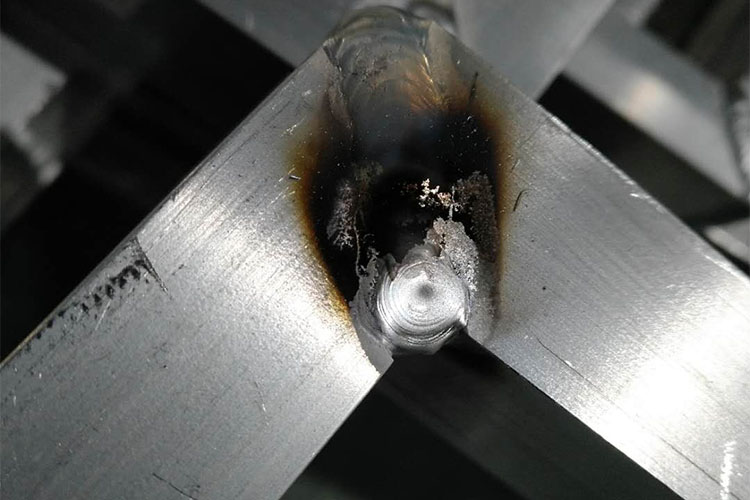
Problem Manifestation: For hollow profiles (especially complex multi-chamber sections), weld quality directly determines structural integrity and service life. Weld defects can be classified as longitudinal or transverse, depending on their orientation and location on the profile.
Problem Mechanism: In porthole dies, the aluminum stream is divided into multiple flow strands that later rejoin. If pressure or temperature at the rejoining point is insufficient, adequate solid-state welding cannot occur. Research indicates that insufficient pressure leading to inadequate material flow reduces weld quality and can cause product failure. For high-end aluminum alloys such as AA6082, this problem is particularly pronounced.
Solutions:
Optimize porthole die design—the core design principle is the "compression-consolidation-extrusion" sequence
Tapered design: Applying a taper angle to the mandrel and die plate helps consolidate metal flow and reduce weld chamber volume
Use finite element simulation to predict material flow and stress distribution in the weld zone
Ensure sufficient weld chamber pressure—research has proven that proper pressure is critical for weld quality
Trap 3: Scratches, Abrasions, and Dents — The Most Overlooked "Surface Killers"
Problem Manifestation: Scratches, abrasions, and dents are surface damages caused by contact with tools and equipment as the profile exits the die opening and passes through subsequent processing stages.
Problem Mechanism:
Contaminants or segregation on the billet surface damage the die bearing during extrusion
Insufficient die bearing hardness leads to damage during extrusion, scratching the profile
Bare metal or foreign objects on the run-out table or cooling bed
Manual handling of profiles and friction between profiles during transportation
Solutions:
Strengthen billet quality control with adequate homogenization treatment
Perform regular die nitriding and strictly follow nitriding process parameters
Use soft felt or pads to isolate profiles from auxiliary equipment, reducing contact damage
Handle profiles with care during production, avoiding dragging
Arrange profiles properly in baskets to prevent mutual friction
Trap 4: Substandard Mechanical Properties — The Invisible "Structural Hazard"
Problem Manifestation: The profile's strength, hardness, and other mechanical properties fail to meet specifications, potentially leading to structural failure during long-term service.
Problem Mechanism:
Extrusion temperature too low or speed too slow, such that exit temperature fails to reach solution temperature, preventing solid solution strengthening
Insufficient cooling rate—the profile cannot cool below 200°C within the shortest time, allowing coarse Mg₂Si to precipitate prematurely, reducing solid solution phase
Billet composition out of specification (insufficient Mg and Si content)
Billet not homogenized, so precipitated Mg₂Si phases cannot redissolve during extrusion
Improper aging process, poor hot air circulation, or incorrect thermocouple placement
Solutions:
Control extrusion temperature and speed reasonably to ensure exit temperature remains above minimum solution temperature
Strengthen air cooling conditions; install mist cooling devices where conditions permit
Strengthen billet quality management with homogenization treatment
Determine reasonable aging process parameters and install thermocouples correctly
Ensure smooth hot air circulation
Trap 5: Pickup — Sharp "Surface Blemishes"
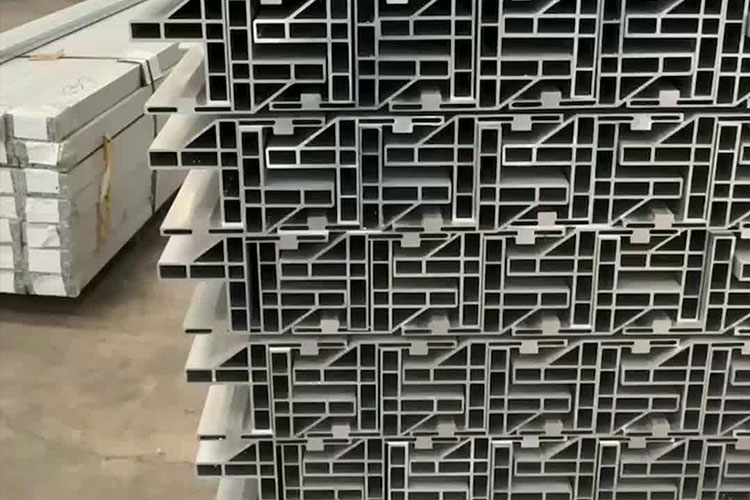
Problem Manifestation: The profile surface exhibits tiny, trailing tumors of varying density, with a distinct sharp feeling to the touch.
Problem Mechanism: Inclusions in the billet or metal/debris adhering to the die bearing are carried away by the high-temperature, high-pressure aluminum during extrusion, forming pickups on the profile surface.
Solutions:
Reduce extrusion speed appropriately, using reasonable extrusion and die temperatures
Strictly control billet quality, reduce inclusion content, and perform homogenization treatment
Strengthen die correction quality management
Trap 6: Black Spots — "Mysterious Spots" After Anodizing
Problem Manifestation: After anodizing, approximately circular dark gray or black spots appear on the profile surface. On the face that contacts the cooling bed longitudinally, these spots are distributed at equal intervals, varying in size.
Problem Mechanism: Insufficient air cooling at the press exit causes the aluminum to contact the cooling bed at elevated temperatures. The cooling rate at the contact points differs from other areas, allowing coarse Mg₂Si phases to precipitate. These areas appear dark gray or black after anodizing.
Solutions:
Strengthen air cooling intensity and avoid profiles being spaced too closely on the cooling bed
Ensure adequate temperature gradient during air cooling
Where conditions permit, combining mist cooling with air cooling can completely eliminate black spots
Trap 7: Structural Streaks — "Invisible Patterns" in Uneven Coloring
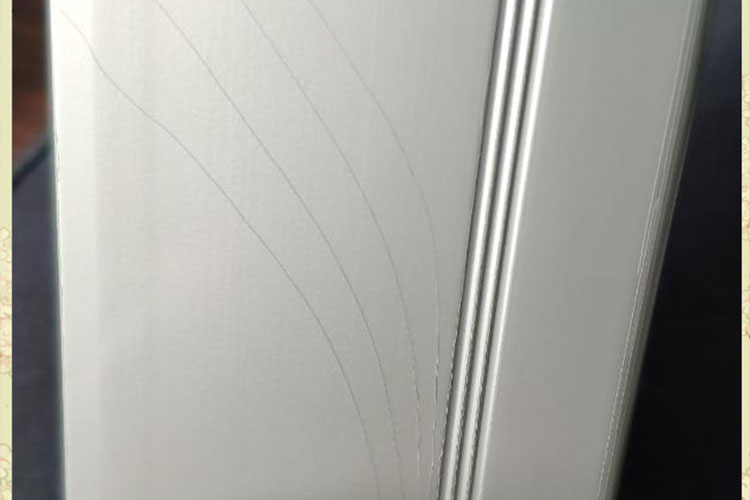
Problem Manifestation: Color differences appear after oxidation—including friction marks (die lines), structural streaks, and metallic bright streaks.
Problem Mechanism:
Friction marks: Metal in the adhesive zone is subjected to friction and shear forces, with particles adhering to the bearing surface scratching the profile
Structural streaks: Non-uniform billet structure, compositional segregation, and inadequate homogenization lead to differential coloring ability after oxidation
Metallic bright streaks: Intense friction during metal flow causes localized temperature rise; severely fragmented grains undergo recrystallization, and the microstructure changes result in lighter streaks after oxidation coloring
Solutions:
Friction marks: Adjust die bearing outlet angle to -1° to -3°; perform effective die nitriding with surface hardness maintained above HV900; sulfur infiltration of the bearing surface can reduce friction
Structural streaks: Properly execute casting processes to eliminate segregation; peel the billet surface; perform thorough homogenization treatment
Metallic bright streaks: Design die structure reasonably; pay attention to bearing transitions during die machining; ensure die bridges are teardrop-shaped to eliminate sharp edges
Trap 8: Waviness, Twist, and Bowing — Shape "Metamorphosis"
Problem Manifestation: The profile exhibits shape defects such as waviness, twist, and bowing.
Problem Mechanism: Shape defects result from non-uniform metal flow. Main causes include:
Unreasonable die bearing design causing non-uniform metal flow
Excessive extrusion speed or temperature
Unreasonable die orifice layout
Solutions:
Correct die bearings to ensure uniform metal flow
Adopt reasonable extrusion parameters, preferring low-temperature extrusion while ensuring adequate exit temperature
Design die structure logically
Trap 9: Inadequate Die Preparation — The Limit of "Hand Polishing"
Problem Manifestation: As profile designs become increasingly complex, hand polishing can no longer meet requirements for quality, repeatability, and production efficiency.
Problem Mechanism: Certain areas of modern dies are simply inaccessible by hand. Inadequate die preparation leads to:
Increased risk of cracking during extrusion
Inconsistent surface quality
Visible scratches on anodized products
Low production efficiency—when preparing 60 dies daily, hand polishing takes 10 minutes/die vs. automated methods taking 2-3 minutes/die
Solutions:
Introduce Abrasive Flow Machining (AFM) technology: Abrasive-laden media flow through the die like aluminum, thoroughly processing internal and complex geometric structures
AFM achieves uniform material removal and consistent finishing results
The consistency and uniformity of automated polishing are key to achieving the highest reliability
Proper die preparation can reduce cracking probability, minimize press stoppages, and save time
Trap 10: Coarse Grain Structure (Orange Peel) — "Inconspicuous" Microstructural Defect
Problem Manifestation: The profile surface exhibits an orange peel-like rough texture. Stretch straightening may temporarily reduce it, but the underlying issue remains unresolved.
Problem Mechanism: Coarse grains formed during extrusion are the root cause—the coarser the grains, the more pronounced the wrinkling. For high-strength aluminum alloys (including those containing grain refiners such as Zr and Sc), the formation mechanism of peripheral coarse grain (PCG) defects is particularly complex: PCG can be attributed to static recrystallization and abnormal grain growth after extrusion, closely related to local deformation history.
Solutions:
Control extrusion temperature and speed—PCG is closely related to profile temperature and strain distribution at the extrusion exit
Optimize die design—PCG locations often strongly overlap with high plastic strain zones
Optimize heat treatment processes—stored energy accumulated during processing is a primary factor in the formation and evolution of local coarse grains
For high-strength materials such as 2195 Al-Li alloy, establish dedicated PCG prediction models that comprehensively suppress defects through die, process, and heat treatment optimization
Trap 11: Inadequate Straightening — "The Final Defense of Precision"
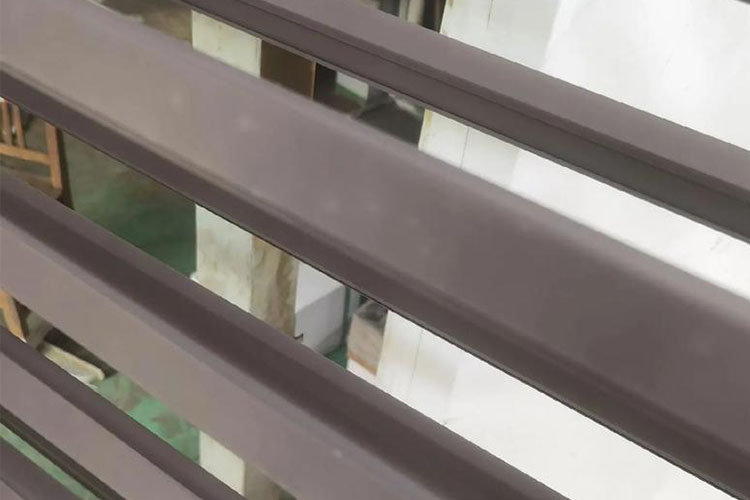
Problem Manifestation: Although extrusion is complete, the profile's geometric precision does not meet assembly requirements, requiring additional machining or causing assembly difficulties.
Problem Mechanism: In aluminum extrusion, geometric variation tends to be greater than in alternative forming processes (such as sheet rolling). These variations include:
Longitudinal direction: Bending or twisting
Cross-section direction: Height/width deviations or outer wall straightness deviations
Hollow profiles: Bulging and sagging—causing profiles that should be straight to bow inward or outward, increasing welding difficulty
For high-strength, high-ductility alloys containing recycled aluminum, there is a conflict between rapid cooling requirements and geometric stability, making it more difficult to achieve required tolerances without machining
Solutions:
Post-extrusion straightening: Introduce plastic deformation before age hardening to maintain low springback
Stretch straightening: The most common overall process method; stretching approximately 0.5% can reduce bending and twisting
Compression, expansion, and hydraulic straightening: Used for surface repositioning, bringing sections into the plastic state and stretching or compressing individual walls for correction
Correct selection of straightening methods can enable automotive-grade tolerances from extruded profiles without machining
Summary: From "Firefighting" to "Prevention" in Quality Thinking
The 11 "silent" quality traps discussed above reveal a core principle: aluminum extrusion quality is not inspected into existence—it is designed and controlled into existence.
Key capabilities of a professional manufacturer include:
Process Understanding: Deep understanding of how temperature, speed, pressure, and die design interact during extrusion, rather than simply following process cards
Die Engineering: Die design is the first line of quality defense—from bearing design to nitriding, every step affects the final product
Advanced Technology Application: Such as AFM die finishing, finite element simulation, and AI-driven temperature prediction
Systematic Quality Control: Full-chain coverage from billet inspection (composition, grain size) through online monitoring (temperature, speed) to finished product testing (dimensions, mechanical properties)
For buyers: Partnering with suppliers possessing the above technical capabilities and quality systems is the most effective way to avoid "silent traps." When selecting a partner, look beyond price—focus on defect prevention capabilities and problem-solving experience.
Frequently Asked Questions (FAQ)
Q: Why do some profiles look fine after extrusion but show defects after anodizing?
A: Because some defects (such as black spots and structural streaks) are not obvious in the as-extruded state, but the electrochemical process of anodizing magnifies microstructural differences. These defects are typically related to uneven cooling rates, non-uniform billet structure, or die bearing conditions.
Q: How can I evaluate an extrusion supplier's quality level?
A: Beyond inspecting the product, understand whether they use advanced die finishing technologies such as AFM, have systematic billet quality control, perform die nitriding and regular maintenance, have online monitoring systems, and maintain comprehensive defect traceability and corrective mechanisms.
Q: How much does die preparation affect quality?
A: Die preparation is a critical factor. The limitations of hand polishing are increasingly apparent—certain areas of modern dies are simply inaccessible by hand. Using automated finishing technologies such as AFM significantly improves surface consistency, reduces cracking risk, and enhances production efficiency.
Q: Is faster extrusion speed always better?
A: No. Extrusion speed is constrained by multiple factors: alloy type, billet condition, product shape, deformation degree, and die structure. Excessive speed may lead to surface defects, degraded mechanical properties, and shortened die life. Recommended extrusion speeds (exit speeds) for 6063 aluminum alloy range from 9-60 m/min.
Q: What are the special challenges with high-strength aluminum alloys (such as 6082)?
A: High-strength alloys face more severe weld defect and coarse grain issues during extrusion. Weld defects require special die designs (such as tapered mandrels) to consolidate metal flow; for high-strength alloys containing refiners like Zr and Sc, peripheral coarse grain (PCG) formation mechanisms are more complex, requiring comprehensive suppression through die, process, and heat treatment optimization.
Related Posts
Aluminum Extrusion Tolerance Design Guide: A Must-Read for Engineers — Master tolerance design principles to prevent quality issues at the design stage.
Guide to Aluminum Extrusion Die Design and Lifespan — Deepen your understanding of how dies affect product quality and consistency.
Aluminum Extrusion Process: 11 Key Steps Explained — Complete process overview from billet heating to final aging.
Extruded Aluminum vs Die Cast: Comparison Guide — Understand how process choice fundamentally affects quality.
Surface Finishing Options for Aluminum Extrusions — Analysis of finish sensitivity to various defects.
About Aluleader
With over 15 years of experience in the aluminum extrusion industry, Aluleader provides high-quality architectural profiles, industrial profiles, and furniture/decorative profiles. Our quality system covers the entire chain—from die design and billet inspection through extrusion process control to finished product testing.
Our engineering team focuses not only on "production" but also on "prevention"—avoiding quality traps at the source through die optimization, precise process parameter control, and systematic inspection. For project-specific quality concerns, our experts are available to provide technical analysis and solutions.