Welcome to Aluleader Metal
Aluminum Window Profiles for Ethiopia: LTZ Series Buyer’s Guide
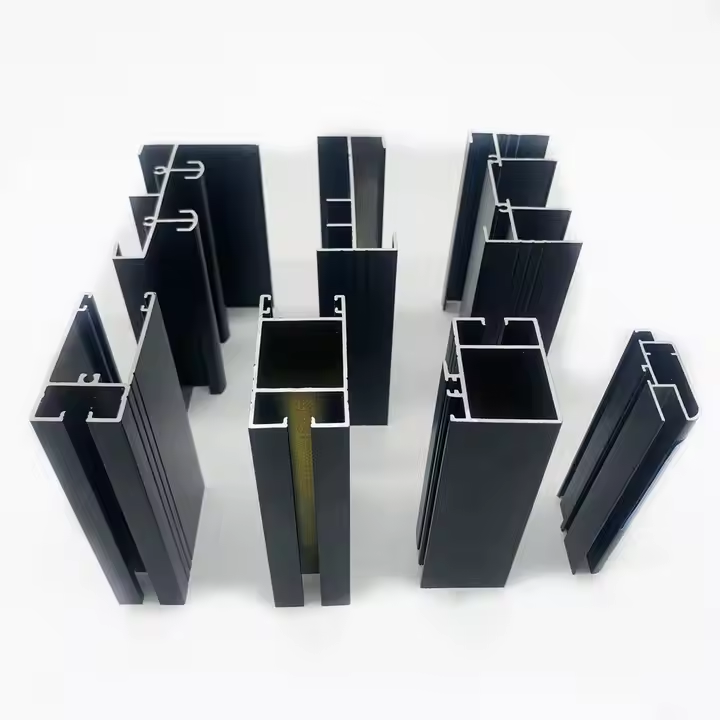
The Ethiopian window and door market uses a variety of aluminum profile systems, and LTZ Series aluminum profiles are among the profile types used for sliding window fabrication.
For importers, distributors and window fabricators, purchasing LTZ profiles is not simply about finding an aluminum extrusion with a similar shape. A complete sliding window system normally requires multiple matching profiles that must work together correctly.
Buyers also need to confirm the profile dimensions, wall thickness, alloy, temper, surface finish, color and quantity before placing an order.
This guide explains what buyers should know when sourcing aluminum window profiles for Ethiopia, particularly LTZ Series sliding window profiles.
If you are already looking for this profile system, you can first view Aluleader's LTZ Series 1.4mm Sliding Window Aluminum Profiles for Ethiopia for product specifications and customization options.
1. What Are LTZ Aluminum Profiles?
LTZ refers to a group of aluminum extrusion sections used in window systems for the Ethiopian market.
Depending on the specific window system, buyers may encounter profile names such as:
L Profile
T Profile
Z Profile
Zekolo Profile
Fasha Profile
Fixed Profile
Frame Profile
Sash Profile
Other matching sections
These profiles are designed to work together as part of a window system rather than as completely independent products.
This is important when purchasing from an overseas supplier.
If you only send a photo of one profile and ask for a quotation, the supplier may not know which complete window system you are using.
A better approach is to provide the complete profile list, drawings or physical samples of the window system you currently manufacture.
For buyers looking beyond the LTZ Series, Aluleader also manufactures a broader range of architectural aluminum profiles for windows, doors and other building applications.
2. Understanding L, T, Z, Zekolo and Fasha Profiles
One characteristic of the Ethiopia LTZ market is that buyers often identify profiles by familiar local or commercial profile names.
However, these names should be treated as a convenient way to identify the profiles—not as a complete manufacturing specification.
L Profile
L-type profiles can be used as part of the frame, edge or supporting sections of a window system, depending on the specific design.
T Profile
T-shaped profiles may be used where the system requires a central connection, divider or supporting section.
Z Profile
Z-shaped sections can be used in different parts of the window system depending on how the profiles overlap and connect.
Zekolo Profile
Zekolo is another profile designation encountered when discussing LTZ-type aluminum window systems for Ethiopia.
Its exact cross-section should always be confirmed using a drawing or physical sample because dimensions can vary between different systems.
Fasha Profile
Fasha profiles are also used as part of some Ethiopia window profile systems.
Again, the profile name alone is not enough for production. The extrusion manufacturer needs the actual cross-sectional dimensions to confirm whether an existing die can be used or a customized extrusion die is required.
Why does this matter?
Two profiles may both be called a “Z Profile” while having different:
Width
Height
Wall thickness
Internal structure
Glass groove
Connection dimensions
Therefore, buyers can use profile names for communication, but the drawing or approved physical sample should be the final technical reference.
3. A Complete Sliding Window Requires More Than One Profile
One common mistake when sourcing aluminum window profiles is focusing only on the main frame.
A sliding window is a complete system.
Depending on the design, it may require:
Outer frame profiles
Top and bottom track profiles
Vertical frame sections
Sliding sash profiles
Interlocking sections
Fixed sections
Glass-related sections
Accessory profiles
Mosquito-screen profiles
These sections must fit together correctly.
For this reason, when sourcing LTZ sliding window aluminum profiles for Ethiopia, it is usually better to send the supplier the complete profile schedule rather than requesting quotations one profile at a time.
This also allows the manufacturer to check whether any matching sections are missing before production.
If your project uses a different window system, you can also review Aluleader's aluminum window profiles to understand the broader range of window extrusion options.
4. Why 1.4mm Wall Thickness Is Requested for Ethiopia Projects
Wall thickness is an important purchasing specification for aluminum window profiles.
For Ethiopia projects, some buyers specifically request 1.4mm aluminum profiles according to their existing window systems, customer requirements or project specifications.
Aluleader can manufacture LTZ Series profiles with a 1.4mm wall-thickness option, subject to the actual profile design and extrusion feasibility.
Other customized wall thicknesses can also be produced according to the customer's requirements.
Why does wall thickness matter?
Wall thickness influences:
Profile weight
Aluminum consumption
Rigidity
Extrusion feasibility
Material cost
Finished window performance
For example, two LTZ profiles can have almost identical external dimensions while having different wall thicknesses.
The heavier profile normally contains more aluminum and therefore has a different material cost.
Do all Ethiopia aluminum profiles have to be 1.4mm?
Not necessarily.
The required thickness should be confirmed according to the actual window system, customer requirement and project specification.
For this reason, when requesting a quotation, it is better to state:
Required wall thickness: 1.4mm
rather than simply asking for:
Ethiopia standard profile
This gives the manufacturer a much clearer production requirement.
If you want to understand wall thickness, alloy, tolerances and other general extrusion-selection factors in more detail, see our guide to choosing the right aluminum extrusion for your project.
This is also where this article differs from that general guide: here we are focusing specifically on the Ethiopia LTZ window-profile system and its purchasing requirements.
5. 6063-T5 Aluminum for LTZ Window Profiles
For architectural aluminum extrusion, 6063 aluminum is widely used because it combines good extrusion characteristics with good surface-finishing performance.
For LTZ window profiles, Aluleader can supply 6063-T5 aluminum extrusion according to the required profile design.
6063-T5 is commonly used for applications such as:
Window frames
Sliding window profiles
Door profiles
Architectural aluminum profiles
Decorative building profiles
For an Ethiopian buyer, the important point is to confirm both:
Alloy: 6063
and
Temper: T5
rather than specifying only “aluminum.”
The exact material specification should ultimately follow the customer's drawing and project requirements.
We will not go deeply into the differences between aluminum alloys here because this article is focused on LTZ purchasing. For buyers who need a broader comparison of alloy, temper and extrusion selection, the aluminum extrusion selection guide covers these factors in more detail.
6. Surface Finishes for Ethiopia Aluminum Window Profiles
After extrusion, LTZ aluminum profiles can be supplied with different surface finishes depending on the required appearance and application.
Powder Coating
Powder-coated aluminum profiles are widely used for windows and doors because buyers can choose from a broad range of colors.
Typical requirements may include:
White
Black
Grey
Bronze
Other customized colors
If color is important, it is better to provide a physical color sample or recognized color reference before mass production.
Anodizing
Anodized aluminum retains a more metallic appearance and is another common option for architectural profiles.
Wood Grain
Wood-grain finishes can be used when the project requires the appearance of timber while retaining an aluminum profile underneath.
The correct finish should be selected according to the customer's design, market preference and project requirements.
For a more detailed explanation of anodizing, powder coating and other finishing methods, read our surface finishing options for aluminum extrusions.
That article covers surface treatment in depth, so we do not need to repeat the full finishing guide here.
7. Existing LTZ Profile or Custom Profile?
There are two common situations when Ethiopian customers source aluminum window profiles.
Situation 1: You Already Use an Existing LTZ System
If your company already fabricates LTZ windows, the easiest approach is to provide:
Existing aluminum profile samples
CAD drawings
Profile catalogue
Cross-sectional dimensions
Current profile list
The extrusion manufacturer can then check whether an existing die is suitable or whether a new die is required.
Situation 2: You Want to Modify the Existing Profile
Some customers may want to change:
Wall thickness
Profile weight
Glass groove
Overall dimensions
Hardware position
Internal structure
In this case, a custom aluminum extrusion die may be required.
The final profile drawing should be confirmed before the die is produced.
This is especially important if you want the new profile to remain compatible with your existing LTZ profiles, glass or hardware.
8. Can an Existing Ethiopia Profile Be Reproduced From a Sample?
Yes.
This is particularly useful for Ethiopian window manufacturers that already use a particular profile system but do not have the original CAD files.
You can provide an existing physical extrusion sample to the manufacturer for evaluation.
The manufacturer can use the sample to understand:
Cross-sectional geometry
Overall dimensions
Wall thickness
Internal cavities
Connection points
Glass grooves
Visible surfaces
However, a physical sample should not completely replace the production drawing.
Before opening a new extrusion die, the manufacturer should prepare or confirm the final profile drawing so both parties agree on the dimensions that will be manufactured.
This is particularly important when reproducing an older profile because the existing sample itself may contain manufacturing variation.
9. How to Order LTZ Aluminum Profiles From China
For Ethiopian importers purchasing LTZ profiles from China, the ordering process can be divided into several practical steps.
Step 1 — Send the Complete Profile List
Tell the supplier which LTZ profiles you require.
If possible, send the complete system rather than individual profiles.
For example:
L + T + Z + Zekolo + Fasha + matching sections
This makes it easier to determine whether all required dies are available.
Step 2 — Send Drawings or Samples
CAD drawings are ideal.
Common file formats include:
DWG
DXF
Dimensioned PDF
If drawings are unavailable, physical profile samples can be provided for evaluation.
Step 3 — Confirm Wall Thickness
For example:
1.4mm
or another required thickness.
Do not leave this specification unclear when comparing quotations.
Step 4 — Confirm Surface Finish
For example:
Powder coated
or:
Anodized
Step 5 — Confirm Color
Provide the required color reference or physical sample.
Step 6 — Confirm Quantity
Provide the quantity required for each profile.
This is important because a complete window system does not necessarily use the same quantity of every extrusion.
Step 7 — Confirm Profile Length
Tell the supplier the required extrusion length.
Step 8 — Review the Quotation and Drawing
Before tooling or production, confirm that the quotation is based on the correct:
Profile
Alloy
Temper
Wall thickness
Surface finish
Color
Length
Quantity
This prevents different specifications from being compared as if they were the same product.
10. What Should You Send for an LTZ Profile Quotation?
If you are requesting a quotation for Ethiopia LTZ aluminum profiles, prepare the following information.
LTZ Aluminum Profile RFQ Checklist
| Information | What to Provide |
|---|---|
| Profile system | LTZ / existing Ethiopia window system |
| Profile list | L, T, Z, Zekolo, Fasha and other required sections |
| Drawing | DWG, DXF or dimensioned PDF |
| Physical sample | If drawing is unavailable |
| Alloy | For example, 6063 |
| Temper | For example, T5 |
| Wall thickness | For example, 1.4mm |
| Surface finish | Powder coated, anodized, etc. |
| Color | Required color or sample |
| Length | Required extrusion length |
| Quantity | Quantity for each profile |
| Destination | Ethiopia |
The more complete the information, the easier it is for the manufacturer to understand the project and prepare an accurate quotation.
11. Sample Approval Before Mass Production
When developing a new LTZ profile or custom extrusion die, sample approval is an important step before mass production.
Buyers should check:
Cross-sectional dimensions
Wall thickness
Profile weight
Surface quality
Color
Straightness
Matching profiles
Glass compatibility
Hardware compatibility
For a complete sliding window system, several matching profiles should ideally be assembled together during sample evaluation.
For example, checking a sash profile alone does not confirm that it will correctly match the frame, interlock, glass and hardware.
Testing the system together provides more useful information than inspecting each extrusion separately.
12. Packaging Aluminum Profiles for Shipment to Ethiopia
Aluminum window profiles have long visible surfaces, so packaging is important during international transportation.
Depending on the surface finish and customer requirements, packaging should be designed to reduce the risk of:
Scratching
Surface abrasion
Profile-to-profile contact
Handling damage
Contamination during transportation
Finished profiles, particularly powder-coated and anodized sections, need suitable protection for their visible surfaces.
Buyers should therefore confirm the required export packaging before the order is completed.
The packing method should also make it easy to identify different LTZ profile numbers after the shipment arrives.
13. Common Mistakes When Buying LTZ Aluminum Profiles
Mistake 1: Ordering by Profile Name Only
“L Profile” or “Z Profile” is not enough to define the extrusion.
Better approach: Send the cross-sectional drawing or physical sample.
Mistake 2: Comparing Price Without Comparing Wall Thickness
Two profiles that look almost identical can contain different amounts of aluminum.
Better approach: Compare quotations based on the same drawing, wall thickness and finish.
Mistake 3: Ordering Only the Main Frame Profiles
A complete sliding window normally requires several matching sections.
Better approach: Prepare a complete LTZ profile list before ordering.
Mistake 4: Ignoring Glass and Hardware Compatibility
The extrusion must work with the actual components used by the window manufacturer.
Better approach: Check glass, rollers, locks, gaskets and other important accessories during sample approval.
Mistake 5: Skipping Sample Approval
A small dimensional difference can affect fabrication and assembly.
Better approach: Approve representative samples before mass production when developing a new die or reproducing an existing profile.
Frequently Asked Questions About Ethiopia LTZ Aluminum Profiles
What are LTZ aluminum profiles?
LTZ refers to a group of aluminum extrusion sections used in window systems for the Ethiopian market. Depending on the system, these can include L, T, Z, Zekolo, Fasha and other matching profiles.
What alloy is commonly used for LTZ window profiles?
6063 aluminum is widely used for architectural window and door profiles because of its extrusion and finishing characteristics. Aluleader can supply LTZ profiles in 6063-T5 according to the profile and project requirements.
Can LTZ profiles be made with 1.4mm wall thickness?
Yes. Aluleader can manufacture its Ethiopia LTZ Series with a 1.4mm wall-thickness option, subject to the actual profile geometry and technical requirements. Other customized thicknesses can also be discussed.
You can view the LTZ Series 1.4mm Sliding Window Aluminum Profiles for Ethiopia for more product-specific information.
Can I send an existing Ethiopia aluminum profile sample?
Yes. If you do not have a CAD drawing, an existing physical profile sample can be used as a reference for technical evaluation and custom die development.
Can the dimensions of an LTZ profile be customized?
Yes. Profile dimensions, wall thickness and certain structural details can be customized according to the customer's drawing and extrusion feasibility.
What surface finishes are available?
Depending on the profile and order requirements, common architectural finishes include powder coating, anodizing and wood-grain finishes.
For more information, see our aluminum extrusion surface finishing guide.
Source LTZ Aluminum Window Profiles for Ethiopia
If you are an aluminum window fabricator, importer, distributor or building-material supplier in Ethiopia, Aluleader can manufacture architectural aluminum profiles according to your drawings, samples and project requirements.
For Ethiopia sliding-window projects, you can also view our dedicated LTZ Series 1.4mm Sliding Window Aluminum Profiles for Ethiopia.
To request a quotation, send us:
LTZ profile list + drawing or sample + wall thickness + surface finish + color + quantity
If you currently use L, T, Z, Zekolo, Fasha or other Ethiopia window profiles, you can send your existing drawings or samples for technical evaluation.
Contact Aluleader for LTZ aluminum profile drawings, technical review and quotation.