Welcome to Aluleader Metal
Aluminum Extrusion and 3D Printing Die Technology: AM Guide | Aluleader
The aluminum extrusion industry is undergoing a quiet revolution in one of its most critical areas: die manufacturing. Traditional subtractive methods—milling, drilling, and electrical discharge machining (EDM)—have long defined what is possible in extrusion die design. These methods impose significant constraints on geometry, repair options, and development timelines.
Metal additive manufacturing (AM), commonly known as 3D printing, is changing this paradigm. By building components layer by layer, AM eliminates many of the shape limitations of conventional machining, enables novel die designs with conformal cooling channels, and offers a sustainable path for die repair that could significantly reduce the need for complete replacement.
This guide explores how additive manufacturing is being applied to aluminum extrusion dies, covering the key technologies, practical benefits, and the challenges that must be overcome for widespread adoption.
The Limitations of Conventional Die Manufacturing
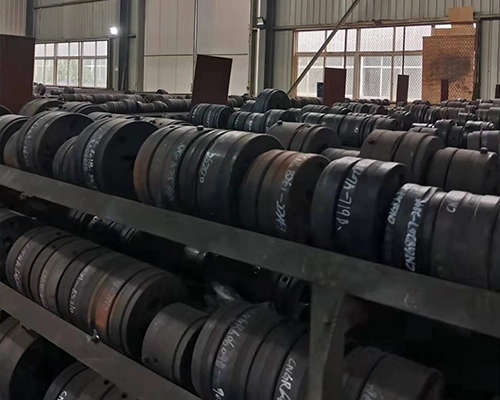
Subtractive manufacturing constraints in aluminum hot extrusion die production limit both the design complexity and repairability of worn dies. Traditional dies are machined from solid blocks of tool steel, typically H13, using CNC milling, drilling, and EDM. Complex internal features—such as cooling channels that follow the contours of the die—are difficult or impossible to produce with these methods.
When a conventional die wears out, the options are limited. Repair is often impractical because the damaged area cannot be accessed or built up reliably. The result is a costly and time-consuming replacement cycle: design, procure tool steel, machine, heat treat, and qualify. For large or complex dies, this process can take months.
Additive manufacturing addresses these limitations directly. It offers virtually no limitations regarding shape complexity, and the cost remains consistent regardless of part complexity. This opens the door to die designs that were previously impossible and repair strategies that extend die life dramatically.
Key Additive Manufacturing Technologies for Extrusion Dies
Several AM technologies are being applied to extrusion die production. Each has distinct characteristics and suitability for different applications.
Laser Powder Bed Fusion (LPBF)
LPBF—also known as selective laser melting (SLM)—builds components by scanning a laser across a bed of metal powder, melting it layer by layer. This technology is one of the most industrially adopted AM methods and has been successfully applied to produce quality parts with certain metals.
For extrusion dies, LPBF offers high precision and the ability to create complex internal geometries. However, tool steels for aluminum extrusion are known to be challenging for additive manufacturing due to their tendency to crack. Fast cooling during the LPBF process and the solid-state phase transformation during cooling both contribute to cracking issues.
Despite these challenges, significant progress has been made. Research has demonstrated that H13 tool steel can be processed using LPBF to produce crack-free components with optimized parameters. The resulting material can achieve mechanical properties similar to or even better than conventionally processed tool steels.
Directed Energy Deposition (DED)
DED offers a different approach. Instead of building from a powder bed, DED uses a focused energy source (laser or electron beam) to melt material as it is deposited, typically through a nozzle. This technology has several advantages over LPBF for extrusion dies: no practical size limitation, higher flexibility, and lower equipment and process costs.
DED is particularly well-suited for large extrusion tools because it can build parts of virtually any size. The printer head can be tilted, making it suitable for local repair of existing dies. The equipment investment and process cost are much lower than LPBF.
Hybrid Approaches
One of the most promising developments is hybrid die manufacturing, which combines additive and subtractive methods. In this approach, the large volume but geometrically simple die part (such as the die bridge) is manufactured conventionally, while the smaller part with geometrical complexity (such as the tip of the mandrel) is built up additively.
This strategy addresses a key limitation of AM: the time and cost penalty of building large volumes. By applying additive manufacturing only where it adds value—in areas requiring complex geometry or localized material properties—hybrid dies can deliver the benefits of AM without the full cost of printing an entire die.
Research has demonstrated that hybrid tools withstand the high mechanical and thermal loads that occur during hot aluminum extrusion, validating their practical viability.
Accelerating Development Cycles
One of the most immediate benefits of 3D printing for extrusion dies is the dramatic reduction in development time. The DfAM (Design for Additive Manufacturing) principle and procedures developed specifically for extrusion tools can help streamline the design process for high-performance dies, significantly reducing design time.
Industry analysis suggests that using 3D printing technology for molds and dies can shorten the manufacturing cycle to approximately one-third of traditional methods, with cost reductions reaching 50%.
Several factors contribute to this acceleration:
Unified raw material supply: AM processes use a single type of raw material regardless of die size, simplifying procurement and eliminating lead times associated with ordering specific steel billets.
Simplified programming and operation: Operating a 3D printer is generally simpler and faster than programming and running conventional CNC machining operations.
Elimination of intermediate steps: The geometric freedom of AM can eliminate EDM and other secondary operations that add time to conventional die production.
Enabling Complex Die Designs
Additive manufacturing's ability to produce shapes that are impossible or impractical with conventional machining is perhaps its most transformative aspect for extrusion die technology.
Conformal Cooling Channels
One of the most significant advances is the ability to integrate conformal cooling channels into extrusion dies. These channels follow the contours of the die surface, providing localized cooling close to the die bearings where it is most needed.
Numerical and experimental investigations have revealed that conformal cooling can reduce and control the profile's exit temperature locally, leading to only a moderate increase in extrusion force. This temperature control improves product quality, extends die life, and can enable higher extrusion speeds.
Novel Die Geometries
Beyond cooling, AM enables fundamentally new die geometries. The HAMET (Hydro Additive Manufacturing of Extrusion Tools) project, a collaboration between Hydro Extruded Solutions, SINTEF, and Conoptica, has developed DfAM rules based on finite element method simulations and feedback from printing and extrusion trials.
These rules help designers maximize the functionality and performance of tools while minimizing printing weight—a critical consideration for cost-effective AM.
Die Repair and Extension of Tool Life
Die wear is a persistent challenge in aluminum extrusion. The combination of high temperature (520–550°C), high pressure (hundreds of MPa), and abrasive wear from hard phase inclusions (Al₂O₃) significantly shortens die service life.
Additive manufacturing offers a sustainable solution to this problem. Research has demonstrated that worn dies can be repaired by removing the affected area and depositing new H13 material using AM methods. This approach, validated through field testing, could significantly reduce the need for complete die replacement, enhancing the longevity and cost-effectiveness of die usage in the industry.
DED is particularly well-suited for die repair. The ability to tilt the printer head and build material locally makes it ideal for addressing wear on specific die features without requiring a complete rebuild.
Advanced Materials for Enhanced Die Life
AM also enables the use of advanced materials that extend die life beyond what is possible with conventional tool steels. Research has developed iron-based alloy powders for LPBF with compositions designed for high-temperature extrusion service. These alloys incorporate additions such as silicon-boron compounds for crack self-healing properties and graphene nanosheets for self-lubrication.
Dies produced from these advanced materials have demonstrated:
Ultimate tensile strength of 1.2–1.8 GPa
Hardness of 58–62 HRC
Elongation of 18.5–22%
Service life 2–5 times longer than conventional H13 steel dies
Challenges and Considerations
Material Cracking in AM
The tool steels used for extrusion dies are known to be challenging for additive manufacturing due to their tendency to crack. The fast cooling during processes like LPBF, combined with solid-state phase transformations during cooling, contributes to this issue. Extensive process optimization is required to produce crack-free components.
Integration with Existing Production Systems
AM is not a standalone solution. Currently, almost all metal 3D printing technologies still rely on machining to finish surfaces. Hybrid machines that combine additive and subtractive capabilities in a single platform are emerging, but the integration of AM into existing die production workflows remains a work in progress.
Capital Investment and Skill Requirements
While DED equipment investment is lower than LPBF, both technologies require significant capital expenditure and specialized skills. For many extrusion manufacturers, the business case for AM depends on production volume, die complexity, and the availability of in-house expertise.
Frequently Asked Questions (FAQ)
Q: How does 3D printing reduce the cost of extrusion dies?
A: AM reduces die costs through several mechanisms: faster production cycles (potentially one-third the time of traditional methods), higher material utilization, elimination of some secondary operations, and repair capabilities that extend die life.
Q: Can 3D-printed H13 tool steel withstand extrusion conditions?
A: Yes. Research shows that optimized LPBF and DED processes can produce H13 components with mechanical properties comparable to or better than conventionally processed H13. Hybrid and fully AM dies have been tested in industrial extrusion environments and have withstood operational demands.
Q: Which 3D printing technology is best for large extrusion dies?
A: Directed Energy Deposition (DED) is generally more suitable for large extrusion tools because it has no practical size limitation and lower equipment costs compared to Laser Powder Bed Fusion (LPBF).
Q: How does conformal cooling improve extrusion die performance?
A: Conformal cooling channels follow the contours of the die, providing localized cooling close to the die bearings. This allows better temperature control, reduces thermal gradients, and can improve product quality while enabling higher extrusion speeds.
Q: Can 3D-printed dies be repaired?
A: Yes. Worn dies can be repaired by removing damaged areas and depositing new H13 material using AM methods. This approach significantly reduces the need for complete die replacement, lowering costs and extending service life.
Related Posts
Large-Section Aluminum Extrusion Design — Explore design principles for complex hollow profiles that benefit from advanced die technologies.
Aluminum Extrusion Tolerance Design Guide — Understand the precision requirements that influence die design and manufacturing.
CNC Machining Aluminum Extrusions — Compare additive manufacturing with conventional machining approaches.
Aluminum Extrusion Process: 11 Key Steps Explained — Understand the complete extrusion process that depends on die performance.
Extruded Aluminum vs Die Cast — Compare manufacturing processes and the role of tooling in each.
About Aluleader
With over 15 years of experience in the aluminum extrusion industry, Aluleader provides high-quality architectural profiles, industrial profiles, and furniture/decorative profiles. Our integrated capabilities include die design and manufacturing, extrusion, CNC machining, and surface finishing. We stay at the forefront of technology developments, including the application of additive manufacturing to die production.
For project-specific questions or detailed inquiries about our die design and extrusion capabilities, our engineering team is available to provide technical guidance.