Welcome to Aluleader Metal
CNC Machining Aluminum Extrusions: Ultimate Guide for Engineers | Aluleader
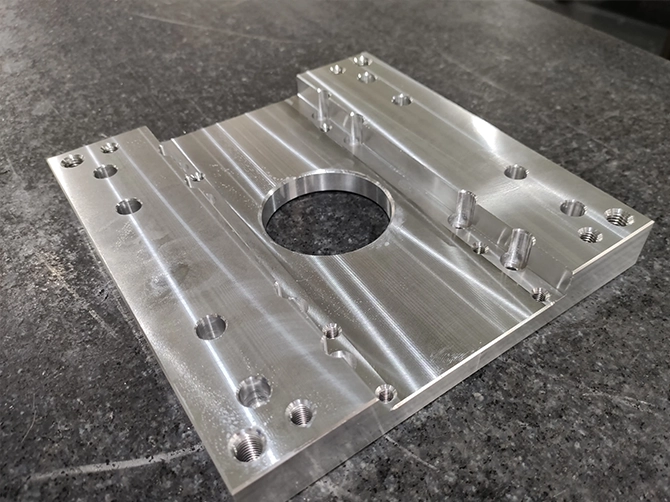
Aluminum extrusion is highly efficient for producing long, uniform profiles. What extrusion does not handle as well are the localized features that turn a basic profile into a finished component—precision holes, threaded holes, pockets, end faces, and mounting interfaces that require tight tolerances . That is where CNC machining becomes essential.
This guide explains how CNC machining adds value to aluminum extrusions, covering common processes, tolerance strategies, design considerations, and cost-control methods. Whether you are specifying parts for industrial equipment, electronics enclosures, or structural applications, understanding the relationship between extrusion and CNC machining will help you achieve better results at lower cost.
Why Aluminum Extrusions Need CNC Machining
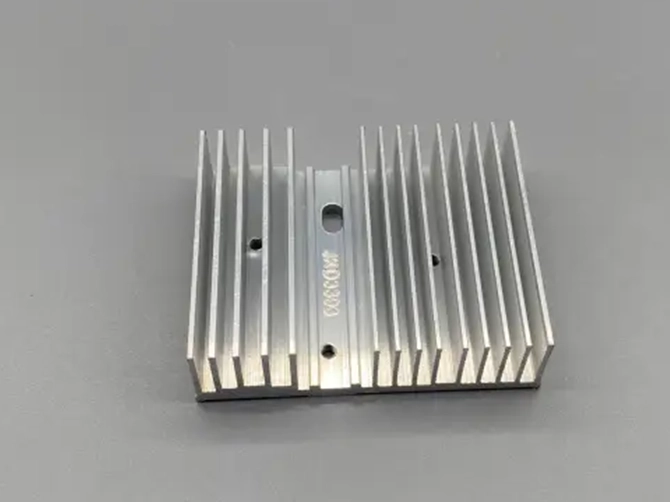
The extrusion process creates a continuous profile with a constant cross-section. It is the ideal method for producing long lengths of shapes like channels, tubes, frames, rails, and heat sinks . However, most applications require features that cannot be formed by the extrusion die alone.
CNC machining fills this gap by adding:
Mounting holes and threaded holes for assembly
Precision slots and pockets for components
End faces that are square and flat
Datum surfaces for accurate positioning
Interfaces for motors, sensors, and linear systems
For many applications, the extruded blank is only the starting point, with CNC machining providing the features and tolerances needed for final assembly .
Common CNC Processes for Aluminum Extrusions
Several machining operations are routinely performed on extruded profiles. Each serves a specific purpose and has cost implications.
Precision Cutting
The first step is often cutting the extrusion to length. This is done using circular saws, automatic saw lines, or CNC saw systems. Cut quality matters because the cut face may become a reference surface for later operations .
Milling
Milling is the most versatile CNC operation for aluminum extrusions. It creates flat planar areas, slots, pockets, side windows, end features, and mounting interfaces. CNC milling removes material from the profile to create the needed geometry .
Drilling and Tapping
Drilling creates holes for fasteners, connectors, cables, and sensors. Tapping adds internal threads so screws and bolts can be used for assembly. These are among the most common secondary operations on extrusions .
Countersinking and Counterboring
These operations prepare holes for flush fasteners, improving appearance and reducing protrusion .
Reaming
When dowel pins or precise alignment holes are required, reaming achieves the tight dimensional control that standard drilling cannot .
Long-Length Machining
Large profiles such as rail systems, structural frames, and architectural components may require long-bed CNC machines or multi-axis machining centers. These specialized setups prevent repositioning errors and maintain accuracy over extended lengths .
Tolerance Strategy: Where Buyers Often Make Mistakes
One of the most common and costly mistakes is applying tight tolerances to the entire extrusion. This increases cost without improving function . A profile does not behave like a machined block—it can move during cutting, after unclamping, or after finishing, especially if it is long, thin, or hollow .
A practical tolerance strategy has three levels :
Normal extrusion tolerance applies to general profile geometry, non-critical outside surfaces, and features that do not affect assembly. These are the standard tolerances defined by EN 755 or other industry standards.
Precision extrusion tolerance may be necessary for moderately critical dimensions, provided the extruder can demonstrate consistent capability.
Machined tolerance is reserved for holes, slots, faces, threads, sealing surfaces, bearing features, and datum-controlled interfaces. These are the areas where CNC machining provides value.
The key principle: The lowest-cost solution is not necessarily the loosest tolerance. The optimal solution is one where the tolerance scheme reflects the actual function of the part. If accuracy is required only in certain areas for assembly, those areas should be machined and inspected. The rest of the profile should be extruded to normal tolerance .
Design Considerations for Cost-Effective CNC Machining
Decisions made at the design stage directly affect how smoothly machining goes later .
Alloy Selection
6061 aluminum is generally preferred for its strength and machinability. 6063 aluminum offers better surface polish and extrusion performance . For visible anodized profiles, 6063 is often specified due to its superior surface response. 6061 provides better strength but can produce different cosmetic results after anodizing .
Profile Design for Fixturing
The extrusion cross-section should be designed with CNC fixturing in mind. Consider:
Wall thickness—if a wall starts too thin, there is no margin for machining
Corner radii—sharp corners complicate tool access
Internal voids—they affect clamping options and part stability during machining
Machining Allowance
The blank needs enough material in the right places for the CNC operation to cut to final dimensions. This is particularly important for critical surfaces that will be machined .
Feature Assignment
Features that require tight tolerances—threaded holes, accurate slot widths, and flat reference surfaces—should be assigned to the CNC stage. Trying to achieve these through die design alone often leads to inconsistent results .
Reducing Setups
The number of setups is a major cost driver . If holes and features can be accessed from one or two sides, machining is faster and more repeatable. Providing screw bosses or locating grooves in the extrusion design can simplify fixturing and reduce setup time .
Cost Drivers in Aluminum Extrusion Machining
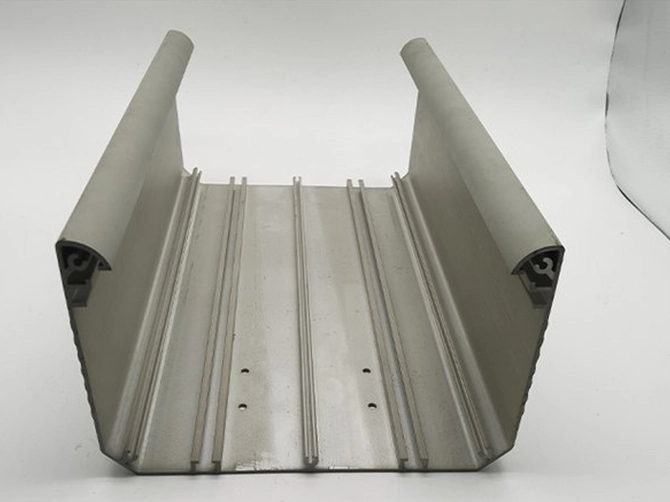
Understanding what drives cost helps you make informed design and purchasing decisions. The total cost of a machined extrusion comes from both the extrusion side and the machining side .
Extrusion-Side Cost Factors
Alloy selection and billet size
Profile complexity
Wall thickness and whether the profile is hollow or solid
Tolerance requirements
Minimum order quantity
Surface finish and heat treatment requirements
Machining-Side Cost Factors
Number of setups and fixture costs
Part length and geometry
Tolerance requirements
Number and type of holes and threads
Burr containment and deburring
Tool access and fixturing complexity
Inspection methodology
The Cost Impact of Design Choices
Design choices have a significant impact on machining cost. Five setups with hand deburring, close tolerances, and cosmetic anodizing will be substantially more expensive than a simple saw-cut and drilled profile .
Practical cost reductions include:
Using standard drill sizes and tool diameters
Increasing corner radii to match common end mills
Avoiding unnecessary tight tolerances on non-critical features
Designing for fewer setups
Reducing deep pockets and thin walls that require specialty tooling
Applying tolerances only where needed is especially effective. Specifying tight tolerances across an entire part dramatically increases machining and inspection cost. In practice, tight tolerances are needed on only 20-30% of critical features .
The Order of Operations: When to Machine
The sequence of extrusion, machining, and finishing matters for final quality.
Machining Before Finishing
This allows the coating or anodized layer to cover most surfaces, improving corrosion resistance and appearance. However, dimensions may change slightly due to the coating thickness.
Machining After Finishing
This exposes bare aluminum at the machined surfaces and can damage nearby coated areas. It should be planned carefully with masking and tolerance allowances .
Best practice: Define threads, electrical contact areas, grounds, bearing fits, and masking needs prior to production .
Surface Finish Considerations
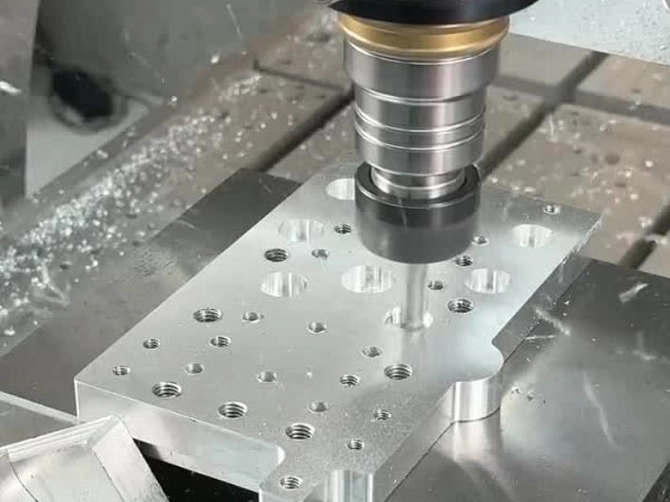
The surface finish from extrusion and machining are not always similar after anodizing or coating .
Visible Areas
If machined areas will be visible, the drawing must specify:
Surface finish requirements
Direction of brushing
Class of anodizing
Color tolerances
Masking requirements
Acceptable cosmetic limits
Functional Surfaces
Beyond appearance, surface finish affects corrosion resistance, wear, electrical contact, thermal contact, sealing, and ease of cleaning. For example, a heat sink needs a flat thermal interface; an enclosure may need anodized or powder-coated protection; a contact area might need coating stripped off or masked .
Frequently Asked Questions (FAQ)
Q: What is the most common CNC operation for aluminum extrusions?
A: Drilling, tapping, and milling mounting features are the most common operations. Precision cutting to length is also routine. For more complex parts, milling of end features, slots, and pockets is common .
Q: Which aluminum alloy is best for CNC machining?
A: 6061-T6 offers the best balance of strength, machinability, and cost. It cuts quickly, has low tool wear, and provides consistent results. 6063 is preferred for applications requiring superior surface finish, especially when anodizing .
Q: How can I reduce the cost of CNC machining my extrusion?
A: Key strategies include: (1) applying tight tolerances only to critical features, (2) reducing the number of setups by designing for accessibility, (3) using standard tool sizes and corner radii, and (4) consolidating features to minimize tool changes .
Q: What is a typical CNC machining tolerance for aluminum extrusions?
A: Standard machining tolerances are approximately ±0.05mm for many features. Tight tolerances (e.g., ±0.01mm) are possible but increase cost. Not all extrusion features can be held to machined tolerances without secondary operations .
Q: Should I machine before or after anodizing?
A: This depends on your requirements. Machining before anodizing allows the coating to protect machined surfaces, but dimensions may change slightly. Machining after anodizing exposes bare aluminum and requires masking. Plan carefully based on your tolerance and appearance needs .
Related Posts
How to Read Aluminum Extrusion Drawings — Understand the drawing specifications that guide CNC programming and inspection.
Aluminum Extrusion Tolerance Design Guide — Learn about tolerance standards and how they interact with machining.
Aluminum Profile Connection Technologies — Explore assembly methods that often require precision holes and tapped features.
Corrosion Protection for Aluminum Extrusions — Understand surface treatments and how they affect machined surfaces.
Extruded Aluminum vs Die Cast: Comparison Guide — Compare manufacturing processes and when to choose extrusion plus machining.
About Aluleader
With over 10 years of experience in the aluminum extrusion industry, Aluleader provides high-quality architectural profiles, industrial profiles, and furniture/decorative profiles. Our integrated capabilities—from die design and extrusion to CNC machining, surface finishing, and fabrication—ensure consistent quality across every project.
Our engineering team collaborates with clients to optimize designs for both extrusion and CNC machining, helping you achieve the best balance of precision, quality, and cost. For project-specific questions or detailed inquiries about our extrusion and machining capabilities, our experts are available to provide technical guidance.