Welcome to Aluleader Metal
Aluminum Extrusion Sustainability: Green Billets, PCF & EPD Guide | Aluleader
The aluminum extrusion industry is undergoing a fundamental transformation. Driven by regulatory pressure, customer demand, and a genuine commitment to environmental stewardship, sustainability is moving from a peripheral concern to a core business imperative. What was once a "nice-to-have" is now a market requirement.
This guide explores the key pillars of a sustainable aluminum extrusion strategy: the sourcing of "green billets," the implementation of closed-loop water systems, and the critical role of product carbon footprints (PCF) and environmental product declarations (EPD). These are the building blocks for a credible, transparent, and competitive sustainability narrative in the global market.
Green Billets: The Foundation of Low-Carbon Extrusions
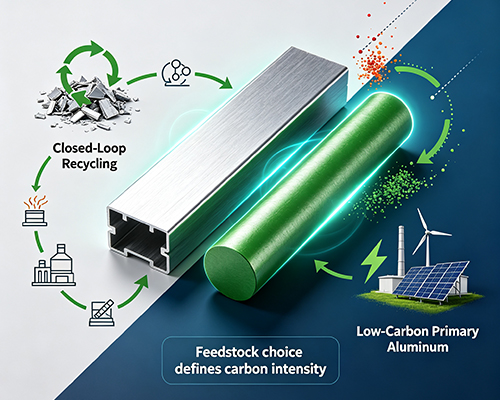
The journey to a sustainable extrusion starts at the very beginning: the billet. The choice of feedstock determines the carbon intensity of the final product. The industry is rapidly moving away from a one-size-fits-all approach to sourcing, with low-carbon and recycled-content billets becoming strategic differentiators.
The Power of Closed-Loop Recycling
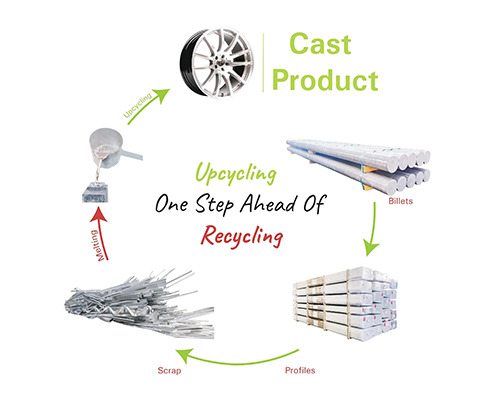
One of the most effective models for sustainable billet production is closed-loop recycling. This involves capturing post-production scrap directly from the extrusion plant and feeding it back into the billet casting process.
A successful trial in Australia, between Capral and Rio Tinto, demonstrated the viability of this approach. Scrap from Capral's extrusion plant was remelted and cast into new billets, resulting in a product with a minimum of 20% recycled content. This closed-loop approach not only minimizes waste but also significantly reduces the carbon intensity of the extrusions produced from these billets . This is a powerful local example of a circular economy, where materials remain in circulation and are converted into useful products .
The environmental benefit is staggering. Using recycled aluminum requires only about 5% of the energy needed to produce primary aluminum from bauxite . This creates a powerful internal closed-loop system, drastically reducing raw material needs and waste.
Lower-Carbon Primary and Recycled Content
While recycled content is key, the decarbonization of primary aluminum production is also critical. For many high-end applications, a blend of "lower-carbon primary" material and recycled content serves as a strategic stepping stone to full decarbonization .
The impact of this approach is measurable. For example, Apple's iPhone 16 utilizes aluminum in its enclosure with recycled content and lower-carbon primary aluminum. This effort meant that the emissions associated with the aluminum raw materials were a mere 0.34 kg CO2e per unit. Had no decarbonization efforts been implemented, those emissions would have been 9.28 kg CO2e per unit, increasing the product's total carbon footprint by 16% . This case study powerfully illustrates how a strategy grounded in material life cycle assessments (LCA) can be used to identify and mitigate carbon hotspots .
Environmental Product Declarations: The "Nutrition Label" for Materials
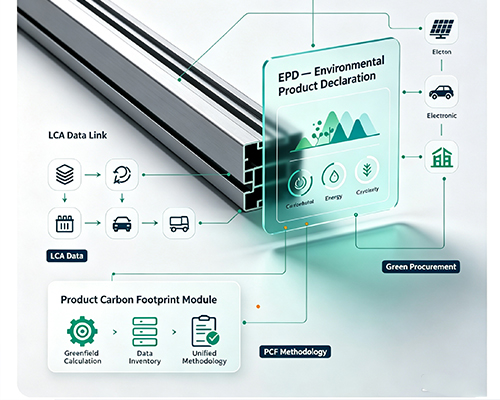
To communicate the environmental performance of their products credibly, the industry relies on Environmental Product Declarations (EPDs). EPDs are often described as "Environmental Nutrition Labels" for materials and products, as they describe the potential environmental impact of a product throughout its life cycle .
Industry-Wide Data for Credibility
The Aluminum Extruders Council (AEC) in the USA has been a leader in this area, regularly updating its industry-wide EPDs for aluminum extrusions. The latest versions, based on 2020/21 data, provide a comprehensive benchmark for the environmental performance of extrusions produced in the US and Canada . These EPDs serve as a crucial tool for architects, engineers, and specifiers who need to make informed material choices for green building projects.
A Unified Standard for PCF
On a global scale, there is a growing push for standardized methods to quantify product carbon footprints. In China, a new national standard, 《温室气体 产品碳足迹量化方法与要求 铝加工产品》 (Greenhouse gas–Quantification requirement and method of product carbon footprint–Aluminum processing product), is being developed . This standard aims to provide a unified methodology for aluminum processing products, from "cradle to gate"—from raw material extraction to the product leaving the factory gate .
This push for standardization is driven by increasing international demand. Customers in key sectors like photovoltaics, automotive, and electronics are increasingly linking carbon footprint data to purchasing decisions. Accurate PCF assessment and reduction strategies have become a vital part of business development for aluminum processors .
Closed-Loop Water Systems: Beyond the Product
While the carbon footprint of the metal is a primary focus, sustainability in aluminum extrusion also involves responsible resource management in the production process itself. Water, a vital resource for processes like anodizing and surface treatment, is a key area of focus.
Treat and Reuse
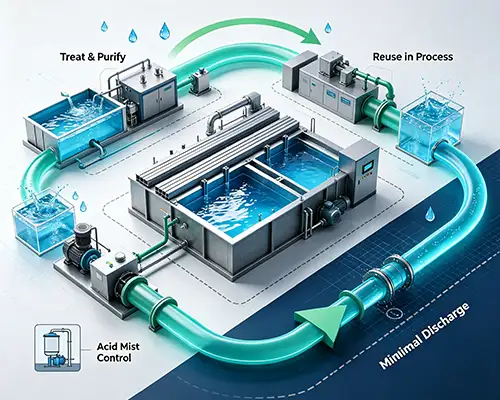
Implementing closed-loop water systems is a best practice for minimizing environmental impact. These systems treat and recycle water used in etching, anodizing, and other surface treatment stages, minimizing discharge and reducing the demand for fresh water . Additionally, using advanced acid mist suppression technology in chemical treatment tanks helps control the release of volatile compounds, improving workplace safety and reducing air emissions . Some companies are innovating in this area, with technologies designed to deposit and purify water for recycling, effectively closing the loop within the production facility and avoiding water waste .
The Path Forward: Industry-Wide Collaboration
The transition to a truly sustainable industry requires more than individual company efforts; it demands industry-wide collaboration.
Major international forums, such as the 2026 International Aluminum Supply Chain Green Low-Carbon and Circular Economy Exchange Conference, bring together producers, users, and certification bodies to discuss common challenges . Key themes from these conferences include:
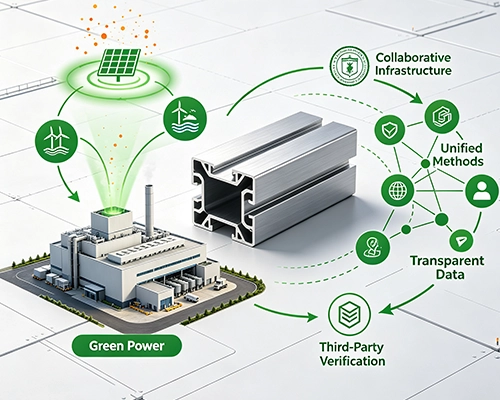
International Data Alignment: Green claims must be built on transparent data, unified accounting methods, and third-party independent verification. Pushing for mutual recognition of standards and certification rules across different countries is crucial .
The "Green Electricity" Revolution: The use of renewable energy in aluminum production, particularly in electrolytic processes, is a game-changer. In China, for example, the use of green electricity in electrolytic aluminum production exceeded 30% in 2025, a major factor in the industry achieving carbon peak in 2024 .
The Role of Certification: The aluminum industry is building a complete green service system. Initiatives like "Green Electricity Aluminum" evaluations, "Green Low-Carbon Aluminum" certifications, and robust Life Cycle Assessment (LCA) databases are creating the infrastructure for credible environmental performance claims .
Frequently Asked Questions (FAQ)
Q: What is a "green billet"?
A: A "green billet" typically refers to aluminum billet produced with a lower carbon footprint than conventional material. This is achieved through the use of renewable energy in its production (green electricity) or by incorporating a significant amount of recycled (post-consumer or post-production) content.
Q: What is a Product Carbon Footprint (PCF)?
A: A PCF is a standardized measure of the total greenhouse gas emissions caused directly and indirectly by a product throughout its life cycle, from raw material extraction to the factory gate (cradle-to-gate) or to its end-of-life (cradle-to-grave).
Q: How do EPDs and PCFs differ?
A: A PCF is just one metric within a broader Environmental Product Declaration (EPD). An EPD provides a more comprehensive life cycle assessment of a product's environmental impact, covering multiple categories like global warming potential, resource depletion, acidification, and ozone depletion. EPDs are typically third-party verified and follow international standards like ISO 14025.
Q: Is closed-loop recycling better than using scrap from other sources?
A: While all recycling is beneficial, closed-loop recycling—where scrap from a specific production chain is returned to the start of that same chain—is highly efficient. It ensures that the material is used to produce products of similar quality, reducing the risk of downcycling. It also often requires less sorting and separation than processing mixed scrap from outside sources.
Related Posts
Aluminum Extrusion Market Outlook 2026-2027 — Understand the market forces and regulatory trends driving sustainability requirements.
Corrosion Protection for Aluminum Extrusions — Learn about surface treatments that can extend product life, a key factor in lifecycle sustainability.
Aluminum Extrusions in Military and Defense Applications — Explore how lightweighting with aluminum contributes to energy efficiency in demanding sectors.
Aluminum Extrusions in EV Battery Enclosures — Discover how extrusions enable sustainable electric mobility.
Aluminum Extrusion Process: 11 Key Steps Explained — Understand the manufacturing process from billet to finished product.
About Aluleader
With over 15 years of experience in the aluminum extrusion industry, Aluleader provides high-quality architectural profiles, industrial profiles, and furniture/decorative profiles. We are committed to evolving with the industry, and we actively track the developments in sustainable billet sourcing, efficient manufacturing, and transparent environmental reporting.
Our engineering and sales teams are equipped to discuss your project's carbon footprint requirements and guide you towards the most sustainable solutions within our capabilities. For project-specific questions or detailed inquiries about our sustainability practices and extrusion capabilities, our experts are available to provide technical guidance.